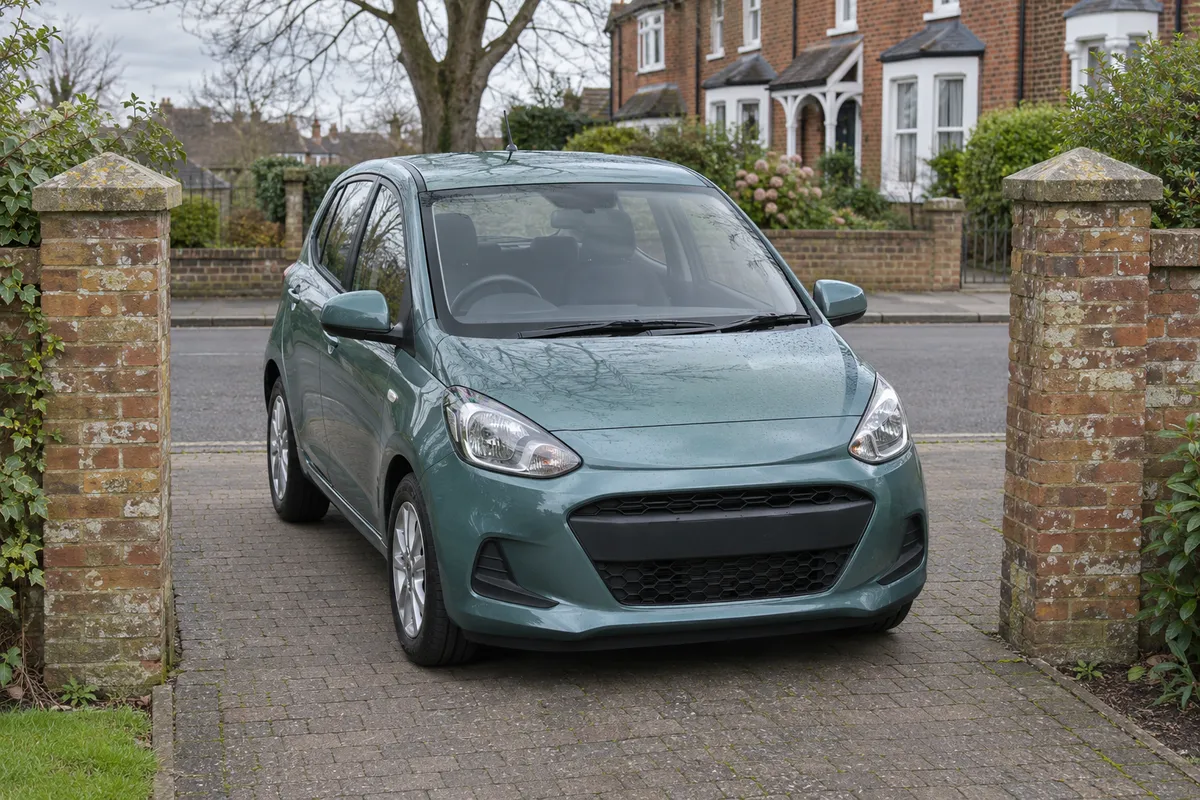
For a short driveway and up to four people, put the 3,776 mm Toyota Aygo X Hybrid on your shortlist. Need a fifth seat? Try the Kia Picanto 1.0 GDI. If rear passengers and luggage matter most, try the five-seat Honda Jazz Elegance with its 304-litre boot. Measure your narrowest opening before booking a viewing. The Jazz is listed as 1,694 mm wide, but it measures 1,966 mm across its extended mirrors. [1] [2] [3]
Which small car suits your parking space?
| Where to start | What the figures tell you | What to check in person |
|---|---|---|
| Toyota Aygo X Hybrid for a short driveway | 3,776 mm long, four seats and 231 litres of luggage space. The UK hybrid specification lists an overall width of 1,740 mm. [2] | Ask for the width across the mirrors before checking a gateway. With the car parked, try opening the tailgate where the end wall would be. |
| Kia Picanto 1.0 GDI for five seats in a city car | The manual and automated manual versions have five seats, a 255-litre boot with the seats up and a quoted minimum turning circle of 9.4 m. [3] | If you need all five places, sit three of your regular passengers across the back. Ask for the mirror-to-mirror width of the exact car. |
| Honda Jazz Elegance 1.5 hybrid for passengers and their bags | Five seats and a 304-litre upright boot, measured by the VDA method. At 4,089 mm it takes up 313 mm more driveway length than the Aygo X Hybrid. [1] [2] | Set both front seats for the people who use them. Check rear knee space, then try your largest everyday item through the boot opening. |
The Picanto and Jazz both offer five places. If you only use the middle one occasionally, try that journey first. A car that takes four adults and a weekend bag can feel quite different when three passengers have to share the rear bench. For a used example, confirm the model year, engine and trim in the advert before using a specification sheet.
Measure the opening and the place where you get out
A pair of gateposts and the parking bay behind them pose two different problems. First measure the narrowest fixed gap, including hinges or a protruding latch at mirror height. Then measure the space beside the driver’s door once the car is parked. A gateway can have room for both mirrors while a bin store farther along the drive stops the door opening where you need it.
For example, imagine a straight opening 2,200 mm wide. Subtract the Jazz Elegance’s extended-mirror width of 1,966 mm. That leaves 234 mm in total, or 117 mm each side if the car is straight and exactly centred. Using the 1,694 mm body figure would suggest 253 mm each side. Even with its mirrors folded Honda quotes 1,814 mm. Those three figures describe the same car in different ways. An angled approach changes the space it takes to get through. [1]
What should I ask if the seller only gives one width?
Ask for the distance from one outer mirror tip to the other with both mirrors in their usual driving position. Get the folded measurement separately if you need it for storage. Give the seller your model year and trim and ask which diagram or measurement they used. For example, the Picanto equipment list specifies electrically folding mirrors on GT-Line and GT-Line S, while the Pure lists electric adjustment and heating. [3]
Read the turning figure before you compare cars
A radius runs from the centre of a turn to the point being measured. Double it for the diameter traced by that same point. The Aygo X Hybrid has a quoted minimum radius of 4.7 m at the tyre and 5.0 m at the body. Those give diameters of 9.4 m and 10.0 m respectively. A raised wall beside a curved entrance is one reason the outer body matters as well as the path of the tyres. [2]
Trim can change the answer even when the cars look the same size. The Jazz Elegance and Advance share their length and mirror width, yet their body turning circles are 10.1 m and 10.7 m. Compare figures taken at the same point. Kia calls its 9.4 m figure a minimum turning circle without specifying the measuring point in that table, so a direct ranking against the Toyota’s 9.4 m tyre diameter would assume too much. [1] [3]
Try the car with your usual passengers
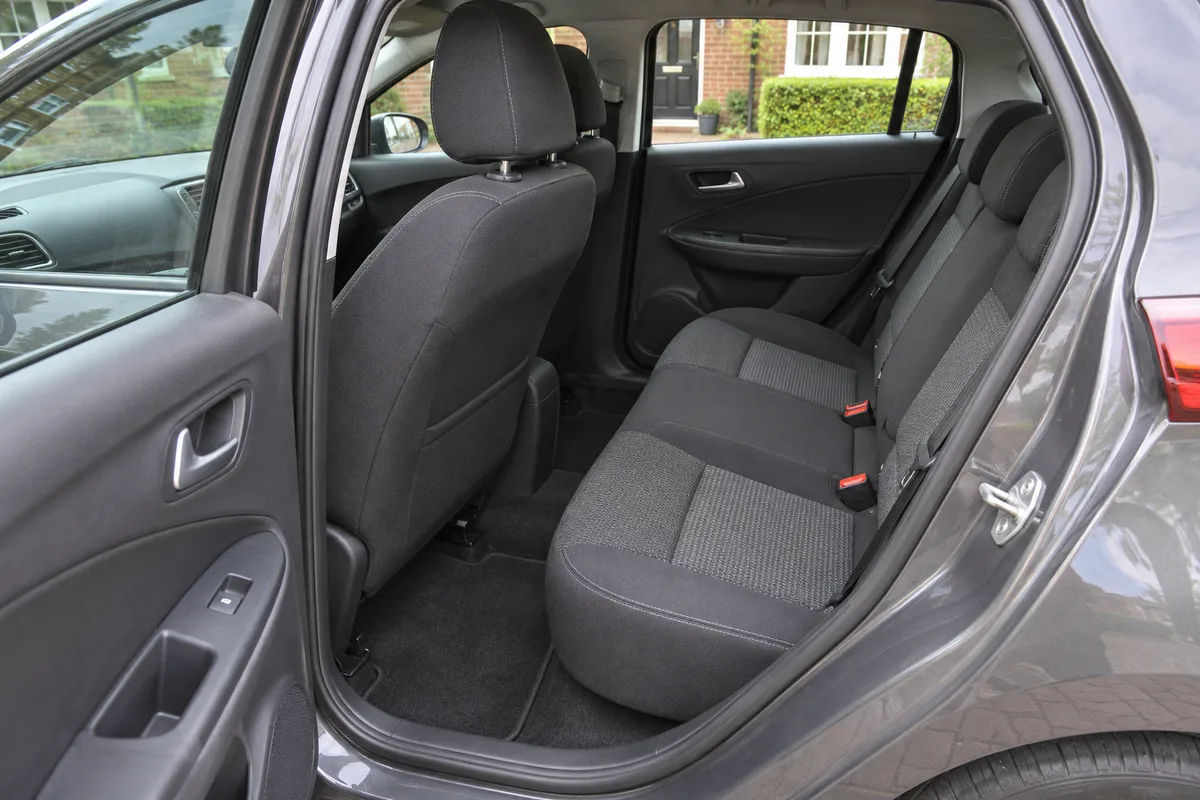
Take the person who uses the back seat most. Can they get a foot through the doorway, slide it under the front seat and sit upright with the door closed? Repeat with the front passenger in place. If a pushchair usually travels with you, take it folded as you carry it and see whether the parcel shelf and tailgate close with the rear seats upright. Published litres tell you little about whether a particular wheel or handle will catch on the boot opening.
For a last check before committing, ask the seller whether you can try the car in your usual parking space. If that is impractical, take your measurements, photographs of the approach and the measurements of a car you already park there comfortably. For buyers considering a slightly larger hatch, our Golf and Polo comparison looks at what changes when you go up a size.