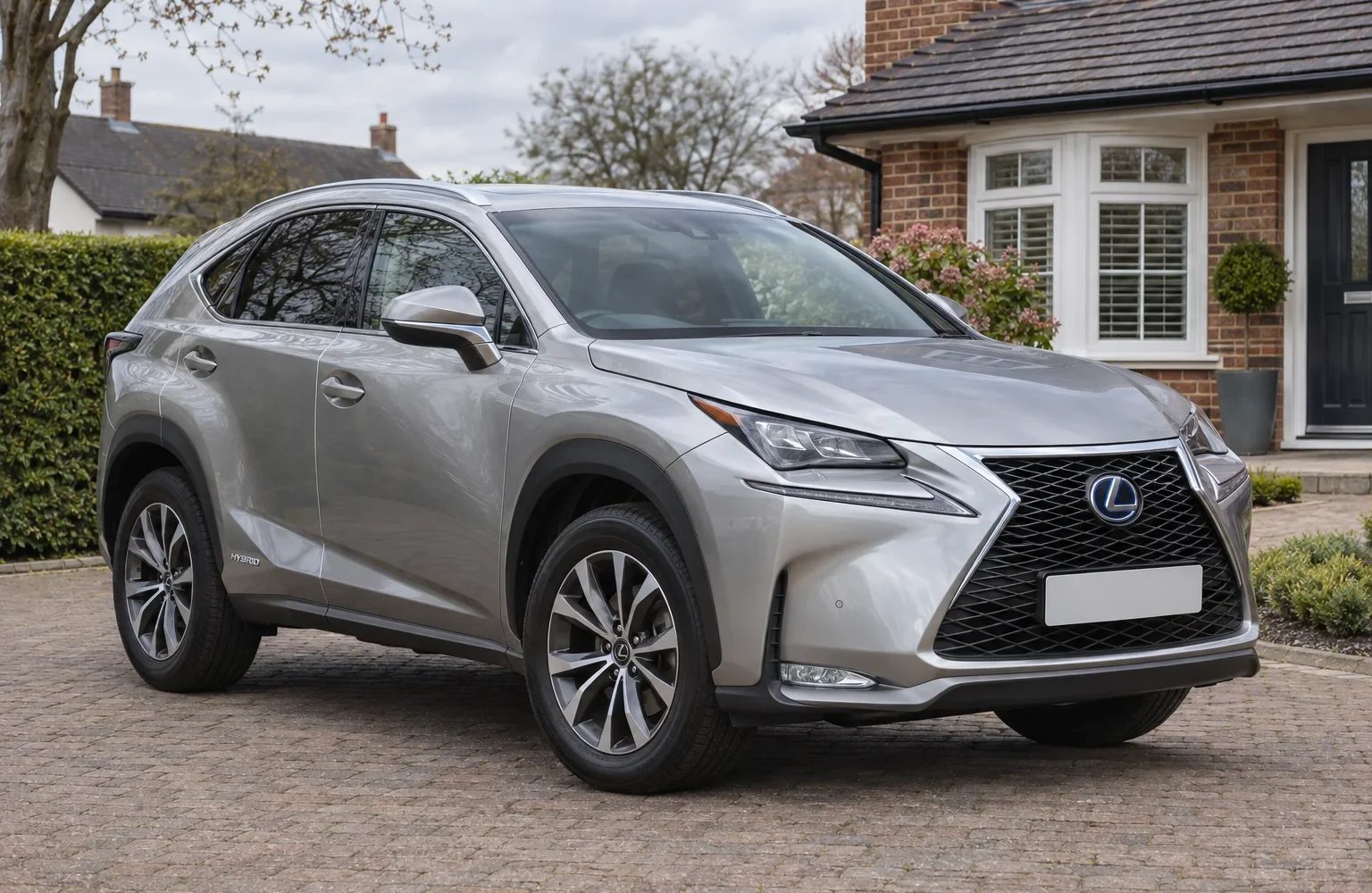
Check the exact derivative before treating a used NX 300h as all-wheel drive. The hybrid badge identifies a model family, but it is not enough to settle which wheels are driven. If an advert simply says “SUV”, “hybrid” or “automatic”, ask the seller to confirm the drivetrain in writing.
This guide concerns the first-generation NX 300h. It uses dated UK specifications to explain the question to ask, rather than applying today’s NX range to an older car. It is documentary buying guidance, not a road test or an assessment of a particular vehicle’s condition.
Two UK examples explain why the year matters
At the 2014 UK launch, the NX 300h S had front-wheel drive, while the other launch versions had E-Four. E-Four uses an additional electric motor to drive the rear axle, engaging automatically when required. It should not be understood as a promise that all four wheels receive drive continuously. [1]
In April 2020, front-wheel drive was again offered as an option on the entry-level NX, together with 17-inch wheels. That later announcement is a useful warning against applying a single trim rule across every year. Neither historical example identifies the car in an individual listing. [2]
| Advert wording | Next check |
|---|---|
| NX 300h hybrid | Request the full derivative and drivetrain, not just the model badge. |
| 2014 launch-specification S | Compare it with the front-wheel-drive launch specification and the actual car’s records. |
| E-Four or AWD | Ask for vehicle-specific specification evidence supporting that description. |
| Later entry-level NX | Check its build specification; do not assume an earlier trim rule still applies. |
Build a short evidence trail
Start with the registration, vehicle identification number and exact model description supplied by the seller. Ask a Lexus retailer to confirm the original drivetrain against the vehicle identity where the paperwork is unclear. Keep the reply with the advert, so you can see whether the seller has described the same car throughout.
Badges, wheel designs and photographs are useful prompts for questions, but do not use them as your final proof. A photograph cannot establish that the pictured vehicle is the one being sold, and an equipment list copied from another advert may describe a different derivative. Ask for an explanation of a mismatch before arranging travel.
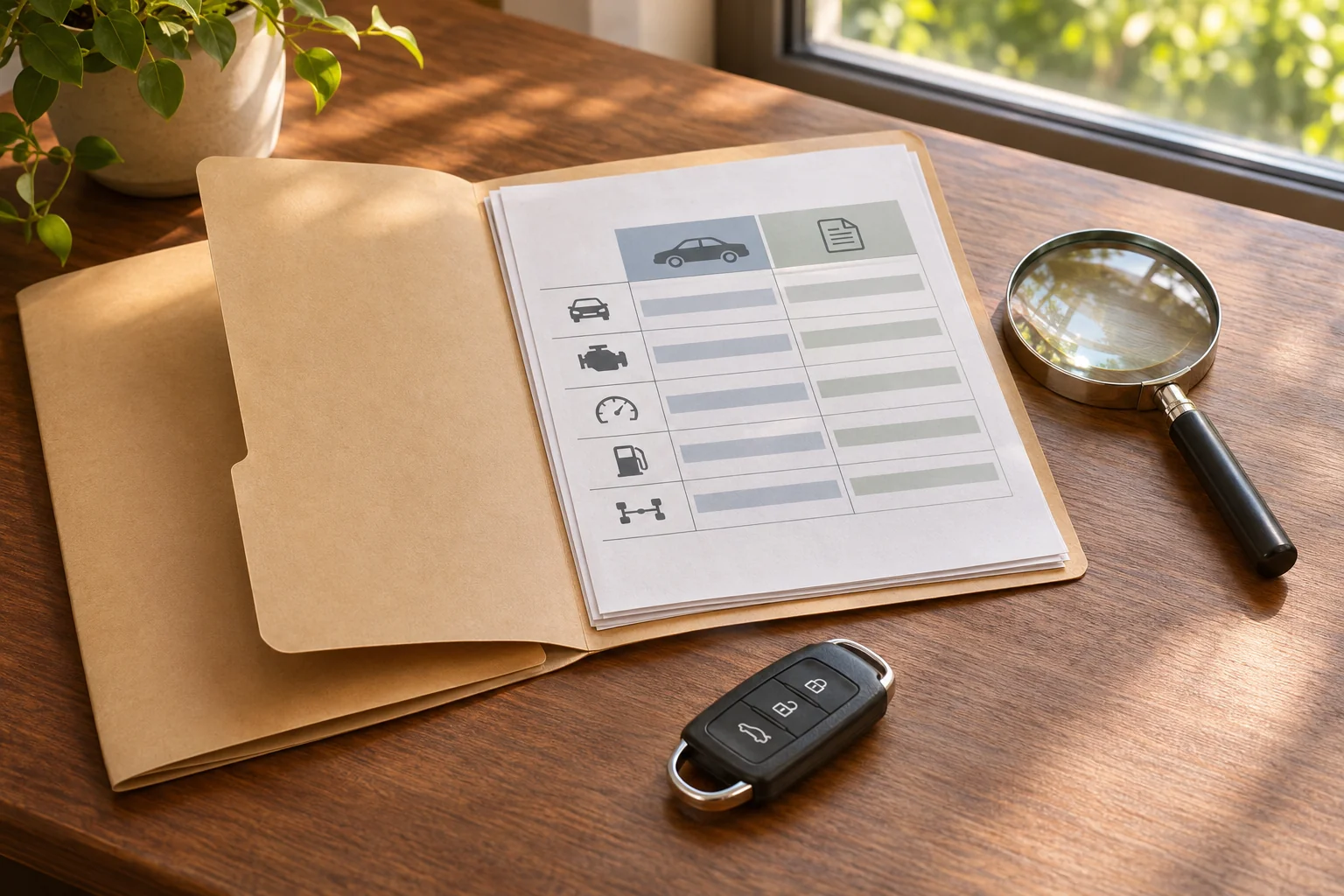
If two cars make your shortlist, record the same fields for each: registration, derivative, drivetrain, specification evidence and unresolved questions. Leave an unknown field marked “unconfirmed”. Filling it with a guess makes the comparison look more complete while leaving the purchase decision less reliable.
Keep equipment identity separate from condition
A correct E-Four description does not tell you whether the car has been maintained well. Review service invoices and any recorded hybrid-system checks separately; ask what each inspection covered and when it was performed. Our guide to used-hybrid battery and service records explains how to organise those questions.
Check recorded MOT results and mileage, then look up outstanding recalls and ask about relevant completion evidence. [3] [4] If the seller mentions a warning, previous repair or unresolved driveline concern, obtain a vehicle-specific inspection rather than treating this specification guide as a diagnosis.
What should I ask if the advert and paperwork disagree?
Ask: “Please confirm whether this specific NX 300h is front-wheel drive or E-Four, and show the vehicle-specific record used to check it.” Request a corrected description and resolve the discrepancy before committing. An explanation based only on the SUV body shape does not answer the question.