A battery-electric car is worth shortlisting when dependable charging and its longer-trip performance fit your life. A full hybrid can suit you when keeping a refuelling routine matters more. A plug-in hybrid needs a reason for both its charging connection and its engine. Compare particular cars over the same journeys and ownership period; the powertrain label cannot tell you which is cheaper, more comfortable or better equipped.
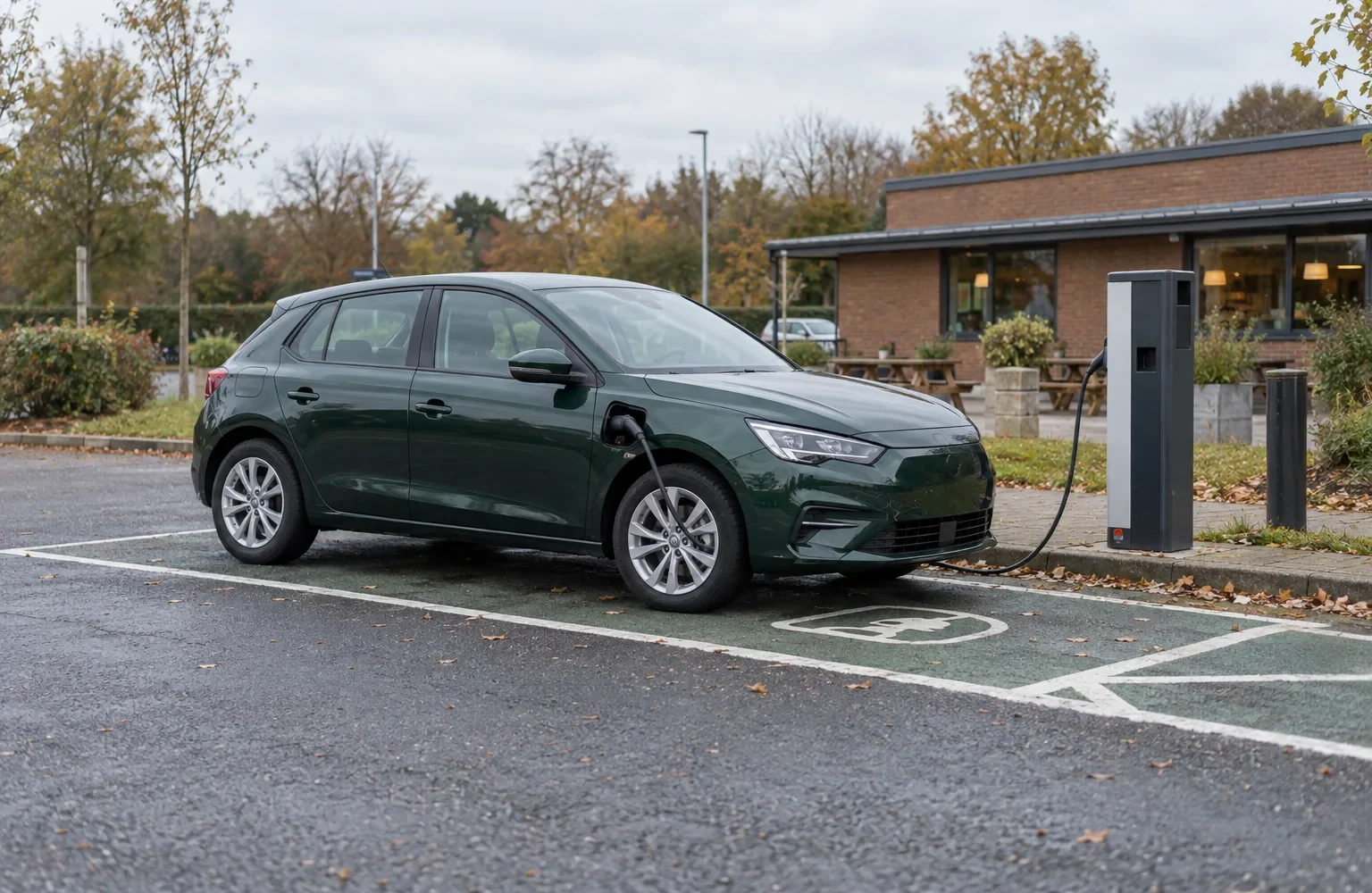
The difference between hybrid and electric cars is straightforward at the fuel pump: a battery-electric vehicle has no combustion engine to refuel, while a hybrid retains one. The buying decision is less straightforward. An attractive electric car may solve your daily driving but make a regular demanding trip awkward. A hybrid may remove that charging requirement while costing more to fuel on the journeys you make most.
This guide is for comparing a battery-electric car with a hybrid shortlist. If you are still establishing whether charging could fit at all, start with our electric-car suitability guide, then use the comparisons below.
What exactly are you comparing?
Here, electric car means battery-electric vehicle, or BEV: its wheels are driven electrically, and you recharge its battery. A full hybrid, or HEV, combines engine and electric propulsion without an external charging connection. A plug-in hybrid, or PHEV, also has an engine, but accepts electricity from a charger. These distinctions are reflected in the Department for Transport’s fuel-type definitions.
An advert saying “hybrid” needs clarification before you compare it with a BEV. In particular, do not confuse a full hybrid with a mild-hybrid system or assume either has a PHEV’s externally rechargeable capability. Ask for the exact version rather than relying on a badge.
| Decision | Battery-electric car | Hybrid alternative |
|---|---|---|
| Replacing the energy you use | Charging is part of ownership; there is no petrol engine fallback. | A full hybrid is refuelled. A PHEV adds charging to its refuelling routine. |
| A journey beyond electric range | Requires a suitable charging stop or a different travel arrangement. | The engine allows continued use with fuel available; a PHEV’s electric range is not its total journey range. |
| Energy-cost comparison | Use the tariffs and charging locations you will actually use. | Use fuel consumption for the relevant driving; include electricity as well for a charged PHEV. |
| Workshop needs | No combustion-engine oil changes, but it still needs the maintenance specified for that car. | The engine remains part of the service schedule alongside the hybrid system. |
| What the advert cannot establish | Present battery condition, practical charging performance and suitability for your demanding journeys. | Actual engine/electric behaviour, condition and the benefit of the particular hybrid system on your routes. |
Compare the difficult journey as well as the easy one
Take a trip you genuinely need to make: perhaps a regular motorway visit, an early airport run or a journey with a passenger who needs accessible facilities. Compare complete itineraries for the electric and hybrid candidates, including arrival time and the return leg. A charging stop that works comfortably during a holiday may be a poor fit for a tight appointment.
Do not dismiss a BEV merely because the trip exceeds one charge. Equally, do not assume every stop you already make will coincide with a suitable charger. Write down the useful charging stop, its alternative and what a delay would mean. For the hybrid, include refuelling and the same rest requirements rather than imagining a journey with no stops at all.
For the electric candidate, check the exact battery and wheel specification behind its range claim. Toyota’s UK range guidance explains that WLTP is a standardised comparison and that speed, temperature, terrain and load can change the result. A summer demonstration is not a winter motorway-range guarantee.
Ask about charging time over the battery levels you expect to use, rather than choosing the largest advertised kW number. Hyundai’s UK charging explanation identifies battery size, state of charge, charger capability and temperature as relevant factors. Add the time needed to reach the charger, start the session and deal with any wait. An advertised charging interval is only one part of the stop.
Frequency matters. A compromise acceptable for an annual visit may become tiring twice a week. Conversely, paying for an engine you rarely need should be a deliberate choice, not an automatic response to one unusual journey.
Which ownership trade-off sounds familiar?
These scenarios suggest what to compare next. They do not rank cars or assign a score to your circumstances.
I can charge reliably, but the car must handle regular long trips
Keep a BEV and a suitable hybrid on the shortlist until you have compared those trips. The electric candidate needs a workable route and charging-stop duration; the hybrid needs acceptable consumption, comfort and cost. A PHEV is worth investigating if you will use its electric capability between longer trips, but the engine’s convenience alone does not prove that it is the best purchase.
Evidence that could change your mind: a different battery version, genuinely suitable stops, or a charging demonstration showing that the advertised performance does not fit your expected conditions.
I rely on public charging and want predictable ownership costs
Compare the BEV using the public tariffs available to you, not a cheap domestic rate from an advert. Include parking or session charges and the time required to get there. A full hybrid offers a different routine without charging appointments. Public charging can still be workable; investigate the specific places before ruling it in or out.
Evidence that could change your mind: dependable destination charging you already visit, a different local tariff, or an alternative car that uses less energy for your journeys.
This will be the household’s second car
Identify which journeys it will actually cover. A BEV may fit a stable local role even if another vehicle handles occasional trips. Then check the awkward overlap: both drivers away, a family visit or one car unavailable. Assess the extra cost of keeping two cars separately; a cheap-to-charge second car does not make the whole household’s transport inexpensive.
Evidence that could change your mind: the second car regularly inheriting the longer journeys you assumed it would avoid.
I am considering a PHEV as a step towards electric
You can learn a charging routine with a PHEV, but buying one first is not a prerequisite for owning a BEV. If a fully electric candidate already meets your needs, compare it directly. If you value the engine for specific journeys and will regularly charge, the PHEV has a clearer role. Toyota’s plug-in hybrid explanation describes externally charged electric running and continued hybrid operation afterwards.
Evidence that could change your mind: little opportunity to charge, an electric car that already covers the demanding trip, or a full hybrid that meets the brief at a more suitable total cost.
Compare the whole ownership offer
Start with cars that meet the same essential requirements. A small used electric hatchback and a new hybrid SUV differ in much more than their energy source. Record the age, mileage, trim, equipment, warranty and condition before interpreting a price difference as an “electric premium” or a hybrid saving.
Build the comparison in three parts:
- Getting the car: the actual purchase or finance offer, any installation needed, and the value of the car you expect to sell later. Treat future resale value as an estimate.
- Using it: energy for comparable journeys, insurance quotations, servicing, tyres and any applicable charges. Use current terms for your circumstances.
- A less convenient month: different charging locations, a busier travel schedule or losing a workplace charging arrangement. Check whether the choice still works.
A PHEV’s headline mpg is not the whole energy bill. The Vehicle Certification Agency’s guidance recommends considering its weighted electricity consumption alongside weighted fuel consumption. Also compare official results from the same test procedure. For your budget, use consumption evidence that resembles your charging pattern rather than treating a brochure figure as a promise.
For a BEV, separate routine charging from en-route charging when estimating costs. If a home tariff is part of the offer, check the whole household bill and its conditions. Our home-charging questions cover the installation conversation. A lower energy bill can be useful without outweighing a higher purchase price or insurance quote.
A used electric car needs different questions, not fewer checks
A BEV has no combustion engine requiring an engine-oil change. It still has a service schedule: Kia’s UK maintenance guidance describes checks and work involving the battery, tyres and software, with costs depending on the vehicle. Avoid treating fewer moving parts as a guarantee of cheaper repairs on every used example.
Nor does regenerative braking remove the need to maintain the brakes. Kia’s e-Care plan includes brake cleaning and battery state-of-health checks. This is an example of the work a manufacturer offers, not a service interval for every electric car. Obtain the schedule and records for each candidate; the hybrid also retains its engine’s maintenance requirements.
For a used BEV, establish its battery version, charging capability and whether the battery is owned outright or subject to a separate lease. The Energy Saving Trust’s used-EV guide identifies those specification questions. Ask for a recent battery-condition report where available, including what was measured, and confirm the actual remaining warranty terms. A fully charged dashboard range estimate is not a battery-health certificate.
For a used PHEV, ask for evidence that the charging system works as well as the engine and hybrid system. For either plug-in candidate, request a charging demonstration using compatible equipment and confirm which cables are included. Unanswered questions about condition deserve an appropriate independent inspection.
Try the parts of ownership that a specification misses
On a test drive, assess the particular car’s response at ordinary speeds, parking visibility, ride and controls. Notice how the hybrid’s engine starts and blends into the drive, and whether that behaviour suits you. Do not infer refinement from an electric badge or acceleration figures alone.
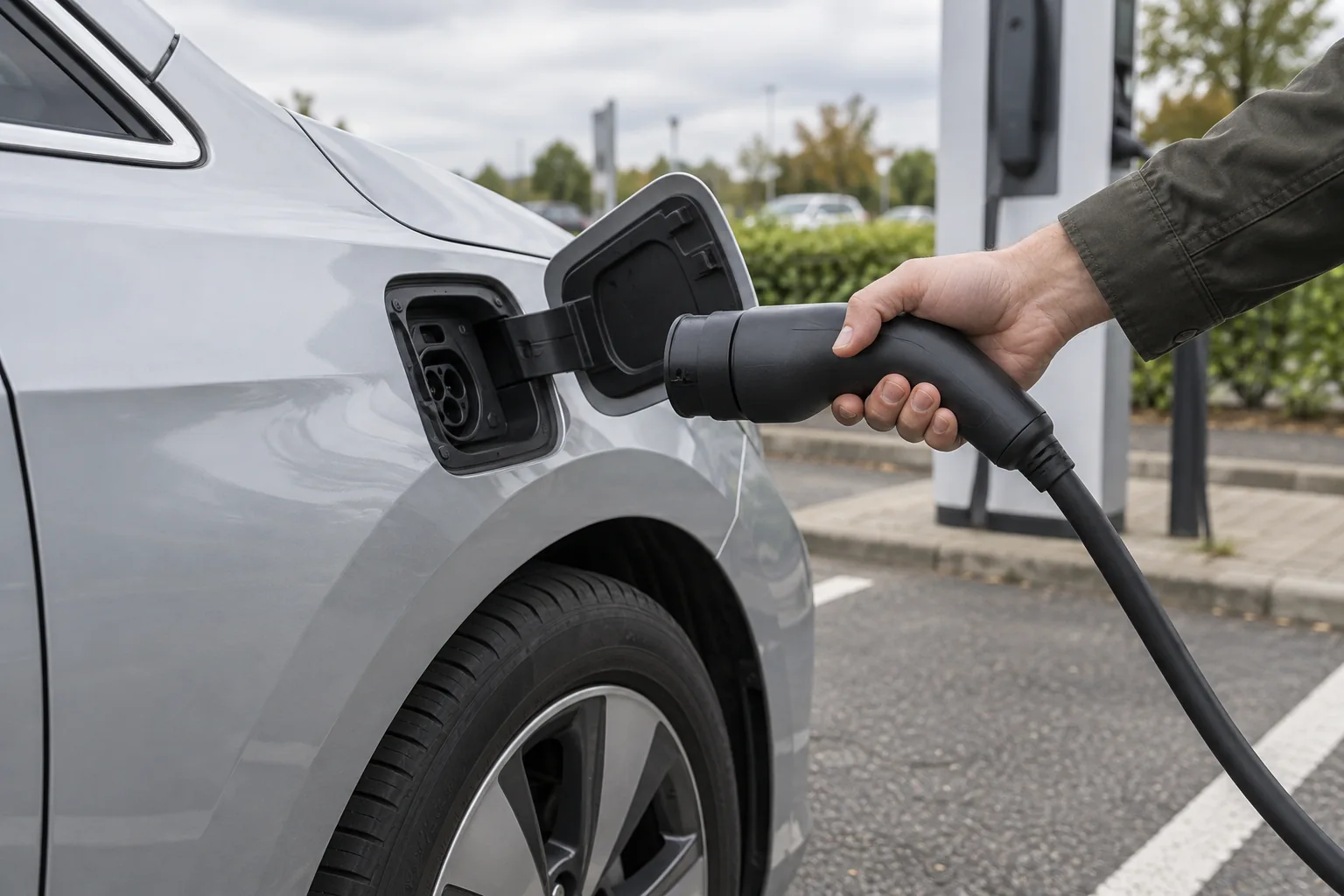
While parked, check whether every intended driver can reach the port and comfortably handle the cable at the locations they expect to use. Look at the charging controls and ask how a session starts and ends. A technically compatible setup may still be inconvenient for a particular driver.
Keep the ordinary car requirements in the comparison: passenger access, luggage, parking dimensions and any towing needs. Use our next-car planning guide to record the same requirements for both vehicles.
Be precise about emissions, then make the choice
A BEV removes combustion exhaust from the car. A hybrid still produces exhaust when its engine runs. That is a meaningful distinction, but “no exhaust” does not mean no environmental impact. The government’s Air Quality Expert Group distinguishes exhaust from tyre, brake and road-wear emissions, and notes that electricity production also matters. Manufacturing and lifetime energy use belong in a broader environmental comparison; a tailpipe figure alone cannot answer it.
Choose the candidate whose important assumptions you can support. For the BEV, that means charging and journeys that work for its actual capability. For the hybrid, it means a clear benefit from retaining the engine, with acceptable fuel use and ownership costs. If the deciding claim is still an unverified range figure, an uncertain charging arrangement or an unexplained condition issue, resolve that before committing.
Sources checked on 15 October 2026. This is a document-based ownership comparison, not a first-hand road test, price survey or prediction of individual running costs. Manufacturer examples illustrate specific information to request, not recommended models.