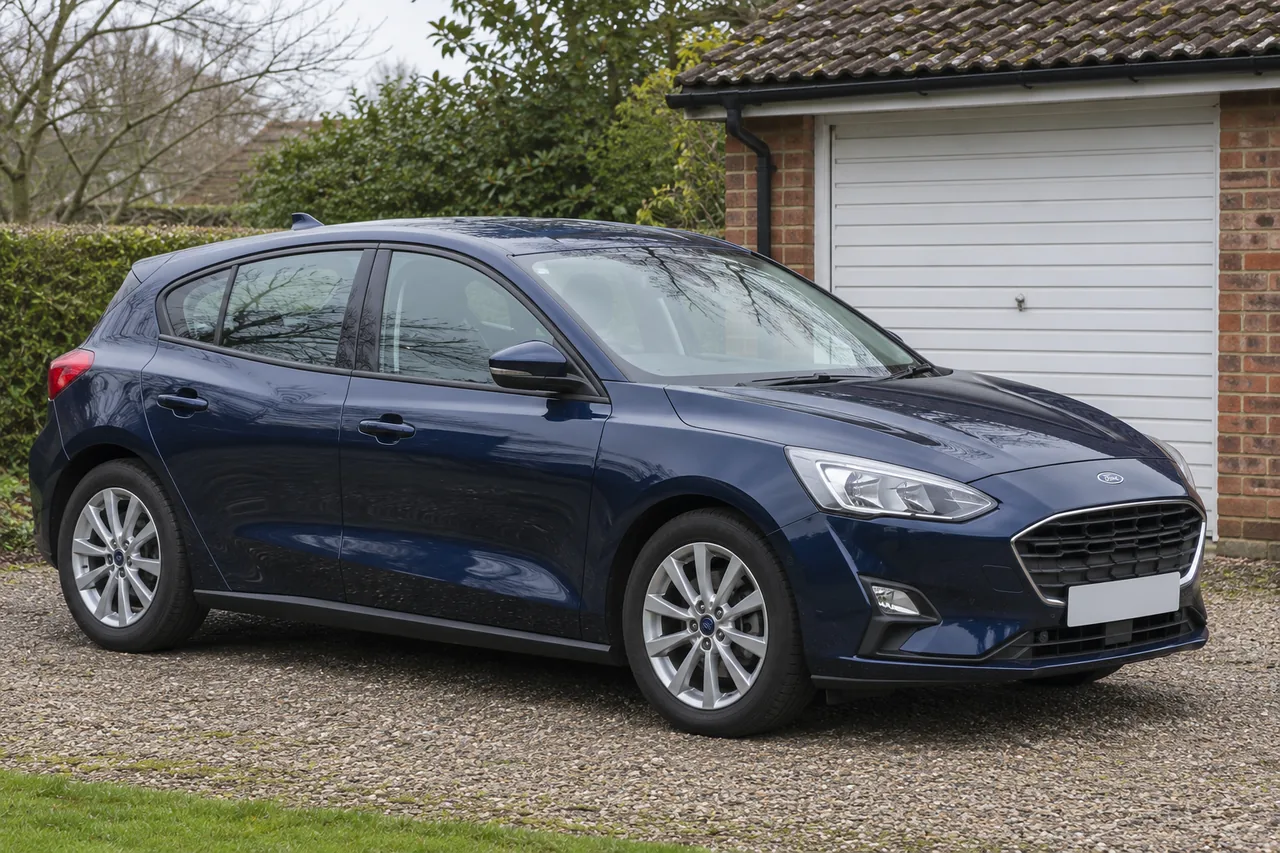
Buying a used Ford Focus? Get the engine output, gearbox and vehicle identification number (VIN) before putting a price on an alleged wet-belt or automatic gearbox problem. Even within the 1.0-litre EcoBoost range, UK buyers could get quite different transmissions. Ford also ties the timing-drive maintenance schedule to the particular engine and vehicle. [1] [2] [3]
Two Focus adverts that sound almost identical
Suppose an advert describes a five-door Focus simply as a “1.0 EcoBoost automatic”. A UK price list dated October 2019 includes the 125 PS 1.0 petrol with an eight-speed automatic. A later UK ST-Line specification pairs a 155 PS 1.0 mild hybrid with a seven-speed PowerShift. A seller may shorten either description to “1.0 auto”. Ask for the full derivative before using an owner’s experience with another gearbox to judge this car. [2] [3]
| Documented version | What to clarify in the advert |
|---|---|
| October 2019, 1.0 EcoBoost 125 PS | The list offered both a six-speed manual and an eight-speed automatic. The power figure alone leaves the gearbox open. [2] |
| Later ST-Line, 1.0 EcoBoost mHEV | The cited specification lists a 125 PS six-speed manual and a 155 PS seven-speed PowerShift. Check both the output and the hybrid designation. [3] |
What does “the belt has been done” mean?
Ask the seller to show you the maintenance schedule for their VIN. Ford directs owners to the service handbook or the maintenance schedule in their Ford account, where longer-term work appears under “Extended Period Maintenance”. A Ford dealer can identify the timing system fitted using the VIN. This is worth doing even if a workshop advert or forum post quotes a precise replacement interval. [1]
Now read the repair invoice alongside that schedule. A drive belt mentioned on a bill could refer to a different part from the one you asked about. Find the component name, date and recorded mileage. If the description is just “belt kit”, ask the seller to obtain an itemised copy from the workshop. If the schedule names a separate oil-pump drive, check whether the quoted or completed work includes it. A bill for one job leaves the other question open. [1]

How to follow up a lurch or hesitation
Ask the seller to describe the event in their own words. Did it happen when first moving off, when selecting reverse or during a particular gear change? Was there a dashboard message? The answer is useful information for a workshop, even when the symptom is absent on a short viewing. A lurch by itself cannot identify a failed clutch, a control fault or a particular repair bill.
If the seller says the gearbox was fixed, look for a job sheet that names the complaint, the gearbox and the work carried out. An invoice for an engine service on the same date does little to explain a shifting problem. For terminology when reading the paperwork, see our guide to automatic gearbox types.
What if the seller has a full service book but no detailed bills?
Ask them to request the record for the specific job that affects your decision. A stamp and mileage can put a visit in the right place in the car’s history. The workshop description can tell you what it actually did. If the car still shows a transmission warning or the seller cannot explain a recurring problem, get an independent assessment before agreeing a price.
Check the registration for outstanding safety recalls as a separate step. A model-and-year search can point to a campaign, while the registration search addresses the example you have found. Neither establishes the condition of the timing drive or gearbox. [4]