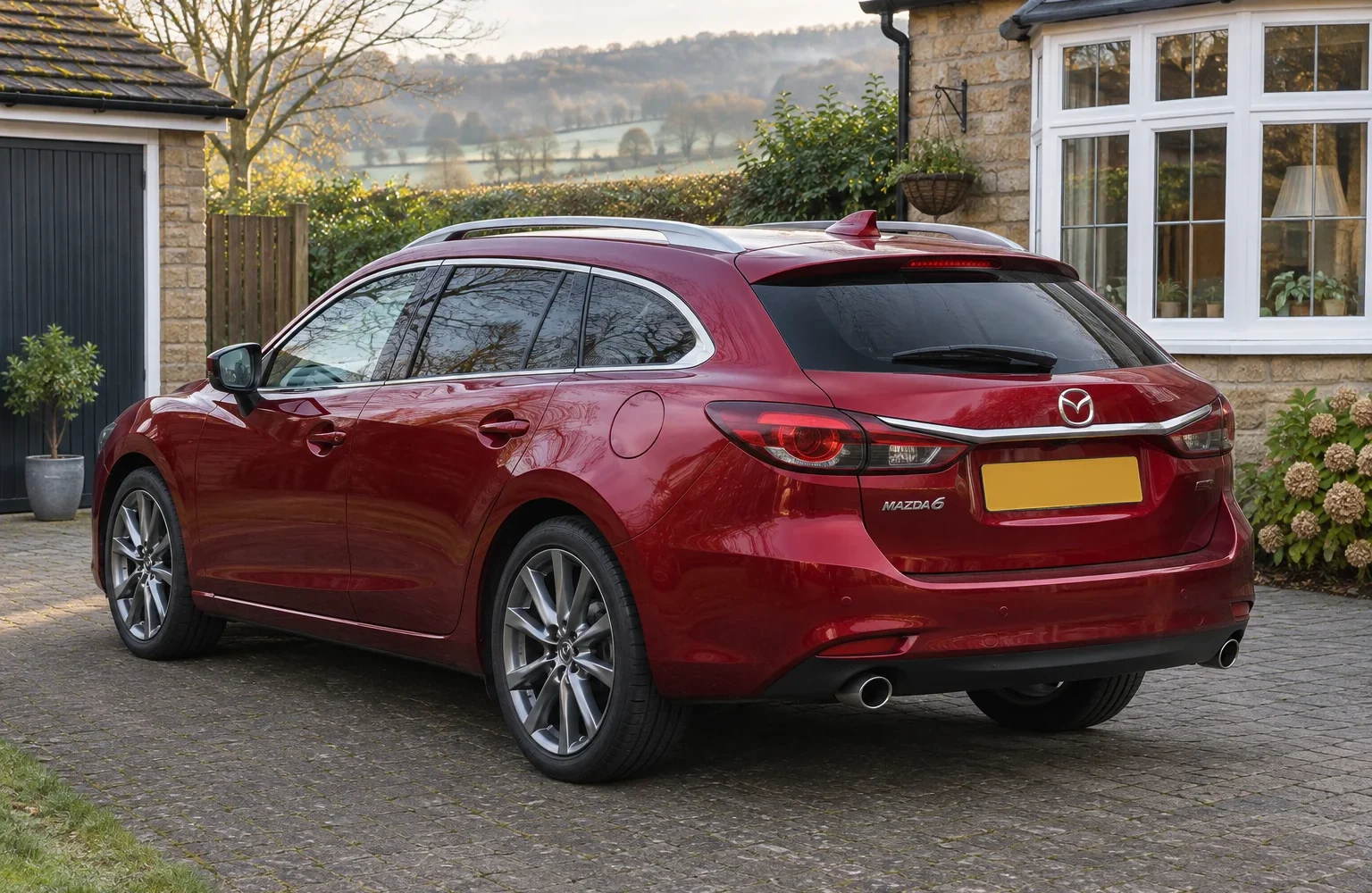
Check a used Mazda6 Tourer with the rear seats in the arrangement you will actually use. A large folded-seat capacity is little help if your usual journey requires those seats for passengers. Bring the awkward item that determines your choice, or its measurements, and ask to try the load bay with permission.
Read the capacity figures in context
Mazda’s UK archive for the 2018-2023 range lists 522 litres for the Tourer with rear seats in place and 1,644 litres with them folded. It describes 60:40 split rear seats, with releases at the boot sides and on the seatbacks. The saloon’s quoted 480-litre luggage space is a different body configuration. [1]
Those are useful reference points, not a promise about your pushchair, dog crate or boxed equipment. Confirm the precise car and inspect its opening, wheel-arch intrusions and floor shape. Avoid copying a saloon figure into a Tourer comparison or comparing seats-down space with a rival’s seats-up figure.
Recreate one ordinary journey
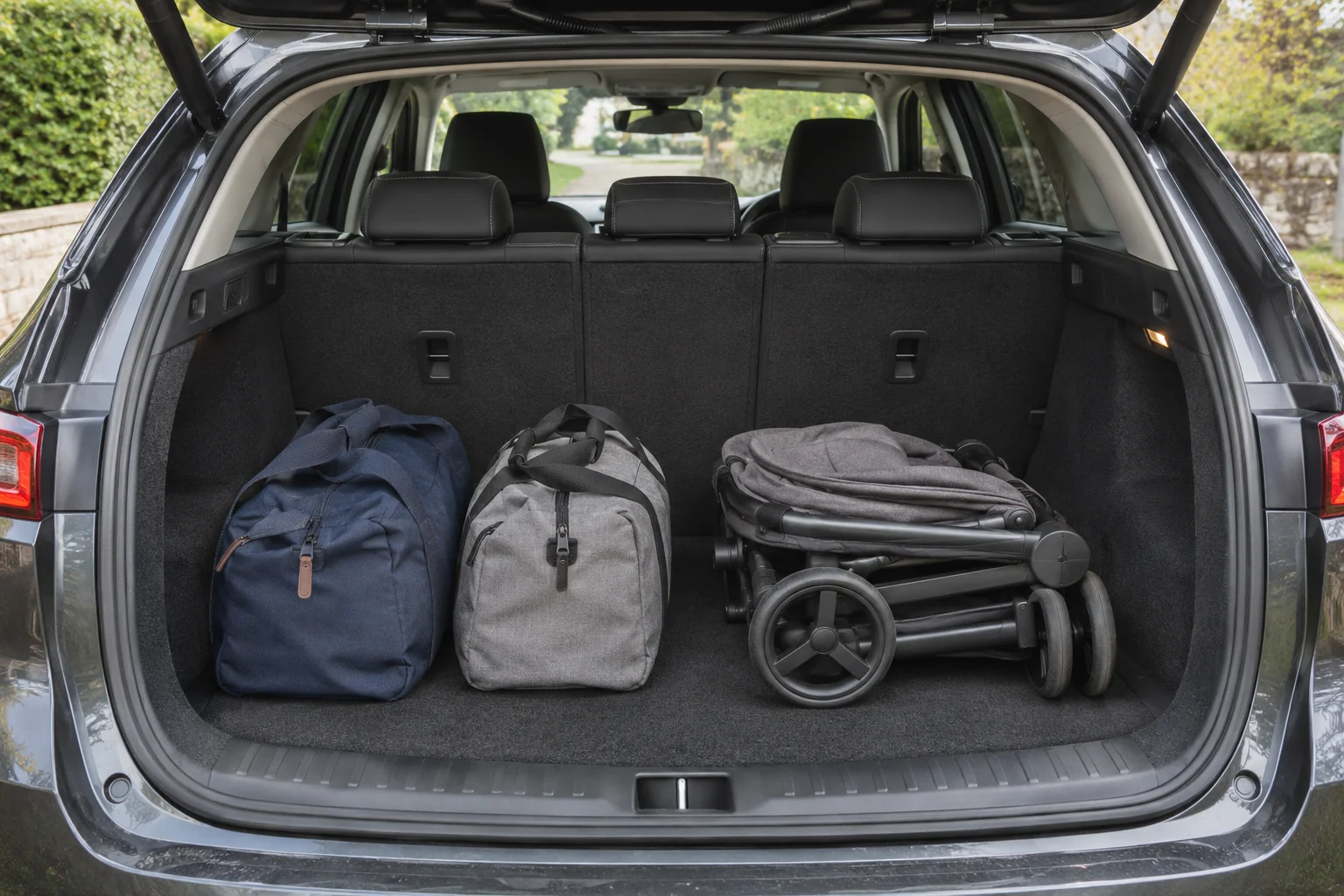
Choose a realistic example before the viewing: perhaps two adults, rear passengers, a folded pushchair and two bags. List which rear positions must remain available. Start with that configuration, then see whether the necessary luggage fits without requiring a different passenger arrangement.
For a rigid object, note its length, width and height, including handles or protruding feet. Check the opening as well as the space beyond it. A box may fit within a floor outline yet be awkward to pass through the tailgate. Do not force an item against trim or close the tailgate against it.
| Check | Record at the car |
|---|---|
| Normal passenger arrangement | Which rear positions remain upright for the intended trip |
| Largest regular item | Whether it passes through the opening and where it sits |
| Split-seat operation | Which section folds and whether the seller can demonstrate the correct procedure |
| Removable fittings | Load cover, floor sections and any accessories promised in the advert |
| Unresolved issue | Exact location and description, plus the seller’s proposed remedy |
See the seat releases work
With the vehicle parked and the relevant area clear, ask the seller to demonstrate folding and restoring each rear section according to the manual. Include the boot-side controls if fitted. You want to know how the actual car works and whether anything needs attention, rather than discovering an unexplained release problem at handover.
Look at the accessible trim and floor for damage that could affect your use. A damaged panel or missing cover should be identified by its proper part description before you seek a replacement price. Do not assume a similar-looking part from another Mazda6 body style will fit.
What if the luggage only fits with a seat folded?
Compare that result with your passenger list. If the folded section removes a seat you normally need, the car has not met that particular requirement. Consider a different packing arrangement or vehicle before treating a larger brochure total as the solution.
Confirm what will be handed over
Photograph included fittings with permission and have any promised replacement recorded clearly. Recheck them at collection. Follow the vehicle manual for load limits and securing luggage: a successful stationary fit check does not establish safe loading.
Use the official MOT history and recall services alongside servicing paperwork. [2] [3] Our viewing checklist covers the wider purchase. This load-bay check answers a practical ownership question; it does not rate the Mazda6’s reliability or replace an independent inspection.