
On a used Nissan X-Trail, e-POWER, e-4ORCE and seven seats describe different things. Establish the propulsion system, driven wheels and seating layout separately before deciding whether an advert meets your needs.
This guide covers the fourth-generation X-Trail introduced to the UK in 2022. Older X-Trails and later specification changes need their own documentation; a model name alone is not enough to transfer these details.
What the powertrain names tell you
Nissan’s UK launch information describes e-POWER as electric drive at the wheels, with a petrol engine generating electricity. It does not require external charging. The e-4ORCE system adds a second electric motor for all-wheel drive. Nissan also announced a mild-hybrid 1.5-litre petrol version with an Xtronic transmission. These are different arrangements, even though listings may describe them all loosely as hybrids. [1]
| Description | What to establish | What it does not establish |
|---|---|---|
| e-POWER | Electric motor drive supplied by an onboard petrol-powered generating system | That the car has all-wheel drive or seven seats |
| e-4ORCE | The dual-motor all-wheel-drive version | The condition of the car or suitability of its passenger space |
| Five or seven seats | The actual seating layout supplied with this vehicle | How much luggage fits with those seats occupied |
Ask for the exact version in writing and compare it with the vehicle documentation. Where the advert contradicts the seller’s explanation, request clarification before travelling. A badge in a stock photograph is weaker evidence than clear pictures and documentation for the car being sold.
Verify the seats before measuring their usefulness
The launch range included five-seat and seven-seat configurations. Do not infer the fitted layout from the hybrid badge or from another example of the same model. [1] Ask for a photograph with every fitted seat upright, then inspect that arrangement at the viewing.
Consider who will use the rear seats and how frequently. Have intended passengers try the space with the car parked, where practical, rather than relying on a seller’s general description of it as a family car. Check access and the seating position together: getting into a seat and being comfortable there are separate questions.
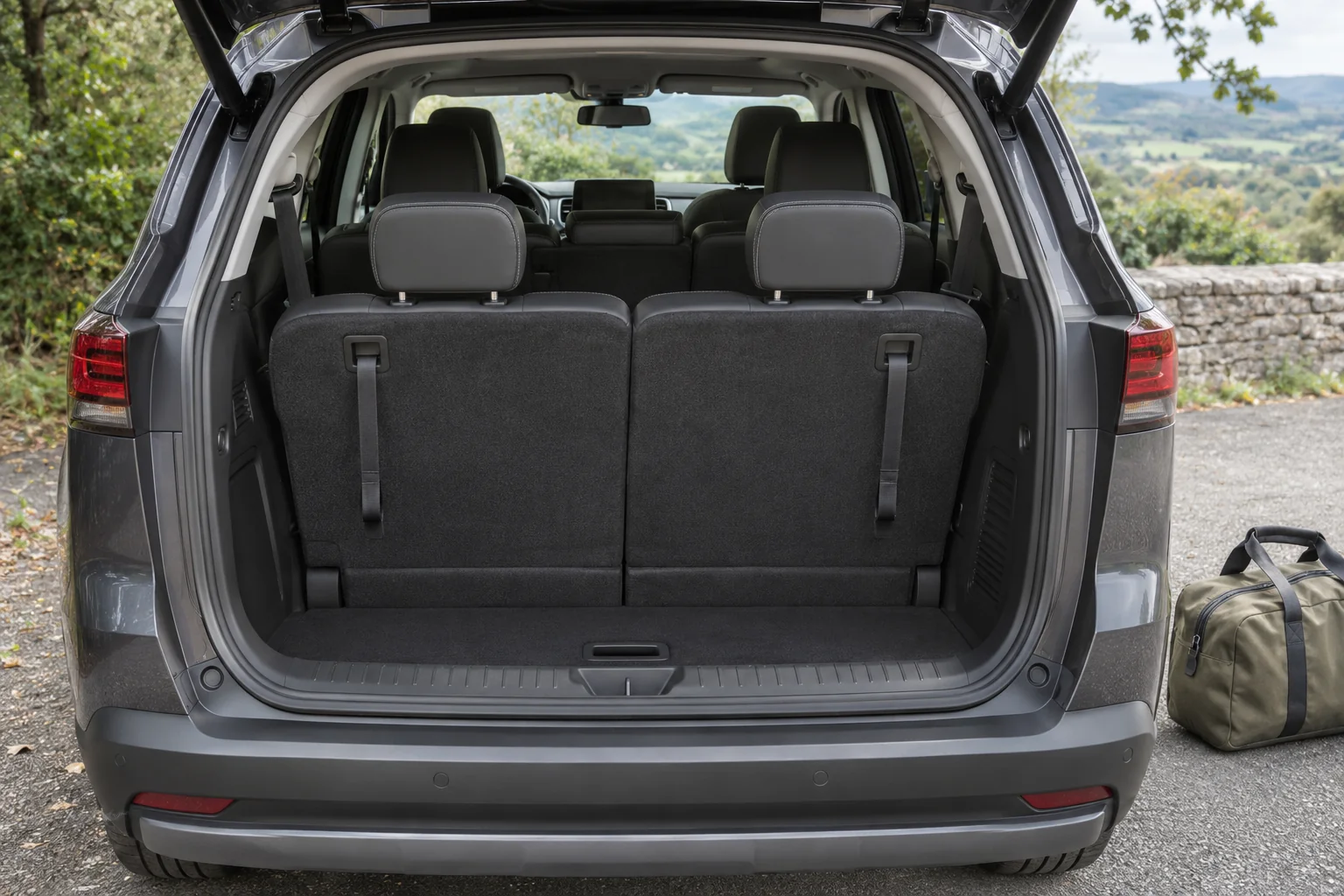
Count people and bags at the same time
If you need seven seats, look at the boot with the third row raised. A photograph taken with those seats folded answers a different question. Bring the bags or bulky item that matter for your regular journeys, and ask permission to try them in the space that remains.
Record any compromise plainly. Perhaps the layout suits occasional extra passengers but does not accommodate your usual holiday luggage at the same time. That observation helps you choose between actual needs; it is not a reason to assume every larger-looking vehicle will solve the problem.
Ask the seller to demonstrate the seating adjustments using the handbook. This article does not establish child-seat compatibility or provide restraint-fitting instructions; those require the relevant vehicle and restraint guidance.
Check the evidence behind the sale
Match the service record to the identified powertrain and ask for invoices supporting any claimed remedial work. A quiet demonstration or a clean instrument display does not amount to a battery-condition report.
Use official MOT history for recorded mileage and results, and the recall service for unrepaired safety recalls. [2] [3] Add the findings to your viewing checklist, keeping unresolved questions visible.
Should I choose e-4ORCE simply because it sounds more capable?
Start with a clear reason for wanting that version, then compare the actual cars’ condition, equipment and suitability. The system name identifies a drivetrain arrangement; it does not prove that a particular used car is the better purchase or provide a guarantee of grip in your intended conditions.