
A used full-size Range Rover P400e is worth assessing around your charging arrangements, the equipment included with the car and the luggage space you actually need. Establish those points before allowing the trim level or a low advertised fuel-consumption figure to settle the decision.
This guide concerns the earlier full-size Range Rover plug-in hybrid. In Land Rover’s July 2020 UK announcement for the 2021 model year, the P400e pairs a 2.0-litre four-cylinder petrol engine with electric propulsion and a 13.1kWh battery. The same announcement lists the P400 separately as a 3.0-litre six-cylinder petrol model. [1] Check the complete model description and vehicle records rather than reading only the number on an advert.
Put the charging equipment on the viewing list
Ask the seller which charging cables are included, where they are stored and whether there are invoices for any replacements. Request photographs before travelling if the advert is vague. “Charging cable supplied” should become a specific item on the sale paperwork, with its identity and suitability confirmed.
The UK announcement describes a standard Mode 3 cable and a full charge in under three hours, compared with 7.5 hours using Mode 2. [1] Those are manufacturer figures for the published specification and charging arrangements. They do not promise the same time from any socket or establish how an older individual car performs.
Ask for a normal charging demonstration with suitable equipment, following the car and charger’s instructions. Let the seller explain the indications and any charging schedule already set. If the demonstration does not work, record what happened and seek a proper assessment; do not guess whether the cable, supply, settings or vehicle caused it.
| Evidence | Useful question | What it does not establish |
|---|---|---|
| Included cable and its identification | Is it suitable for this vehicle and the intended charging point? | The condition of the vehicle’s battery |
| A normal charging demonstration | Can the seller demonstrate the process without an unexplained fault? | Remaining battery capacity or future reliability |
| Workshop report | Which vehicle, date, test and findings does it cover? | Anything outside the report’s stated scope |
| Your home charging assessment | Is there a suitable, practical arrangement where you park? | That an advertised cable makes every domestic supply suitable |
Have a qualified installer assess any proposed home installation. For planning your routine, use our guide to charging a plug-in hybrid in everyday use. If regular charging would be inconvenient, include that in the purchase decision before comparing running costs.
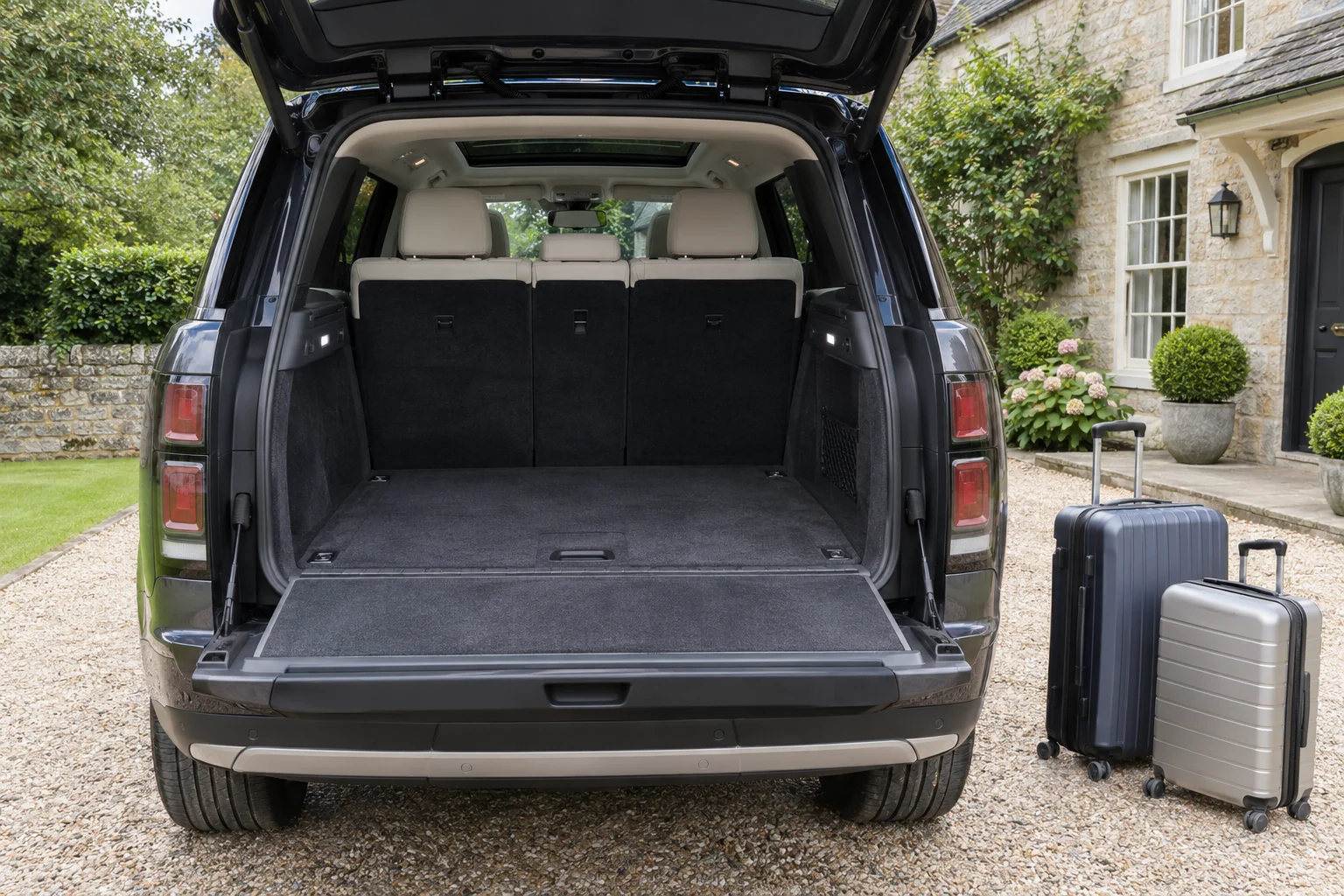
Check the loadspace with your normal seating position
Bring the luggage that normally causes difficulty. Set the seats to the positions the passengers need, then try loading the cases, pushchair or other bulky item. Inspect the usable opening and how you reach the back of the boot. A photograph with the seats folded answers a different question from carrying passengers and their bags together.
Ask the seller to demonstrate the tailgate and any fitted seat-folding controls according to the handbook. Check that the cable bag has a suitable storage place once the luggage is in. Do not rely on a capacity figure copied from another Range Rover derivative: record whether the actual arrangement works for you.
A useful example is a family that can fit its two holiday cases but must remove both to reach an everyday bag. The luggage technically fits, yet the packing routine may still be unsuitable. Try loading and unloading, not just closing the tailgate once.
Read the service history as a timeline
Land Rover’s online service history covers vehicles built from 1 July 2013 that have visited an Approved Service Centre, with updates after those visits. [2] Read it alongside invoices, including any independent work. An empty period in the online record needs explanation rather than an automatic conclusion that no servicing occurred.
Ask a workshop familiar with this powertrain to compare the records with the applicable schedule and identify work due. Keep the engine-service evidence and any hybrid-system reports separately identifiable. One does not automatically answer the questions covered by the other.
Cross-check recorded mileage and test history using the MOT service, then check outstanding safety recalls by registration. [3] [4] Obtain vehicle-specific advice where necessary before committing.
Does a successful charge mean the battery is healthy?
It demonstrates that charging worked in the circumstances observed. It is not a measurement of remaining battery capacity or a guarantee of future performance. Ask for an appropriately scoped assessment if battery condition is material to your decision, and read its limitations.
The viewing should leave you with an identified vehicle, a credible charging plan, a luggage arrangement you have tried and a maintenance file whose gaps you understand. Price and trim comparisons become more useful once those practical questions are answered.