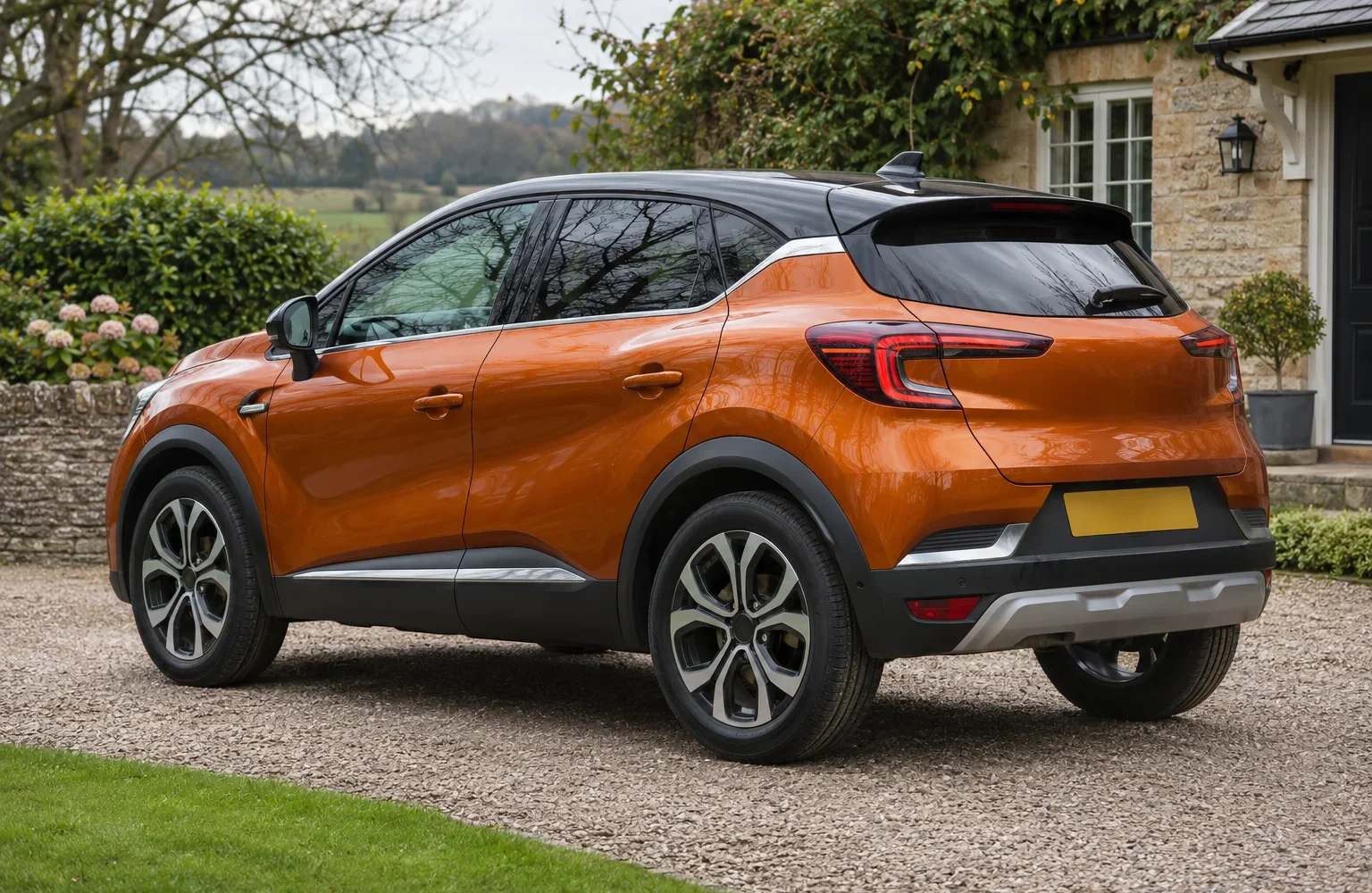
Compare a used Renault Captur’s boot with the rear bench set for the people who will actually travel in it. A generous-looking photograph can be unhelpful if the seats have been moved forwards, the floor has been lowered or luggage is shown with the backrests folded.
For the second-generation Captur introduced in 2019, the useful buying question is therefore not simply “How many litres?” It is whether your passengers and your luggage fit together in the arrangement you will use.
Understand what the sliding bench changes
Renault’s November 2019 European launch documentation describes a rear bench with 16 cm of travel and a boot floor offering two heights. The source is a French-market announcement: it is evidence of the model’s modular layout, not a UK trim list. Confirm the equipment on the particular car, especially when comparing different years and powertrains. [1]
Moving a bench changes how space is shared. If one seller presents it in a luggage-friendly position and another leaves more room for passengers, their photographs do not offer a fair comparison. Ask for a picture showing the seat position as well as the boot.
| Check | Keep consistent | Record separately |
|---|---|---|
| Passenger space | Usual front-seat positions and intended rear passengers | Where the rear bench is set |
| Boot floor | The same floor configuration | Whether all removable pieces are included |
| Luggage | Your own folded pushchair, bags or other bulky item | Any need to move seats or remove a cover |
| Vehicle identity | Generation, body style and exact powertrain | Any differences that need checking in the handbook |
Try the combination you need on an ordinary day
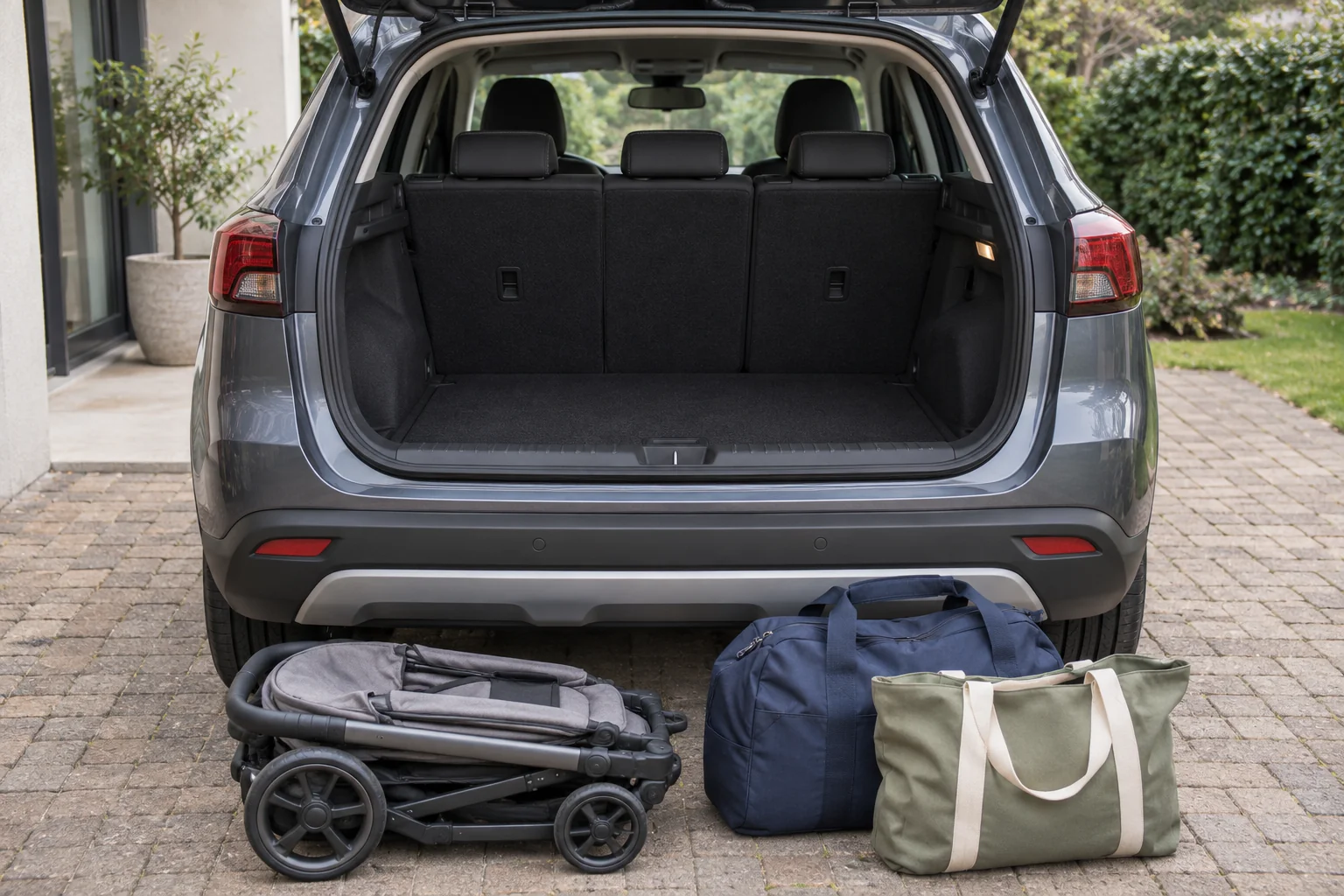
Bring the awkward item rather than estimating it from memory. A folded pushchair, musical instrument case or regular work bag gives the viewing a specific purpose. Ask permission before loading it, and check the opening as well as the space beyond it.
Set the passenger positions first. Then see what luggage fits without changing that arrangement. If you usually carry both adults and a pushchair, a demonstration that accommodates only one part of that combination has not answered your question.
Next, ask the seller to demonstrate the bench and floor adjustments according to the car’s handbook while parked. Look at the actual pieces supplied with the car. If a movable floor or luggage cover is missing, ask whether the agreed sale includes a replacement; do not assume a photographed accessory is included.
A useful note might read: “Usual passenger positions retained; folded pushchair fits; one bag needs another position.” That is more informative for your decision than copying a maximum capacity into a spreadsheet without recording how it was achieved.
Keep the space verdict separate from the condition verdict
A successful luggage trial establishes suitability for your belongings. It does not establish maintenance quality or explain an unusual noise. Check the service documents for the exact car and ask for any outstanding questions to be answered before committing.
Review recorded MOT results and mileage through the official service, then check for unrepaired safety recalls. [2] [3] The broader questions to ask when buying used can sit alongside your space notes.
Can I compare two advertised boot-capacity figures directly?
Only after establishing that they describe comparable cars and seat arrangements, using the same measurement convention. If the adverts do not explain this, ask for the underlying specification. For a personal buying decision, repeating the same passenger-and-luggage trial on each car is often more useful than choosing the larger unexplained number.