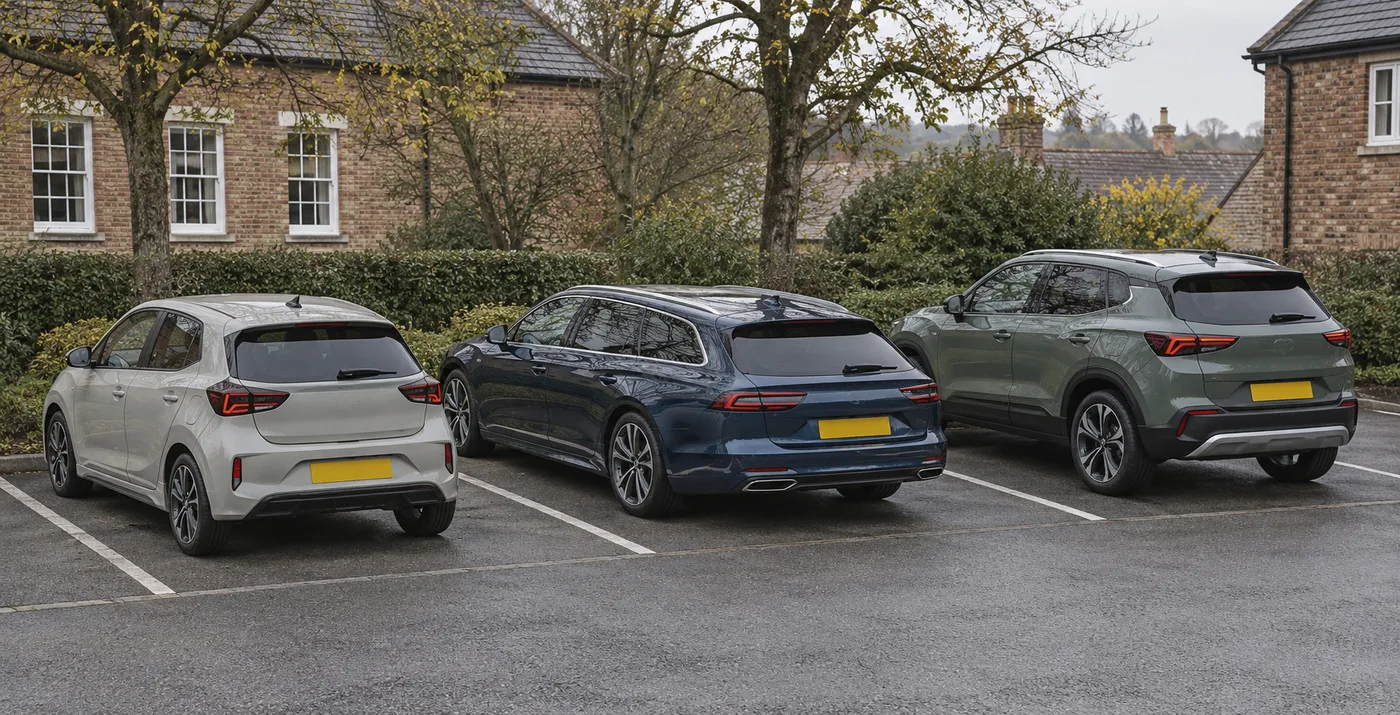
For a week spent squeezing into town parking spaces, start with the Honda Jazz e:HEV Elegance. If all the rear seats stay occupied and you still need room for holiday luggage, try the Toyota Corolla Touring Sports 1.8 Hybrid estate. The Hyundai Kona Hybrid Advance sits between them in length and boot capacity and is worth a look if you prefer a taller body for getting in and out. All three are petrol full hybrids you can run without a charging point.
Think about the journey you make most often: who travels with you, the tightest place you park and your longest regular stretch of motorway. Those details narrow the choice more quickly than a single combined mpg figure. For a guide to the powertrain itself, see how a full hybrid works.
Three hybrids to put on the shortlist
| Car | Length and boot | Deciding question |
|---|---|---|
| Honda Jazz Elegance, 1.5 e:HEV automatic | 4,089 mm long. Boot capacity is 304 litres. [1] | Will your weekly shopping still fit with your biggest passenger in the back? |
| Toyota Corolla Touring Sports, 1.8 petrol hybrid automatic | 4,650 mm long. The 1.8 estate holds 596 litres up to the luggage cover. [2] [4] | Can you use the estate’s extra load space where you normally park? |
| Hyundai Kona Advance, 1.6 hybrid 138 PS, six-speed dual-clutch automatic | 4,350 mm long. Boot capacity is 466 litres. [3] | Does the seat height work for the people who climb in several times a day? |
The figures give a starting point for a viewing. A wheelarch, a sloping tailgate or a raised floor can stop a rigid suitcase fitting even when the quoted capacity looks ample. Check the luggage space with the seats in the position your passengers actually use.
Honda Jazz for town parking and frequent short stops
The Jazz takes up 561 mm less length than the Corolla estate. That difference matters on a street where your only space is between two parked cars. There is also a reason to look beyond combined fuel economy: for the Elegance, Honda lists 78.5 mpg in the low-speed WLTP phase and 48.7 mpg in the extra-high phase, against 62.8 mpg combined. Someone doing long motorway runs should not budget on the town figure. These are test-cycle results, not a prediction for your commute. [1] [2]
At the viewing, start with the rear seats occupied. If the pushchair only fits by folding a seat, decide whether that seat will actually be available on the school run. On a day when you have the rear space to yourself, ask for a demonstration of the Jazz’s Magic Seats and bring the bulky item you want to carry. [1]
Toyota Corolla Touring Sports for passengers and luggage together
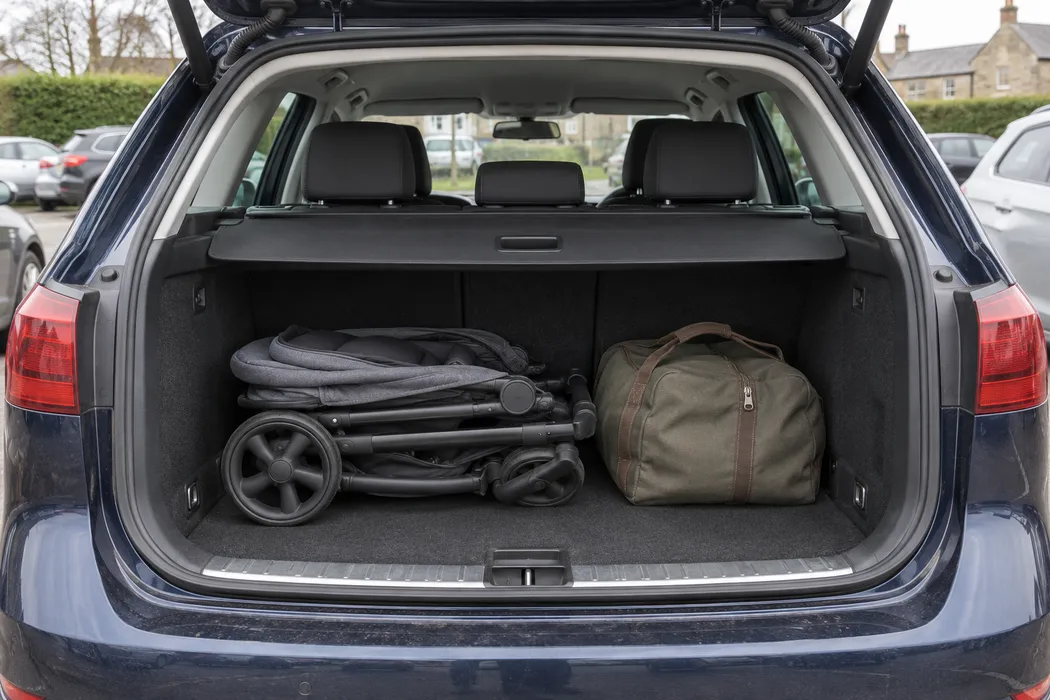
A couple heading away with two friends can use the estate’s boot without asking a rear passenger to give up a seat. Take the hardest item to pack to the viewing. Slide it in past the wheelarches, pull the cover across, then see what space is left for soft bags. Check that you can open the tailgate at home with the garage door shut.
Look for the words Touring Sports and the 1.8 engine in the advert. The UK brochure gives the 1.8 hybrid hatchback a 361-litre boot and the 1.8 estate 596 litres under the cover. That is a 235-litre difference within the same Corolla family. Confirm the exact version and model year with the seller before using its figures. [2] [4]
Hyundai Kona Hybrid for mixed journeys and frequent passenger stops
The Kona Advance gives you 162 litres more quoted boot space than the Jazz and takes up 300 mm less length than the Corolla estate. For a grandparent who regularly rides in the front or someone who helps a child into the rear, try the doors in a marked parking bay. Notice how far the passenger has to step across the sill and whether the door can open far enough beside a neighbouring car. [1] [2] [3]
On a test drive, include a familiar stretch of faster road if your week includes motorway miles. Hyundai lists 60.1 mpg combined for this Advance hybrid, with individual WLTP phases ranging from 76.3 mpg in the low phase to 49.6 mpg in the extra-high phase. They are standardised test results. Your speeds, traffic and load can give you a different figure, so compare cars over a similar route and use the same unit on both trip computers. [3]
How much would an mpg difference matter over your year?
Suppose your annual mileage is 8,000 miles. At an illustrative 50 UK mpg you would use about 727 litres of petrol. At 55 UK mpg you would use about 661 litres, a difference of 66 litres over the year. Multiply 66 by the price per litre at your own filling station to see what that difference would be worth. For a low-mileage household the space needed every week may carry more weight. Our guide to fuel-efficient cars and running costs puts fuel alongside the other costs of ownership.
How do I repeat the calculation with my own mileage?
Divide annual miles by the car’s mpg to obtain UK gallons, then multiply by 4.54609 to convert to litres. Use the same annual mileage and petrol price for both cars. If you have two sets of figures, run the calculation once using both cars’ combined WLTP numbers and again using the figures you expect on your own routes.
Sources
- Honda UK, Jazz full hybrid specifications. Elegance fuel economy, dimensions, seating equipment and rear-seat-up capacity.
- Toyota UK, Corolla brochure. Pages 42 and 52 give the dimensions and luggage capacities for the hatchback and Touring Sports.
- Hyundai Motor UK, Kona technical specification. Page 3, Advance trim and 1.6 Hybrid 138 PS column for dimensions, boot and WLTP figures.
- Toyota UK, Corolla Touring Sports model range. UK hybrid estate and powertrain options.