
For two people making short trips from a dependable charging spot, the three-door Fiat 500e Icon 24 kWh is a useful starting point. If rear passengers travel regularly, try a Hyundai INSTER and check the seat layout of the trim you are buying. For longer stretches between charges, compare the two batteries in the Renault 5 E-Tech electric. The small-car decision comes down to who needs to get in, how far you go between plugs and how long the car can stay there. [1] [2] [3] [4]
Which car suits your charging pattern?
| Start here | What the UK specification tells you | Try this before buying |
|---|---|---|
| Fiat 500e Icon 24 kWh hatchback | Three doors, 95 hp and a combined WLTP range of 118 miles in the UK Q4 2026 guide. [4] | Try getting into the back with another car parked beside you. |
| Hyundai INSTER 01 or 02, UK launch versions | Four seats in both. The 02’s two rear seats slide and recline. The 01’s split rear seats fold but do not slide. [1] | Set the rear seats for your passengers before you load the boot. |
| Renault 5 E-Tech electric | The UK range guide lists up to 194 WLTP miles with the 40 kWh Urban Range battery and up to 259 with the 52 kWh Comfort Range. [2] | Compare both batteries using the charger you would actually use. |
When the smaller Fiat battery makes sense
Suppose you drive 18 miles on each of four days before returning to a charger. That is 72 miles between charges. Add a 60-mile visit before the next plug and the total becomes 132 miles, already beyond the 24 kWh car’s combined test range. In the second case, find a reliable stop or compare the 42 kWh version. Fiat quotes 186–199 miles across the 42 kWh versions in the same UK guide. Check the trim and body style on the order or advert. [4]
The 72-mile calculation is a screening exercise. A cold, fast journey with passengers can use more energy than the test cycle. Work from the charge you expect to have when you set off and keep enough in hand to reach an alternative stop. For a second-hand example, ask for the battery and charging records as well as checking which pack it has. [2] [4]
Why the INSTER trim matters when passengers come along
In the October 2024 UK specification, both rear seats on the INSTER 02 can slide to trade legroom for luggage space. On the 01 there is no equivalent adjustment. If the car will carry an adult behind a tall driver, have both sit in the car at the same time. Now see whether the boot takes the weekly shop without moving either seat. A sliding seat helps only if the person in it can spare the legroom. Both versions in that specification seat four, so a regular fifth passenger rules them out. [1]
The same specification estimates 58 minutes from 10% to 80% on a public 50 kW unit, compared with about 30 minutes at a suitable 150 kW unit. Those estimates cover both launch battery sizes. If your normal stop is the 50 kW charger at a local supermarket, use the longer time when deciding whether that stop fits your week. Allow for waiting and for charging conditions on the day. [1]
Can you refill the larger Renault battery while you are parked?
Renault lists 3 hours 55 minutes on a 7.4 kW AC point for a 15–80% charge in the 40 kWh Renault 5. The corresponding 52 kWh figure is 5 hours 11 minutes. Both add the same percentage of the battery, but the larger pack takes in more energy. If the car is parked overnight either may suit. If you have a four-hour evening slot, the smaller pack’s quoted time is close to the entire window. Look at how much charge you need for tomorrow, rather than assuming you need the whole quoted top-up. [3]
What should I write down on a test drive?
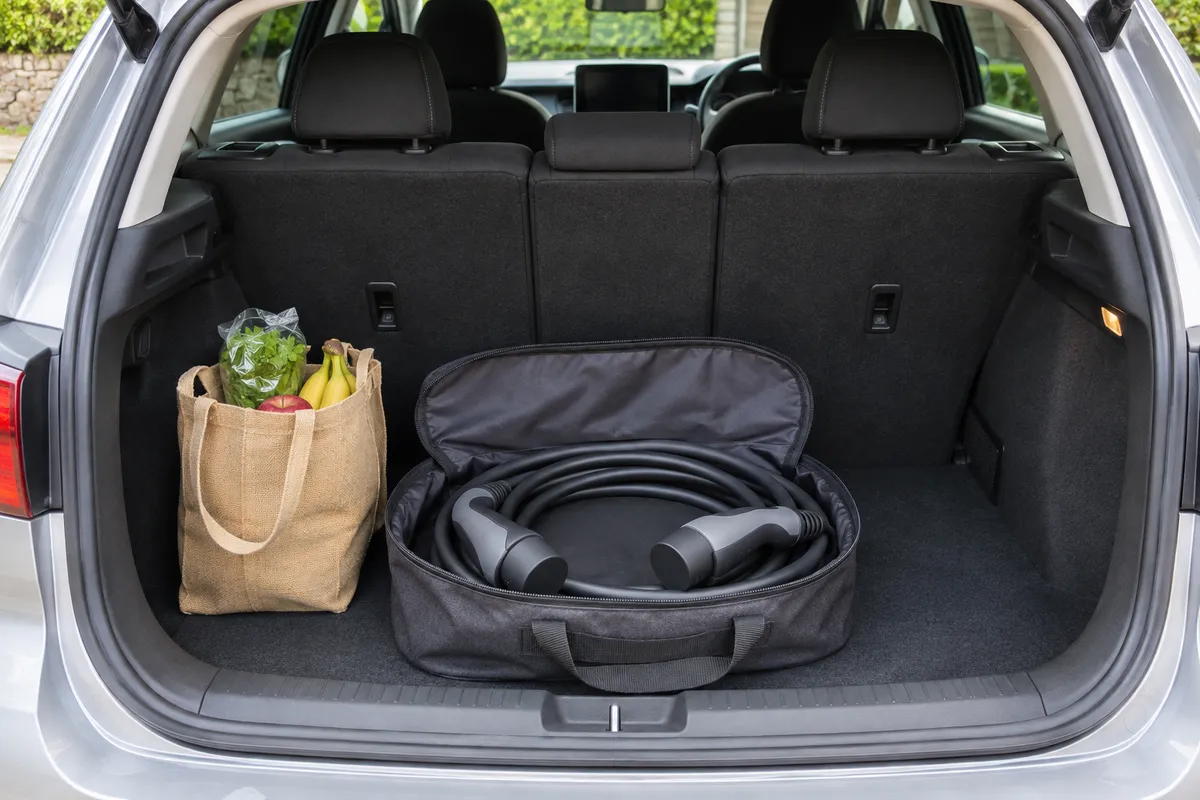
Take the trip distance, starting and ending charge, outside temperature, amount of motorway driving and how many people were aboard. Check the rear-door access where you park and whether your usual cable can be retrieved with shopping already loaded. These observations give you a fairer basis for comparing two cars. For the longer journey in your diary, use our guide to estimating electric car range.