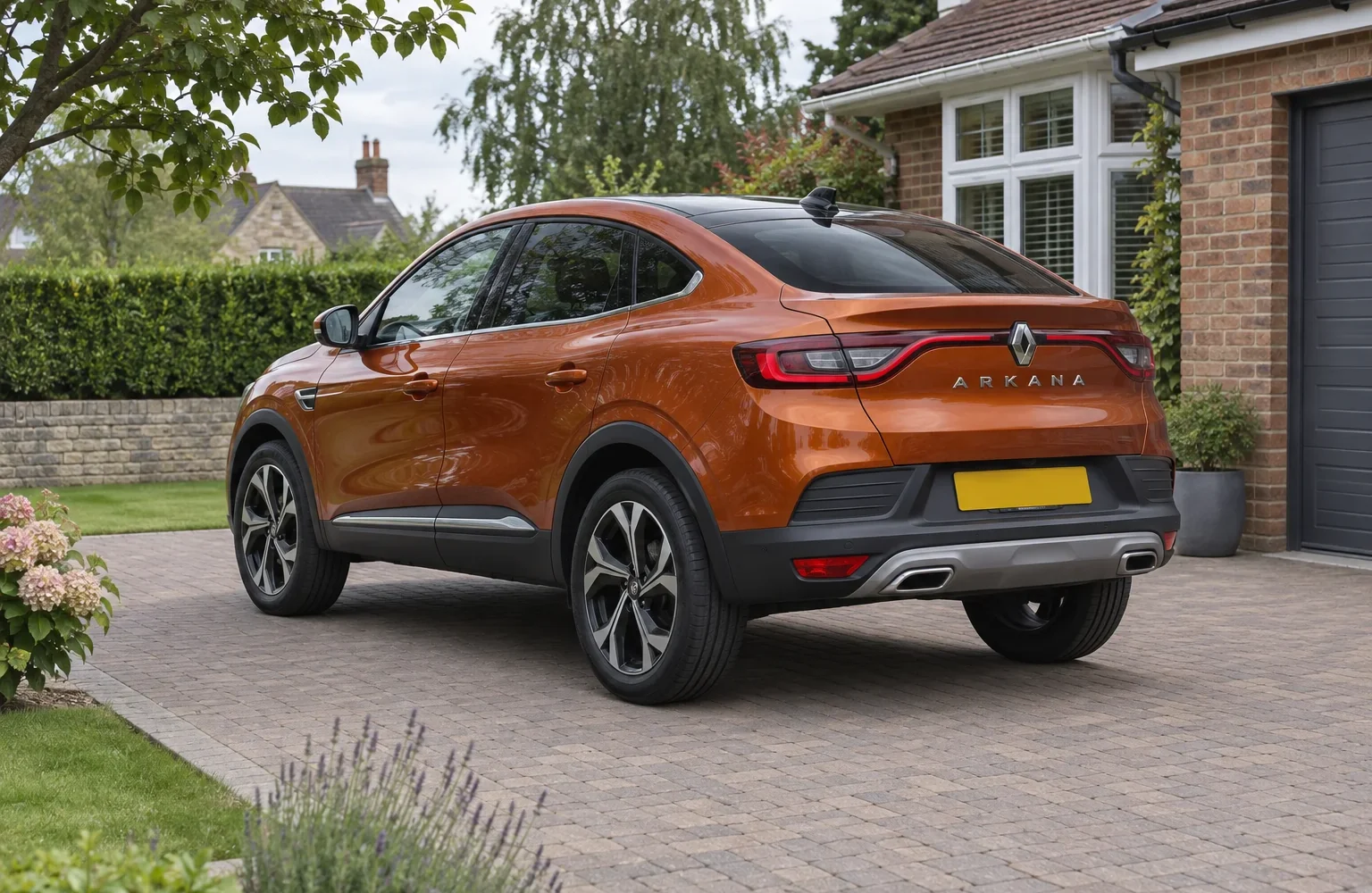
Compare the same Arkana powertrain before comparing boot litres. A single number copied into a used-car listing can hide an important difference between the TCe versions and the E-Tech Hybrid. Your viewing should establish both which car is being offered and whether your luggage fits with the seats you need in use.
This is a guide to the European Arkana introduced in 2021, using its period range information. It is not a measurement of a car we have tested, and the figures should not be applied to a different-market vehicle merely because it carries an Arkana badge.
Start with the correct pair of figures
The European range release quotes 513 litres of luggage capacity, or 480 litres for the E-Tech Hybrid. It also describes a removable false floor and a rear bench split into two-thirds and one-third sections. Treat those as historical configuration references, then verify the fittings and specification of the actual UK car. [1]
| European range configuration | Quoted capacity | Check on the car |
|---|---|---|
| TCe version | 513 litres | Does the listing identify the exact engine and supplied boot floor? |
| E-Tech Hybrid | 480 litres | Has the advert used the hybrid figure rather than a general range figure? |
| Seats folded or floor rearranged | Do not compare directly with the figures above | Which passengers and removable fittings are included in that arrangement? |
The difference between 513 and 480 is 33 litres. That calculation does not tell you whether a particular pushchair, crate or suitcase fits: a volume total does not describe the narrowest part of the opening or the shape of your object. Use the numbers to check the advert, then use the actual load bay to answer the practical question.
View the boot in your everyday configuration
Arrange the front seats for their usual occupants and leave every rear seat you normally need available for passengers. Ask the seller to show the boot floor and any alternative position or removable section, following the handbook for that car. Keep track of what was moved; otherwise a spacious demonstration can become a comparison with a different passenger arrangement.
Bring the awkward item, not just a tape measure. A folded pushchair may have a wheel or handle projecting beyond its main frame. A rigid suitcase cannot always use a corner that a soft bag can. Check that the object passes through the opening, sits as intended and allows the tailgate to close normally without pressing against it.
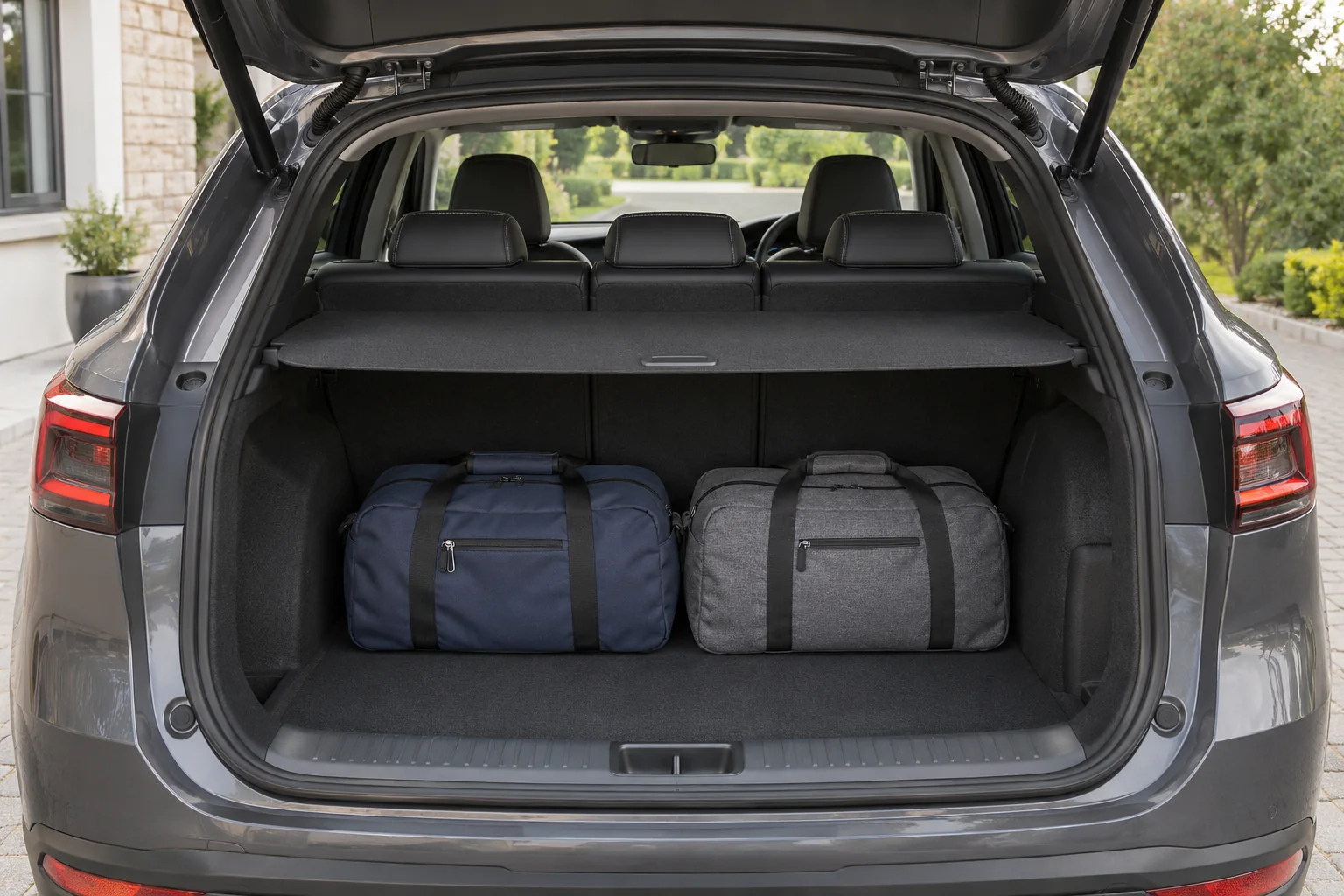
If you cannot bring the item, note its full dimensions including handles and wheels, and ask for measurements at the narrowest useful points. Treat that as a shortlist check rather than a guarantee. A second viewing with the item is more informative than agreeing to buy on the strength of a headline capacity alone.
Agree what comes with the car
Ask which floor panels, parcel shelf and other removable boot fittings are included in the sale. Photograph their condition with the seller’s permission and record anything missing in your viewing notes. If an item matters to you, establish the correct replacement and its availability before assuming it will be easy to put right.
For the rest of the appointment, use our used-car viewing checklist. Review MOT results and recorded mileage, and check recalls for the vehicle. [2] [3] A useful boot layout is one part of a purchase assessment; it does not settle the service history or mechanical condition.
Can I choose the better car from 513 versus 480 litres?
Only after deciding what you need to carry and with how many passengers. If both cars accommodate your real load, compare their remaining merits separately. If one requires a passenger seat to be folded, write that limitation into the comparison instead of treating both boots as equally useful.