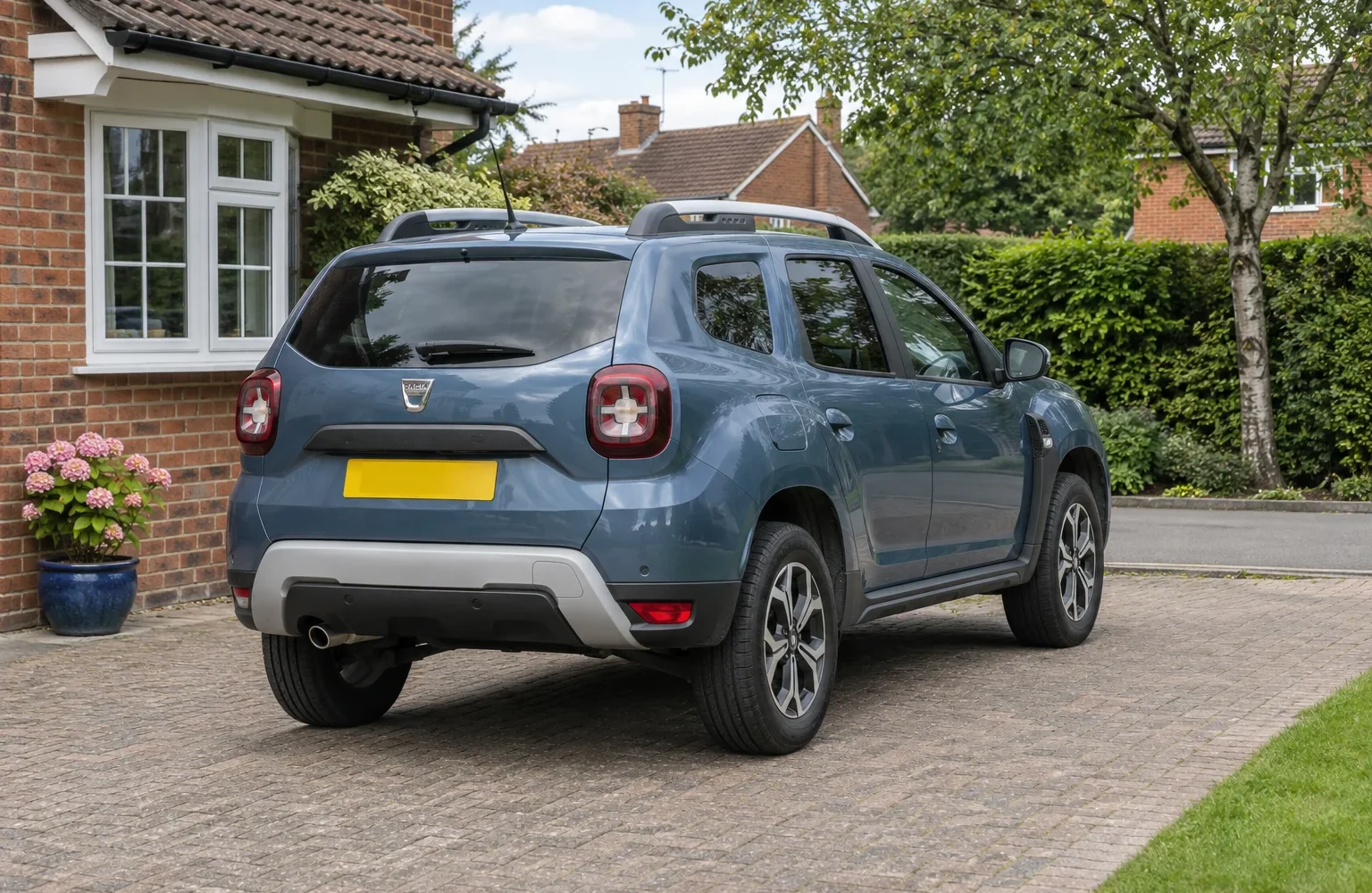
Check both the drivetrain and the puncture equipment before comparing an early second-generation Duster’s boot figure. Two adverts can quote different capacities without either describing a larger body. The useful question is which configuration each number represents, and whether the car still has the equipment described.
The figures below come from the UK brochure printed in October 2018 for the SCe 115 and Blue dCi versions shown there. They are a reference for that range, not a specification for every subsequent Duster, the earlier generation or the latest hybrid model. [1]
Read the repair-kit and spare-wheel columns correctly
| Listed drivetrain | With repair kit | With spare wheel |
|---|---|---|
| SCe 115 or Blue dCi, 4×2 | 445 dm³ | 445 dm³ |
| SCe 115 or Blue dCi, 4×4 | 411 dm³ | 376 dm³ |
One cubic decimetre is one litre. Within that table, the 4×4 figure is therefore 35 litres lower with the spare-wheel configuration than with the repair kit. The 4×2 entries are the same in both columns. These are brochure configuration figures, not measurements taken by Motoring Desk. [1]
Do not interpret the 35-litre difference as a promise about one particular suitcase. It describes the published capacity change, not the shape of the remaining space. Equally, do not assume a spare wheel must be missing simply because a seller quoted the larger number; the listing may have copied an inappropriate specification.
Establish what the seller is including
Ask the seller to identify the exact engine and drivetrain from the car’s records, then show you the supplied puncture equipment. If the advert promises a spare wheel, see the actual wheel and ask whether the appropriate associated equipment is present. If it promises a repair kit, ask to see its components and any relevant condition or expiry information.
Keep this as an inventory check. A wheel merely being present does not establish that it is suitable for that vehicle, and a bottle or compressor does not establish that every puncture can be dealt with. Refer compatibility and condition questions to the vehicle handbook and a suitable professional rather than relying on appearance.
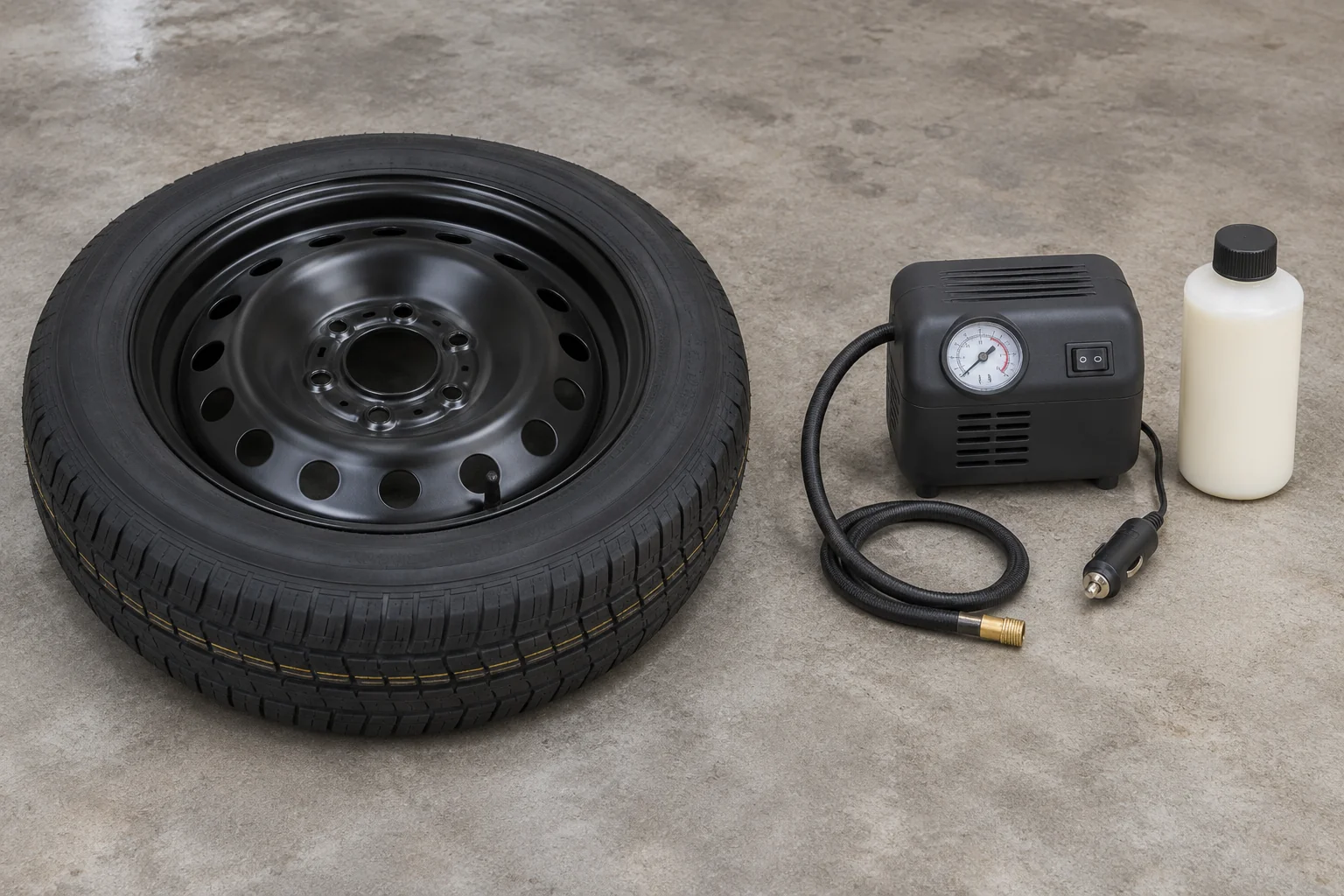
With permission, take a photograph of what is supplied and note where it is stored. Record missing parts as specific items instead of writing “boot kit incomplete”. That makes a replacement enquiry clearer and prevents a vague promise from being mistaken for a complete set at handover.
Compare the boot as you will use it
Leave the rear seats in the position needed for your passengers and keep the intended puncture equipment in its normal storage arrangement. Bring your regular awkward load: a folded pushchair, shopping trolley or the bags you actually travel with. Check it through the opening and in the load bay, without using pressure from the tailgate to make it fit.
If the only way the demonstration works is to leave supplied equipment behind, decide whether that arrangement meets your needs before agreeing to buy. Ask about any alternative storage arrangement rather than inventing one during the viewing. This guide does not give instructions for relocating equipment, fitting a spare wheel or repairing a tyre.
Use the wider viewing checklist for the rest of the car. Review recorded MOT results and mileage, and look up vehicle recalls. [2] [3] The boot comparison answers a practical purchase question; service history and any mechanical concerns still need their own evidence.
What if an advert quotes 445 litres for a 4×4?
Ask the seller to check the specification against the exact vehicle and correct any copied figure. For the 2018 range in this guide, the 4×4 entries are 411 or 376 dm³ depending on the listed equipment. Verify the actual car rather than assuming that the discrepancy identifies a mechanical fault.