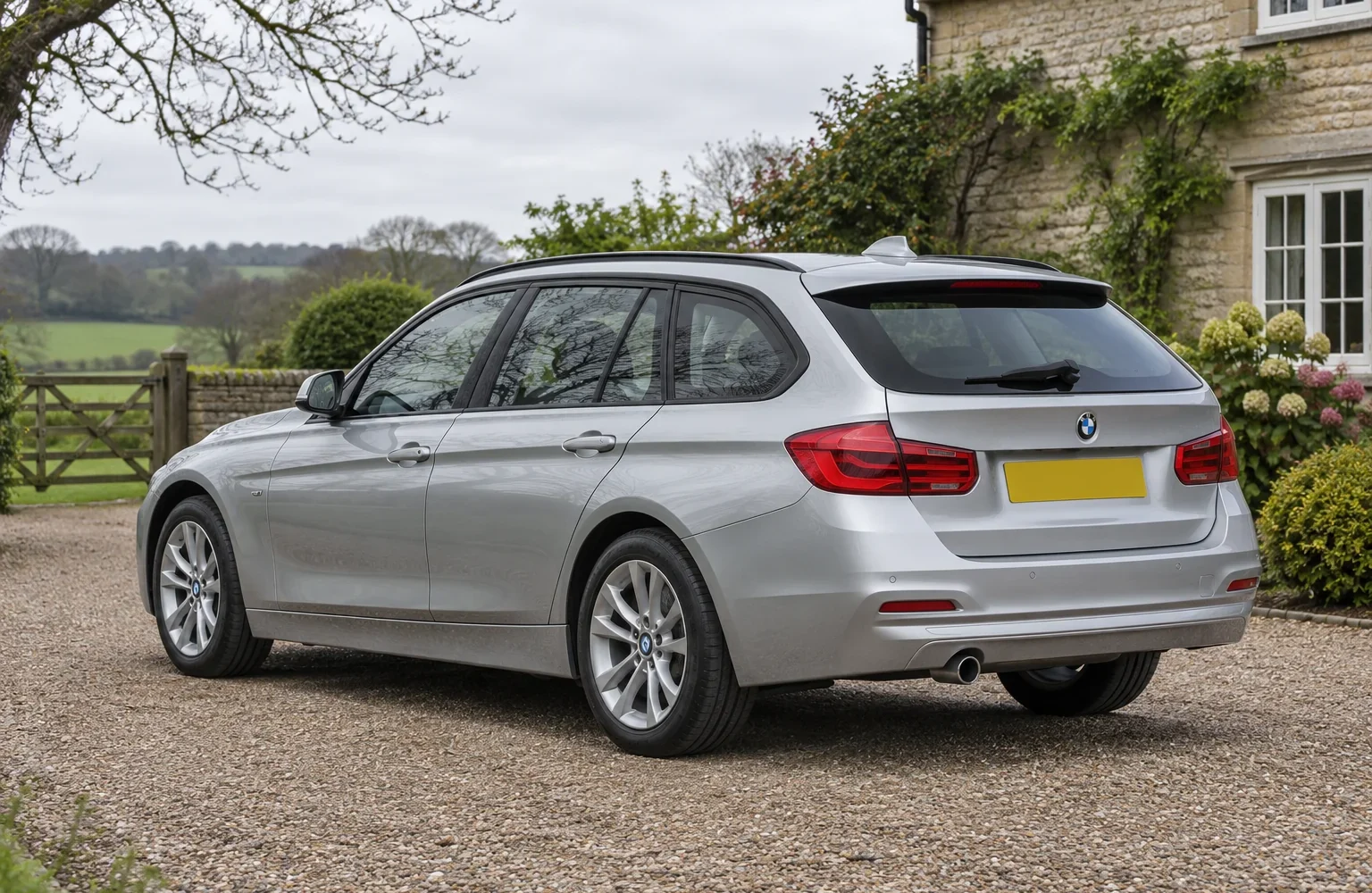
When viewing a used BMW 3 Series Touring, ask for two separate demonstrations: the rear glass opening on its own, and the complete tailgate opening. Then check the folding rear seats and loose boot equipment. A photograph of an open boot will not answer all three questions.
BMW’s November 2016 3 Series brochure describes a separately opening rear window and a rear seat divided 40:20:40. It describes Comfort Access as optional. These are useful reference points for a Touring of that period, but the brochure also warns that equipment varies by market. Match its description to the actual car’s build information and handbook. [1]
Separate the equipment claim from its condition
Start with the seller’s specification list. Ask which opening functions are fitted and which controls operate them. If the advert promises hands-free access, request a demonstration of that particular feature; do not treat a powered tailgate alone as proof of the option.
With the car parked and sufficient clearance overhead and behind it, let the seller operate the glass and tailgate according to the handbook. Watch each complete opening and closing cycle from a safe position. Keep hands and luggage away from moving parts. If something stops unexpectedly, have it investigated rather than trying to force the mechanism.
| Area | Ask to see | Record before deciding |
|---|---|---|
| Rear glass | Separate opening and closing using the correct control | Whether the demonstration was completed, or an explanation is still needed |
| Complete tailgate | A full cycle with adequate clearance | Any unexpected interruption and the seller’s proposed remedy |
| Rear seat sections | The split needed for your usual passenger and luggage combination | Whether the handbook procedure can be demonstrated |
| Loose equipment | Every cover, net, floor panel or accessory included in the sale | A written inventory and any missing item’s replacement quote |
Try the small opening with a real purpose
Think about the item you most often add after packing: a shopping bag, coat or small holdall. With permission, check whether you can reach a sensible place for it through the glass opening. You may find that the full tailgate remains the more convenient route for your particular bag. That is useful information to obtain before buying.
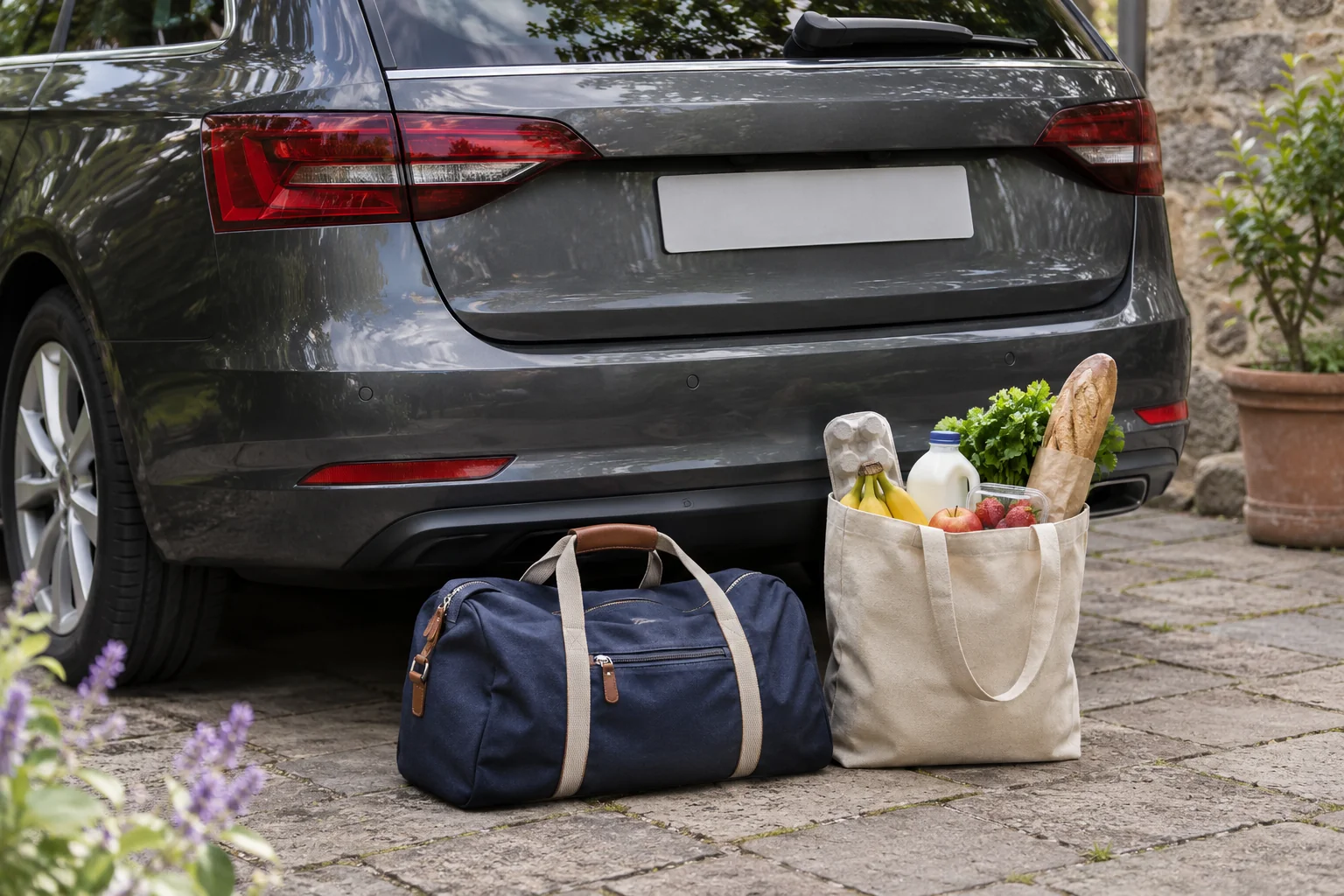
Also try your largest regular item through the main opening. A long object and two rear passengers create a different requirement from a weekend trip with the whole rear bench folded. Use the actual seat configuration you expect to need, following the handbook; do not assume that a headline boot figure answers this question.
Make the handover inventory specific
Ask the seller to show where removable pieces belong and how they are stored when not in use. Photograph the items included, with permission, and have any promised replacement named on the order. A vague assurance that a missing part is inexpensive leaves both compatibility and cost unresolved.
Use the used-car viewing checklist for the broader inspection. Compare the recorded MOT mileage and results with the paperwork, and check for outstanding safety recalls. Neither exercise establishes whether the rear-window feature suits your loading routine. [2] [3]
Does a failed demonstration prove a common Touring fault?
No. It records an unresolved issue on that car. Ask for the correct operating procedure, a proper diagnosis where necessary and evidence of any agreed repair. This guide does not provide failure-rate data or identify a cause from a single observation.