A mild hybrid uses electrical assistance alongside a petrol or diesel engine. It can recover energy while slowing down, help restart the engine and support acceleration. Many systems cannot propel the car on electricity alone, but some newer 48 V arrangements can. The motor’s connection to the drivetrain matters more than the badge or battery voltage.
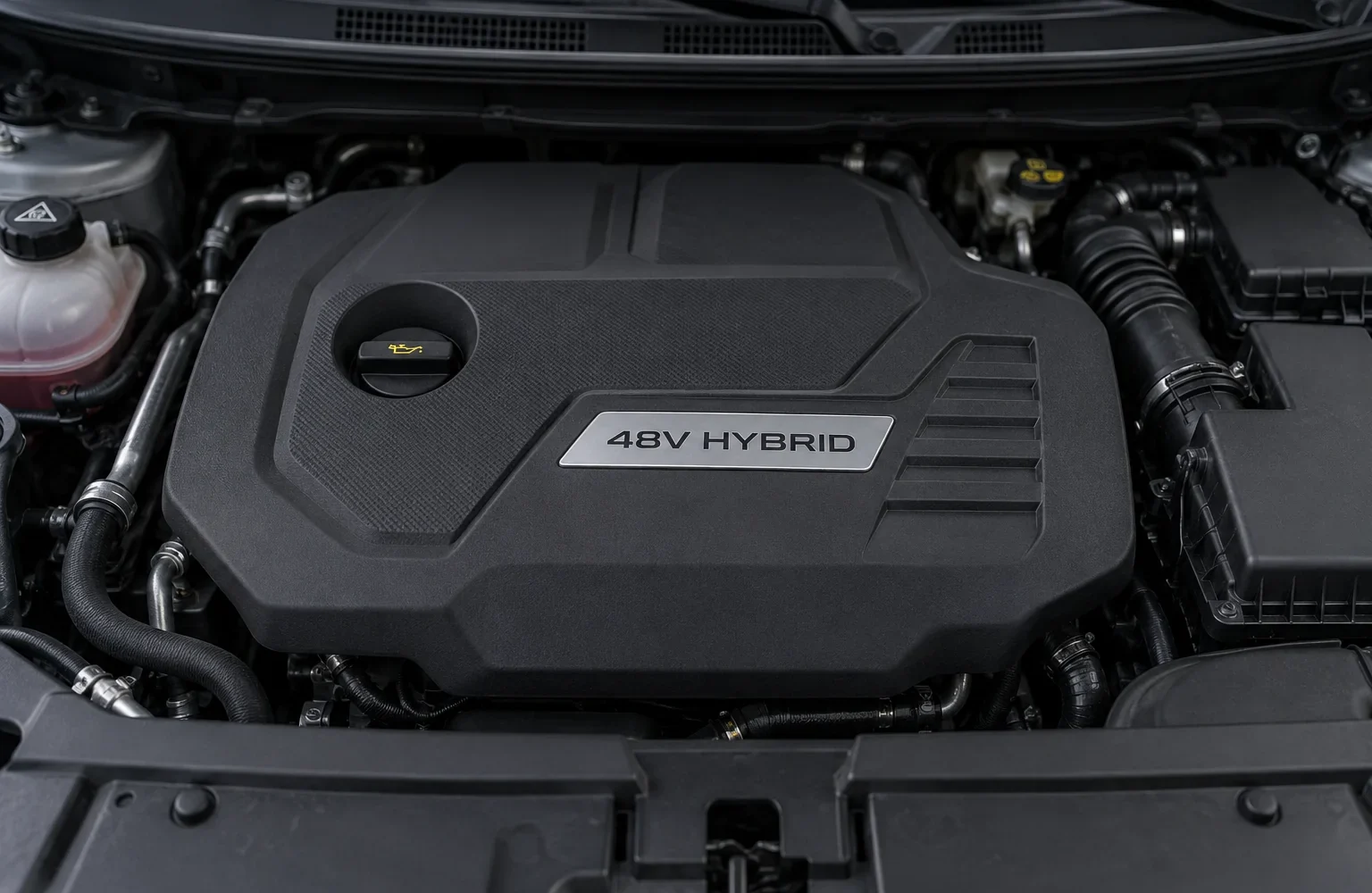
If an advert promises “hybrid efficiency”, the useful question is what the electric system actually does. Does it turn the engine, or can it drive the wheels with the engine stopped? This guide explains that distinction, then gives you questions to establish the capabilities of a particular UK car.
What does mild hybrid mean?
MHEV stands for mild hybrid electric vehicle. The combustion engine remains central to its operation, with a relatively small electrical system added to help it work more efficiently. You refuel the car normally; a mild hybrid does not have a plug-in charging routine.
That description covers different hardware. A familiar arrangement connects a motor-generator to the engine by a belt. Other designs integrate electrical machinery into the transmission. Their abilities differ, so “mild” is not a precise specification of electric driving range or operating modes.
For example, the current Ford UK Puma description, checked on 14 October 2026, says its 48 V system assists the 1.0-litre petrol engine and cannot drive the car on electricity alone. The same page offers manual and automatic versions. Neither an automatic gearbox nor electric-only driving follows automatically from the words “mild hybrid”.
The parts that make the difference
A motor-generator does two jobs
Used as a motor, it takes electrical energy from the battery and produces turning force. Used as a generator, it converts mechanical energy into electricity. A belt starter-generator transfers that force through a belt connected to the engine’s crankshaft. It can help turn the engine without being a separate motor capable of driving the car independently.
Abbreviations are inconsistent. You may see BSG, BISG, ISG or MHSG. Suzuki describes its ISG as an Integrated Starter Generator that assists the engine and recovers braking energy. “Integrated” in a component name is not proof that the motor can propel the wheels with the engine disconnected. Ask where it is connected and what the manufacturer says it can do.
The battery stores energy; the converter serves another voltage
A typical 48 V arrangement has a dedicated hybrid battery alongside the car’s ordinary 12 V electrical system. A DC/DC converter links the voltage levels so the hybrid system can support the lower-voltage supply. The batteries and electrical circuits have different roles; “48 V hybrid” does not mean every electrical item runs at 48 V.
Hyundai’s UK explanation of its earlier Tucson diesel system documents this battery, converter and belt-driven starter-generator arrangement. It is an example of the architecture, not a parts-location guide for another Hyundai or a different manufacturer’s car.
The control system decides when to recover energy, assist or restart. It must work within the car’s operating conditions. A driver does not normally choose when to charge the small hybrid battery as they would schedule a plug-in car’s charging session.
Recovery, restart and assistance are different functions
Hyundai’s current UK powertrain guide describes its 48 V system as electrical support for the combustion engine, including recovery during slowing. These are the three functions to recognise:
- Recover: while the car slows, the motor-generator can convert some of its motion into electrical energy for storage. That is regenerative braking, also called recuperation.
- Restart: the system can use stored energy to turn the engine again after an automatic stop. Stopping an engine at a junction is different from driving along on battery power.
- Assist: stored energy can add turning force during acceleration, helping the combustion engine. The amount and availability of assistance depend on the system and conditions.
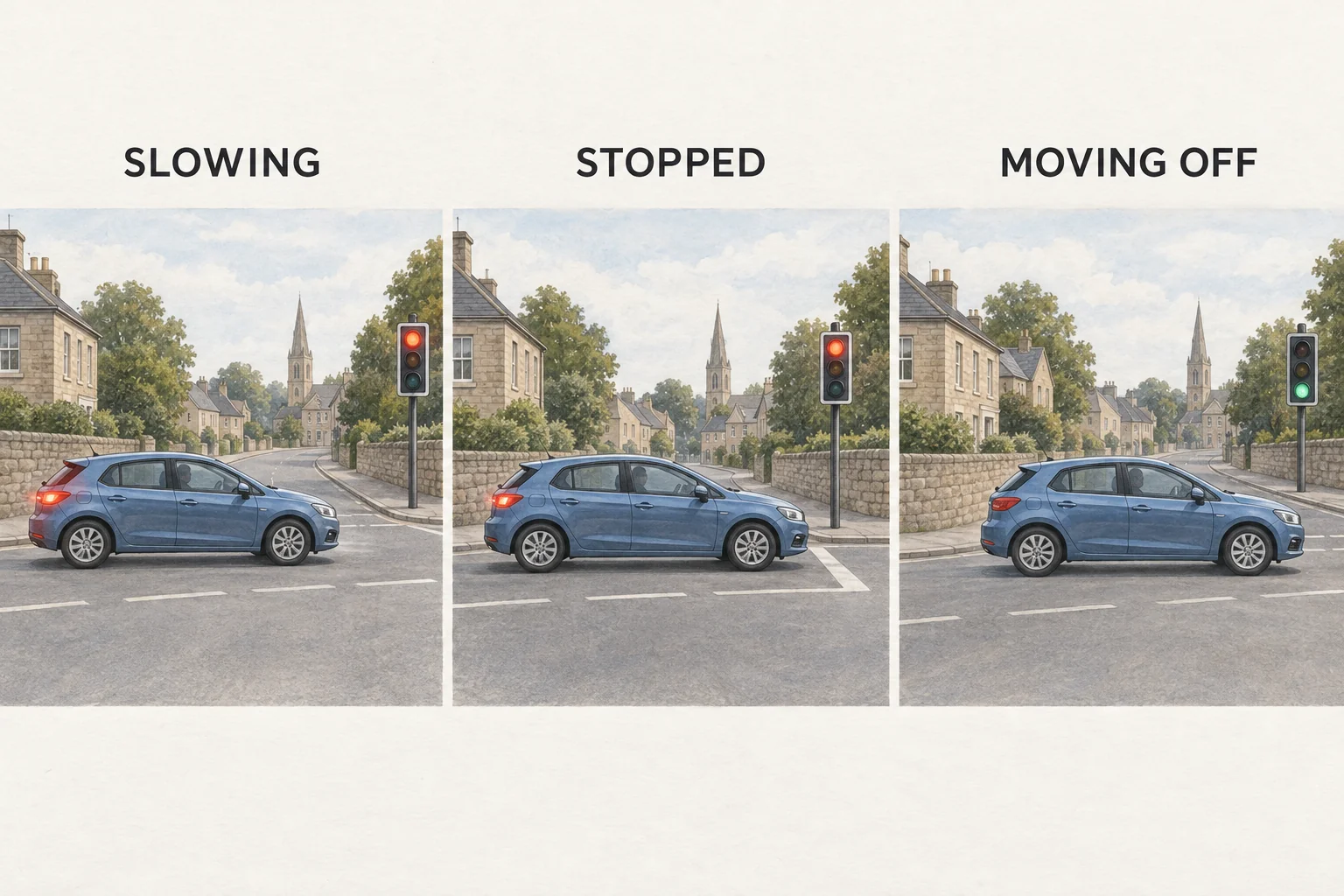
Recovery does not create free energy. It saves some energy that would otherwise be lost as the car slows; the conversion and storage processes also have losses. Deliberately accelerating and braking to “charge up” is not an efficiency strategy. Drive normally and anticipate traffic, leaving the system to manage itself.
Nor does a charging graphic mean all braking is regenerative. The car still has its conventional brakes. The balance between electrical recovery and friction braking is a matter for the vehicle’s design and control system, not a percentage you can infer from a generic dashboard symbol.
An engine-off moment is not always electric driving
Three events are easily confused: an engine stopping while the car waits, a moving car coasting with its engine stopped, and an electric motor actively propelling the car. Only the last establishes electric propulsion.
A rolling car can continue moving using its existing momentum without an engine or motor pushing it. Consequently, seeing the rev counter fall to zero is not enough to establish that the battery is driving the wheels. Look for the handbook’s explanation of the actual mode or energy-flow display.
Likewise, a smooth restart tells you about how the engine resumes operation. It does not establish an electric-only range. A sales description that merges “engine-off coasting” and “electric driving” needs clarification before you use it to compare cars.
Why some 48 V hybrids can drive electrically
The important difference is a motor and transmission arrangement that can deliver drive while the combustion engine is stopped. A voltage label alone cannot tell you whether this is possible.
A documented UK example is the Peugeot 3008 and 5008 HYBRID powertrain announced in February 2023. Its e-DCS6 dual-clutch gearbox incorporates an electric motor. Peugeot describes starting, manoeuvring and low-speed travel in heavy traffic on electric power when battery charge permits. That is a different capability from a belt-driven unit that only supports the engine.
The terminology has evolved too. Vauxhall’s UK Astra page, checked on 14 October 2026, describes its 145 PS 1.2-litre 48 V version as a petrol mild hybrid with electric-drive capability. This is why a blanket statement that every mild hybrid is incapable of electric propulsion is unreliable.
These examples do not promise a battery-only commute or an electric mode whenever you request it. The exact powertrain, battery state and operating conditions matter. On a used car, check the build specification and matching handbook: an earlier engine or another version wearing a similar badge may work differently.
What 48 V, kW and kWh actually tell you
Volts (V) describe electrical voltage. Kilowatts (kW) describe power, while kilowatt-hours (kWh) describe an amount of energy. They answer different questions. A 48 V label is not an electric range figure, and a motor’s peak power does not tell you how long it can deliver that output.
Check whether a published battery capacity is gross or usable. Do not add an engine’s peak power to a motor’s peak power yourself and call the result the vehicle’s official system output; use the manufacturer’s combined figure where one is specified. For buying purposes, a documented function is often more useful than an isolated electrical number.
Decode the advert before the test drive
| Advert wording | What to establish | Useful evidence |
|---|---|---|
| 48 V mild hybrid | Is this engine assistance only, or can it propel the car with the engine stopped? | The matching powertrain specification and handbook. |
| Self-charging | How is energy recovered, and what can the stored energy actually do? | The manufacturer’s operating description, not an implied unlimited energy supply. |
| Electric driving | Does it mean propulsion, stationary start-stop or engine-off coasting? | The named driving mode and its conditions. |
| Better fuel economy | Better than which engine, gearbox and specification, under which test? | Comparable official figures for the two exact versions. |
| Hybrid battery warranty | Which battery and components are covered on this car? | The applicable written terms, age, mileage and service requirements. |
Four questions to take to the seller
Open the questions that match your uncertainty. Keep the answers with the registration, model year, engine and gearbox details; a generic brochure for the model family may describe several powertrains.
Where is the evidence for this exact hybrid system?
Ask the seller to identify the engine and transmission in the vehicle’s build specification, then show the relevant handbook section. A trim name or a hybrid badge is insufficient if that model has changed systems during production.
What should happen during an ordinary test drive?
Ask for an explanation of the energy display before setting off. Observe normal restarts, acceleration and slowing without trying to force a mode or watching a screen instead of the road. If electric propulsion is claimed, ask which conditions permit it.
Why did the engine stay on?
Ask which handbook conditions govern automatic engine stops and electrical assistance. One short drive cannot establish a fault or a battery’s condition. Have a warning message or unexplained behaviour assessed by a suitably qualified workshop instead of diagnosing it from the badge.
What maintenance and cover apply?
Obtain the service schedule, records and warranty wording for the actual vehicle. Ask specifically about the hybrid battery, motor-generator and associated drive components. This guide does not provide battery access, disconnection, jump-starting or electrical repair instructions; use the manufacturer’s procedure and qualified help where required.
What this changes for an owner
You gain electrical functions without organising plug-in charging, but still depend on the combustion engine and its fuel. The system can improve efficiency; its name cannot predict your fuel bill. The Vehicle Certification Agency explains why actual consumption differs from controlled WLTP figures, including the effects of driving style, accessories and load.
Compare equivalent specifications and realistic journeys rather than assigning every mild hybrid a fixed saving. If routine electric-only travel is your priority, start with our electric-car suitability guide. For the broader shortlist, use how to choose your next car. Here, the essential result is more specific: know what the electrical system in the car you are considering can actually do.
Sources checked on 14 October 2026. This is a researched technical explanation, not a road test or an inspection of an individual car. Historical examples are identified by their source context; current manufacturer pages are dated by the check above. Capabilities and equipment vary by powertrain, build date and market.
The conversation