A car service combines scheduled maintenance with inspections. What it includes depends on your car, its age and mileage, and the package you book. Start with the manufacturer’s schedule, then ask the garage which items it will inspect, replace and charge for separately. A package called a “full service” is not, by itself, proof that every job due on your car is included.
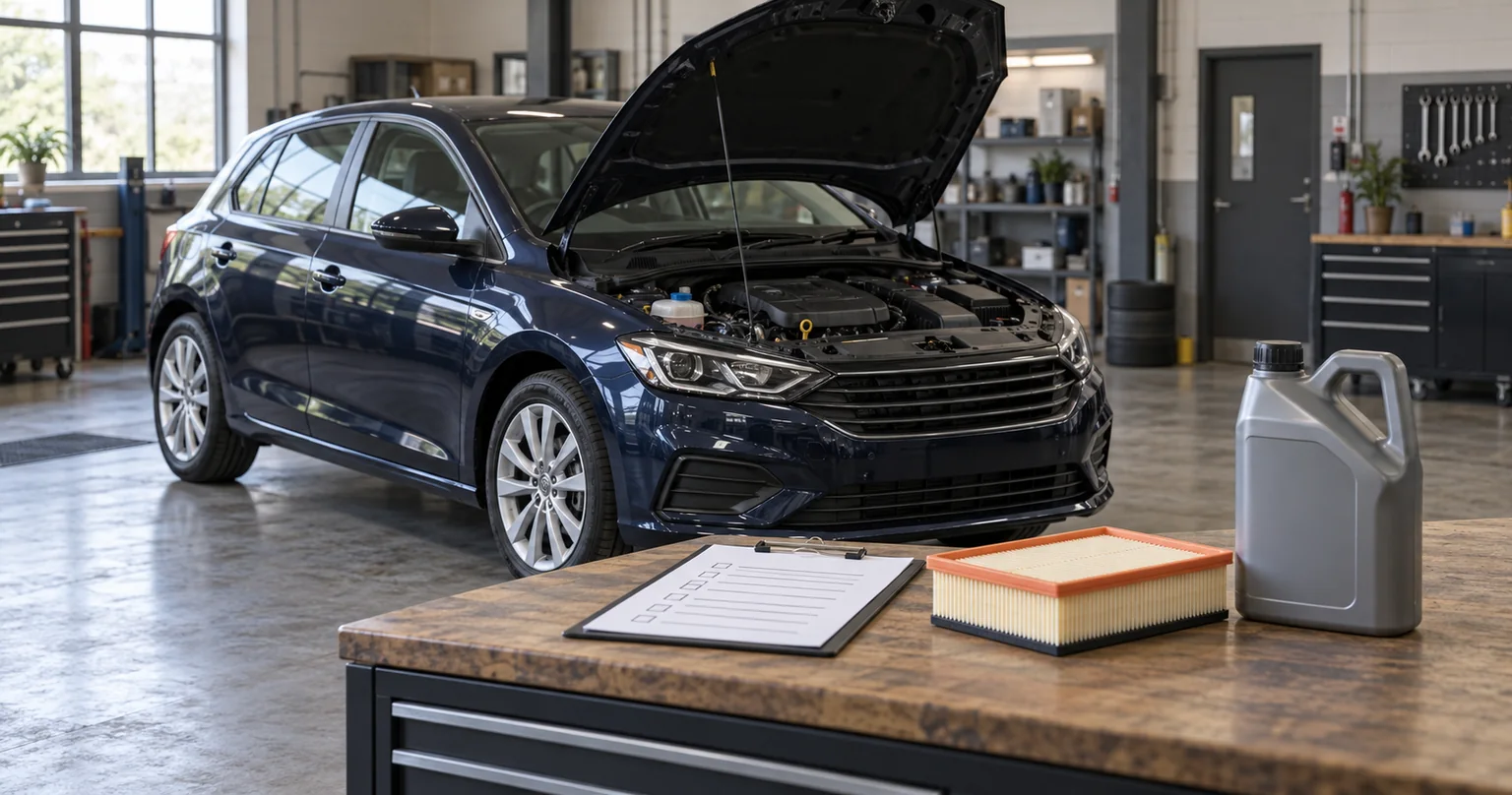
This guide helps you prepare a booking, compare written quotes and understand the paperwork afterwards. It is not a set of instructions for carrying out mechanical work. A service also cannot establish that a car will remain fault-free until its next appointment.
What is included in a car service?
Think of the work in three groups: inspections, scheduled replacements and repairs. The first two may be included in a booked service; the third usually needs a separate decision and price. Ask for a checklist that distinguishes them. “Check brakes”, for example, does not mean new brake pads are included.
| Work described | What it means for your quote | Question to ask |
|---|---|---|
| Inspection | Assessing the condition or operation of listed components, such as tyres, lights, steering or brakes. | What is inspected, and will I receive the findings in writing? |
| Replacement | Fitting named parts or renewing specified fluids. For an engine oil service, the oil and filter should be identifiable. | Which replacements are included for my exact vehicle? |
| Top-up | Adjusting a fluid level where appropriate. This is different from a scheduled fluid change. | Is the quote for checking, topping up or replacing that fluid? |
| Additional repair | Work proposed after a fault or wear is found, outside the agreed service. | Will you contact me with the findings and a price before doing it? |
For a concrete example, Kwik Fit’s published packages distinguish a visual brake inspection in its interim service from a fuller brake examination in its full service. Its manufacturer service follows the work specified for the relevant interval. Those are that provider’s descriptions, not a checklist that every other garage must use.
A replacement part is not the same as a condition check
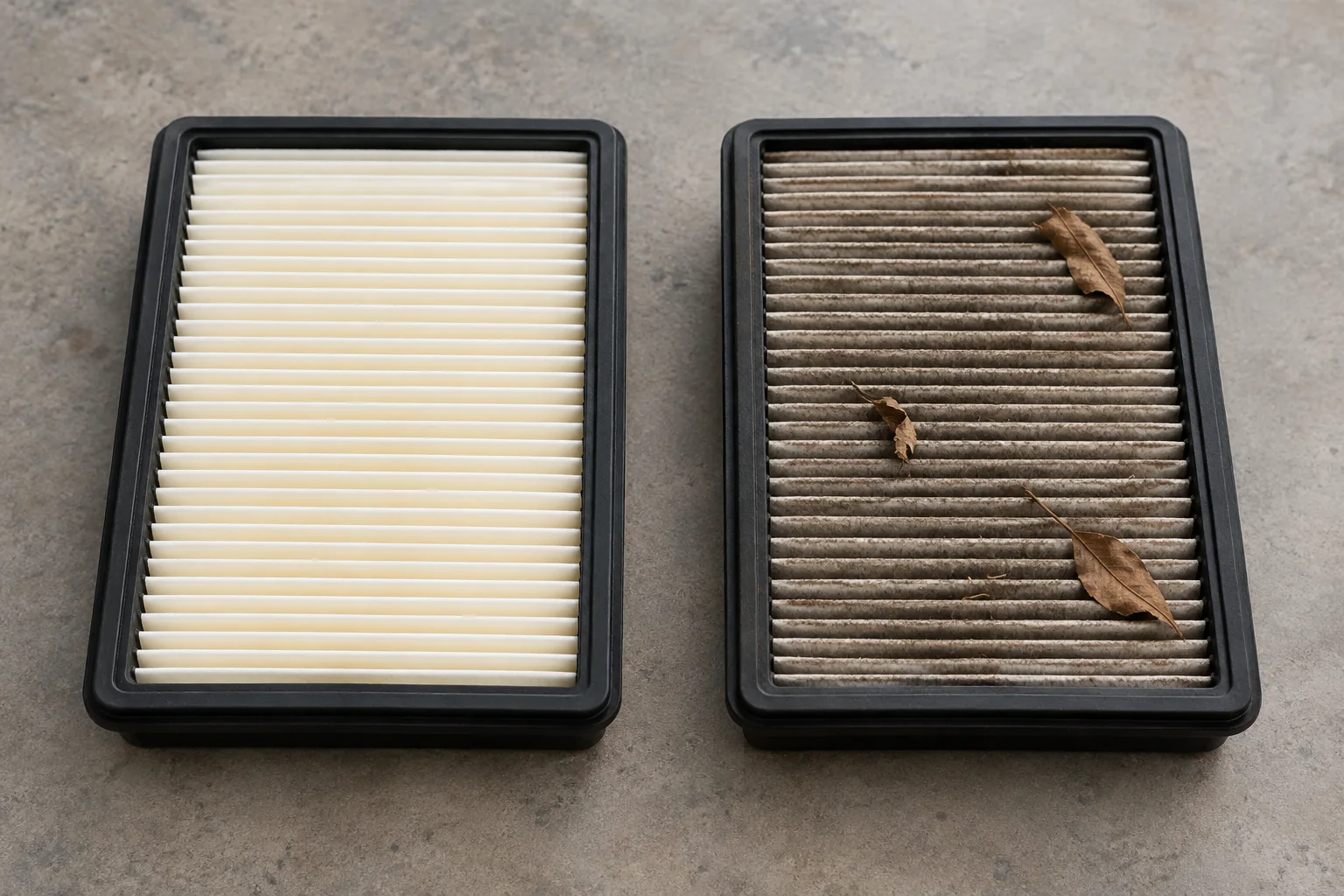
If a quote says “air filter check”, ask whether a replacement is included if it is due. If it lists “air filter replacement”, confirm that means the engine air filter, cabin filter or both. Similar wording can hide materially different work. The car’s schedule and the technician’s findings matter more than the number of ticks on a promotional checklist.
Interim, full, major or manufacturer service?
These names help describe packages, but compare their written contents before comparing their prices. The question is whether a package covers the work now due, including any time-dependent items, rather than whether its name sounds comprehensive.
| Package | How to interpret it | What to clarify |
|---|---|---|
| Interim | A smaller package, often offered between more extensive visits. | Does it cover your due work, or is it an additional visit? |
| Full | A broader package of checks and specified replacements. | Which filters and fluids are replaced, rather than checked? |
| Major | A provider’s larger package, potentially including more replacement items. | Which additional items are included, and are they due on your car? |
| Manufacturer schedule | A service matched to the vehicle and its scheduled work. | Which interval is being followed, and are supplementary jobs included? |
Halfords describes interim, full and major packages, as well as EV and hybrid services. This illustrates why the name alone is insufficient: a supplier’s package structure is a booking product. Have the garage reconcile it against the maintenance requirements for your particular car.
A longer checklist is not automatically a better match. If one garage counts each exterior light separately and another groups them as “lights”, the totals tell you little. Ask about the work that affects your decision: scheduled parts, fluid specifications, inspection scope and documentation.
How often should you service your car?
Use the schedule for the exact model, engine or powertrain and model year. Have the registration and, if needed, the vehicle identification number available. Look in the service record or handbook and check the manufacturer’s owner portal. Tell the garage the date and mileage of the last completed service, not just today’s odometer reading.
Ford’s interval guidance explicitly varies by model and engine. It also explains that driving conditions can bring forward an oil-change requirement, independently of other maintenance intervals. An oil-life reminder and the next scheduled inspection therefore need not represent the same job.
Where a schedule specifies both time and distance and says “whichever comes first”, reaching either limit makes the work due. For illustration only, a hypothetical 12-month/10,000-mile interval would be reached at 12 months even after 4,000 miles, or at 10,000 miles after eight months. Do not adopt those numbers for your car without checking its schedule.
Low mileage and an unclear service history
Low annual mileage does not cancel a time-based requirement. Equally, do not buy an extra package solely because an advert recommends it for all drivers. Give the garage your usage pattern and ask which scheduled requirement or identified condition justifies the proposed work.
If the previous history is missing, say so at booking. Ask the garage to identify what can be verified and to explain a sensible catch-up plan for the unknown items. A new stamp cannot recreate the missing years. Keep receipts and dated reports from now on; our used-car questions guide helps you investigate the evidence before buying.
Is a service the same as an MOT?
No. An MOT checks specified roadworthiness and environmental standards at the time of the test; servicing carries out maintenance. GOV.UK explains the test’s scope and notes that it does not cover the condition of the engine, clutch or gearbox. An MOT pass does not show that scheduled servicing has been completed.
If you book both together, ask for each price and result separately. A service invoice, an MOT result and a proposed repair estimate answer different questions. Keep all three where applicable. Do not wait for a routine appointment if a new warning or fault needs attention.
Do electric cars and hybrids need servicing?
Yes, but the work must match the powertrain. A battery-electric car has no combustion-engine oil change; it still has components that require checks and maintenance. A hybrid retains an engine as well as its electrical drive system. Neither should be booked into a generic package without confirming suitability.
Volkswagen’s UK EV guidance lists charging-component, battery and conventional vehicle checks, and an inspection every two years for its all-electric ID family. That is a manufacturer example, not a universal EV interval. Ask what battery assessment your quoted service actually includes and whether a report is supplied. Our everyday EV guide considers the wider ownership routine.
How much should a car service cost?
A useful price is a written quote for the same car and the same due work. A headline “from” price or national average cannot tell you that. The final scope may differ with the required parts, fluid specification, labour, supplementary maintenance and any separately authorised repairs.
Toyota’s UK service guidance, for example, directs owners to identify their vehicle and service level to see the inclusions and cost. Follow that principle when comparing any providers: obtain the scope first, then the total payable.
Copy the following questions into your booking notes. Open each section for the details to request.
1. Are both garages quoting for the same work?
Give both garages the same registration, mileage, last service date and known history. Request the exact scheduled visit and ask each to list included replacements and exclusions. Ask separately about any belt, transmission-fluid or other supplementary work shown as due for your vehicle; do not assume “major” includes it.
2. What is the total price?
Ask for a total including VAT where applicable, parts, labour and any stated disposal or consumable charges. Establish whether the figure is a quote or estimate, what could change it, and how approval for extra work will be obtained. Price optional collection, courtesy transport and MOT work separately so you can compare the service itself.
3. What records will I receive?
Ask for an itemised invoice, the completed inspection checklist, the oil approval or specification where relevant, and a service-record entry. If the car uses a digital history, ask whether the garage can update it and how you can check the entry. A dashboard reminder reset is not a substitute for those records.
4. What happens if you find a problem?
Agree a contact number and ask the garage to explain the finding, urgency, proposed repair and cost before additional work. If a recommendation is unclear, request its measurements or other evidence and an explanation you understand. An online guide cannot decide whether your particular car is safe to collect or drive.
The Motor Ombudsman’s Service and Repair Code commits accredited businesses to agreed work and transparent pricing. Check a garage’s current accreditation if it matters to your choice; the code is not a claim that every garage subscribes.
Before you hand over the keys
- Send the service history and confirm the vehicle details, including engine or powertrain.
- Describe any symptoms in plain terms: what happens, when it happens and any dashboard message. Ask whether diagnosis is a separate booking and charge.
- Confirm the agreed work, total price and arrangement for authorising extras in writing.
- Ask what the garage needs you to bring, such as the locking wheel-nut key or service book, and arrange collection time.
- If warranty, lease or service-plan conditions apply, check your own documents and obtain clarification before booking. Do not assume every package satisfies them.
At collection: turn the paperwork into your next plan
Check the recorded date, mileage and registration. Match the invoice to the agreed work, then ask which items were completed, declined, deferred or need further investigation. If an item is due later, record its date or mileage trigger; “next service” may be too vague for a separate time-based job.
Keep a copy of the invoice and report alongside the paper or digital history. Confirm how to raise any concern after collection. Between appointments, continue the appropriate checks before driving; a completed service does not remove the need to respond to new symptoms.
Sources checked 14 October 2026. Manufacturer examples refer to current UK guidance and do not replace the schedule for an individual vehicle. The illustrations are generated with AI; this article does not report a workshop test or an inspection of a reader’s car.
The conversation