Choose a hybrid around the charging you can actually use. A full hybrid can be a useful starting point if you want electric assistance without plugging in. A plug-in hybrid deserves consideration when regular charging fits your routine and its electric running offsets the costs of the particular car. A mild hybrid generally offers more limited electrification, but some newer systems can move on electric power alone. The badge is not a complete specification.
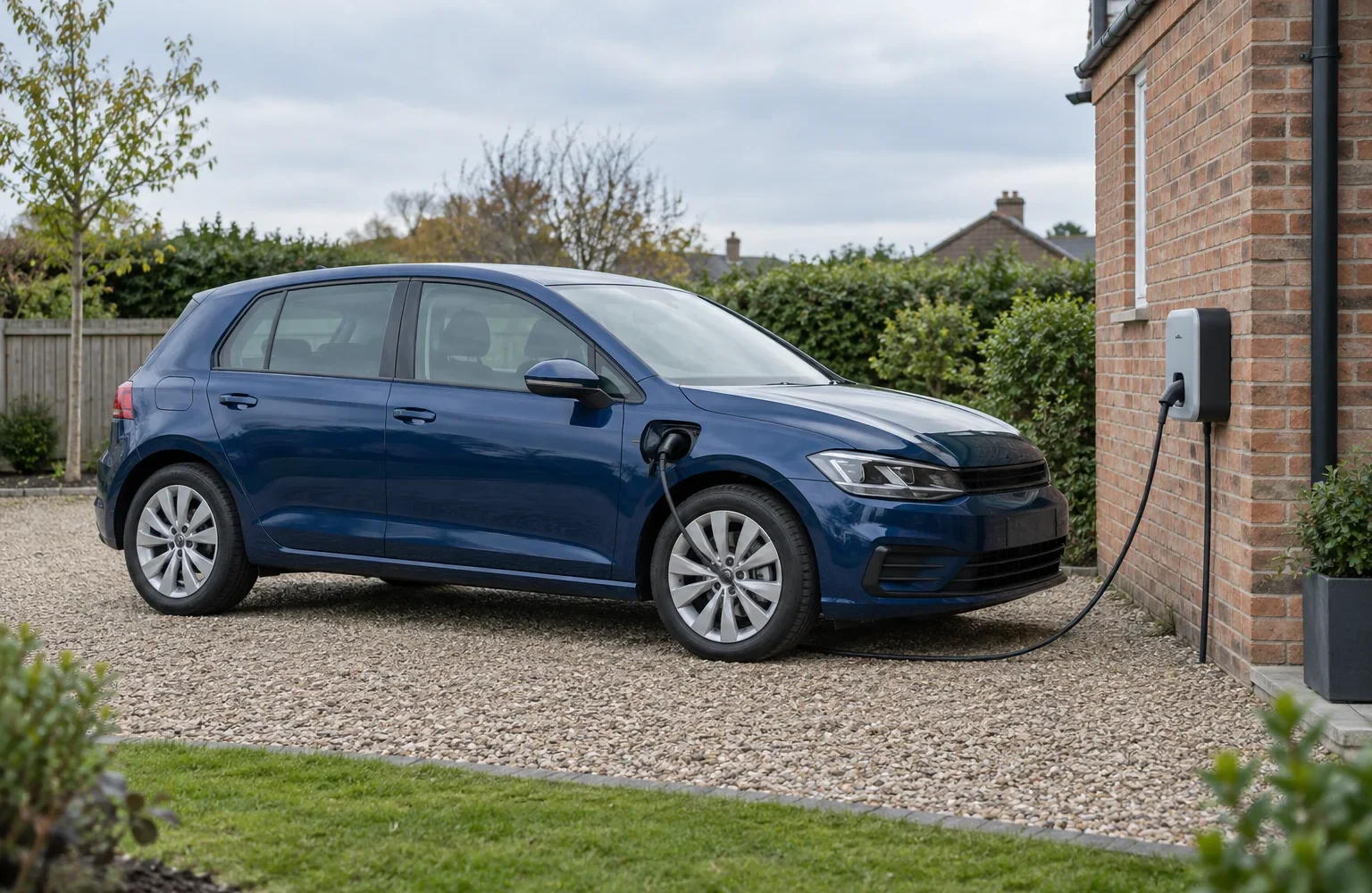
The important difference between a hybrid and a plug-in hybrid is the external charging connection and the opportunity for longer electric driving. That does not make either one the better purchase for everyone. Compare your normal week with the capabilities, condition and price of the actual vehicles.
Mild hybrid, full hybrid and plug-in hybrid at a glance
| Question | Mild hybrid (MHEV) | Full hybrid (HEV) | Plug-in hybrid (PHEV) |
|---|---|---|---|
| Do you plug it in? | No external charging. | No external charging. | Yes, to replenish its externally chargeable battery. |
| What does the electric system do? | Usually assists the engine; capabilities differ substantially. | Can propel the car electrically as well as work with the engine. | Supports longer electric driving, alongside an engine. |
| Is an electric-only journey assured? | No. Many cannot provide electric-only propulsion; newer exceptions exist. | No. Electric running is limited and managed by the system. | No. Charge, conditions, power demand and the vehicle’s operating rules matter. |
| First buying question | What does this system actually do, and how does this car compare with alternatives? | Does its consumption and driving behaviour suit your routes? | Where, how often and at what cost will you charge it? |
The manufacturer examples below explain these distinctions. Battery voltage, an “EV” display or a generic “hybrid” advert is not enough to identify every capability.
What the three labels mean in daily use
Mild hybrid: check the exception before accepting the rule
Many mild hybrids use their electric system to assist a petrol or diesel engine. For example, Ford’s UK description of the Puma 1.0-litre EcoBoost mild hybrid says its 48-volt system recovers braking energy and helps during acceleration, but cannot drive the car on electricity alone. You refuel it rather than connect it to a charger.
That last capability is not universal. Vauxhall’s UK Astra overview, checked on 14 October 2026, describes its 145 PS, 48 V petrol mild hybrid as offering electric drive for shorter journeys. The useful distinction is between assistance-only and electric-propulsion-capable systems, not a promise attached to “48 V”. These are specific UK descriptions, not specifications for every model year.
Full hybrid: electric driving without an external charger
A full hybrid can use the engine, electric motor or a combination, according to the system and conditions. Its battery is replenished during use. Toyota describes both engine-driven generation and recovering energy as the car slows in its explanation of its non-plug-in hybrid system.
“Self-charging” does not mean free energy. Fuel still supplies the engine, and regeneration recovers some energy that would otherwise be lost during slowing. Nor should a brief electric section on a test drive be treated as a guaranteed electric range for every journey.
Plug-in hybrid: make the charging connection useful
A PHEV combines an engine with a battery that accepts external charging, generally offering longer electric running than a comparable non-plug-in hybrid. Toyota’s UK plug-in hybrid guide explains this difference and the return to hybrid operation when its available electric range is used. Electric range ending is different from a battery fault or running out of fuel.
A charged battery is not a guarantee that the engine will stay off. Ford’s Kuga Vignale handbook’s drive-mode messages, for example, include engine use associated with defrosting and system requirements. Read the handbook for your version; this is not an instruction to disable heating or demisting to preserve an electric-only claim.
Start with parking and charging access
Before comparing batteries, write down where the car normally spends several hours parked. Home charging may be convenient, but a driveway is not the only possible arrangement. Dependable workplace or destination charging can also form part of a routine. Check the access conditions instead of treating a nearby map pin as a guaranteed space.
- Availability: can you use the charger at the times you actually park there? What happens if it is occupied or unavailable?
- Compatibility: what connector, charging input and cable does the exact car require? Do not assume every public charger can serve it.
- Time: can the car take on enough energy during your normal stay? Ask for the charging specification for that version.
- Cost: record the electricity tariff and any parking, session or access charges.
If home charging is part of the plan, establish the installation and permission requirements before committing to the car. Our home-charging questions help you prepare that conversation.
If you do not expect to plug in, compare the PHEV’s consumption in that use with the alternatives. It may still function as a hybrid, but do not pay a premium on the assumption that externally supplied electric driving will happen. Equally, do not assume every uncharged PHEV is less economical than every full hybrid: the particular cars and journeys decide that comparison.
Compare electric range with the whole day’s driving
Count the return trip and any errands between charging opportunities. A commute that appears short on a one-way map can become a much larger daily requirement after school, shopping or another household member uses the car.
Allow for variation instead of planning around an exact brochure boundary. Toyota notes that cold weather can reduce its plug-in hybrids’ electric range in its range guidance. Ask for evidence relevant to your route and season, and identify which battery, wheel and trim specification the quoted figure describes.
Also consider what happens beyond electric range. A short daily routine with occasional long trips is a different proposition from long motorway journeys every working day. Toyota’s RAV4 Plug-in explanation illustrates why both the return journey and the next charging opportunity matter. Its model-specific range figures are not a prediction for your shortlist.
Compare fuel and electricity together
A large PHEV mpg figure does not mean that all its driving was powered by the fuel counted. The Vehicle Certification Agency’s guidance identifies weighted combined fuel consumption for plug-in hybrids and recommends showing electricity consumption alongside it so buyers can understand total energy use. Compare cars tested on the same basis; the headline mpg number alone is not a running-cost comparison with an HEV.
For your own records, a useful calculation is:
Energy cost for a period = fuel bought for that period × its price + electricity bought for charging × its tariff, plus applicable charging fees.
Use litres and £ per litre for fuel, and billed kWh and £ per kWh for electricity. Keep the distance and period comparable, and account for fuel and battery energy carried over at either end. Calculate different fuel prices and charging tariffs separately, then add them. Use billed charging energy where available, rather than multiplying advertised battery capacity by the number of sessions.
Before purchase, ask for consumption evidence under a charging pattern you could repeat. Make two budgets if access is uncertain: one with the charging you expect, another with fewer sessions or a higher tariff. A large change in the result is useful information about how dependent the choice is on that arrangement.
Add purchase price, expected resale, insurance, scheduled servicing, tyres and any charging installation. Use actual quotes and mark uncertain resale or repair figures as estimates. There is no universal price premium or annual-mileage threshold that chooses between all three types.
Which situation is closest to yours?
Open the relevant scenario to identify the next comparison to make.
I cannot charge regularly and mostly drive around town
Start by comparing a full hybrid with suitable mild-hybrid and conventional alternatives. Judge the actual fuel use, price and low-speed driving behaviour. Do not shortlist a PHEV mainly for an electric commute you cannot replenish, or assume its normal hybrid operation matches another model.
I can charge where I park and usually make short daily trips
A PHEV deserves a close look if charging is dependable and its usable electric running covers a useful share of your day. Compare the whole ownership cost. Also consider a battery-electric car: reliable charging is a reason to assess it, not a reason to stop at plug-in hybrids.
I could charge at work, but that arrangement may change
Confirm availability, payment and access outside your usual working hours. Recalculate using a realistic fallback, including weeks away from work. The car should remain affordable and suitable if an informal charging arrangement ends.
Most of my mileage is on long motorway journeys
Compare consumption over the full route and the opportunities to recharge between journeys. Do not extrapolate a short battery-assisted demonstration to an entire working week. An HEV, MHEV or PHEV may suit a particular shortlist; the label alone cannot rank the costs or comfort.
Check the car, its paperwork and its charging equipment
Before paying a deposit, record the exact engine, transmission, battery version and model year. Confirm the system using the correct UK handbook or manufacturer specification; adverts sometimes shorten a detailed powertrain description to “hybrid”.

- History and condition: request itemised service records, investigate warnings and arrange an appropriate inspection for unresolved concerns.
- Battery evidence: ask what any battery report measures, when it was produced and which battery it covers. Read the actual warranty terms and remaining cover; do not infer them from the hybrid type.
- PHEV charging: confirm the correct supplied cables, their condition and a working charging demonstration. A port photograph does not show that the charging system works.
- Practicality: try your luggage, seating and storage requirements in that powertrain version. Check any towing requirement against its approved limits.
- Driving: assess parking, ordinary acceleration and engine transitions on a relevant test drive. Transmission preference remains a separate question; see our manual-versus-automatic guide.
Use your answers with our next-car planning guide. If dependable charging makes a fully electric car plausible, the electric-car suitability guide helps you examine that option too.
Sources checked on 14 October 2026. This comparison uses manufacturer and regulator documentation, not first-hand vehicle testing. Named systems illustrate specific capabilities; equipment and instructions vary by version, year and market.
The conversation