A Statutory Off Road Notification tells DVLA that you are keeping a vehicle off public roads instead of taxing it. You can apply through GOV.UK, by phone or by post. Arrange the storage space first, check when the declaration will start, and deal with insurance separately.
A car that is merely unused is not automatically SORN. The distinction matters if you are parking a second car for winter, waiting for repairs or buying a project that will not be driven home. This guide covers privately kept vehicles in the UK; the insurance section distinguishes Great Britain from Northern Ireland.
Do you need a SORN?
If you keep a vehicle off the public road and will not keep it taxed, you normally need to declare SORN. In Great Britain, it also matters when insurance lapses, even if the car remains on your driveway. The storage location, tax and insurance need to be considered together. See DVLA’s SORN requirements.
There is no requirement to declare SORN simply because you are taking a holiday or have stopped commuting while keeping the car properly taxed and insured. Equally, cancelling a payment does not tell DVLA that the vehicle is off the road.
The declaration itself is free. It does not need an annual renewal, so there is no recurring SORN fee to budget for. Start at the official service rather than paying a third party to submit the same notification. DVLA explains these points in its SORN guidance.
Where can a SORN car be kept?
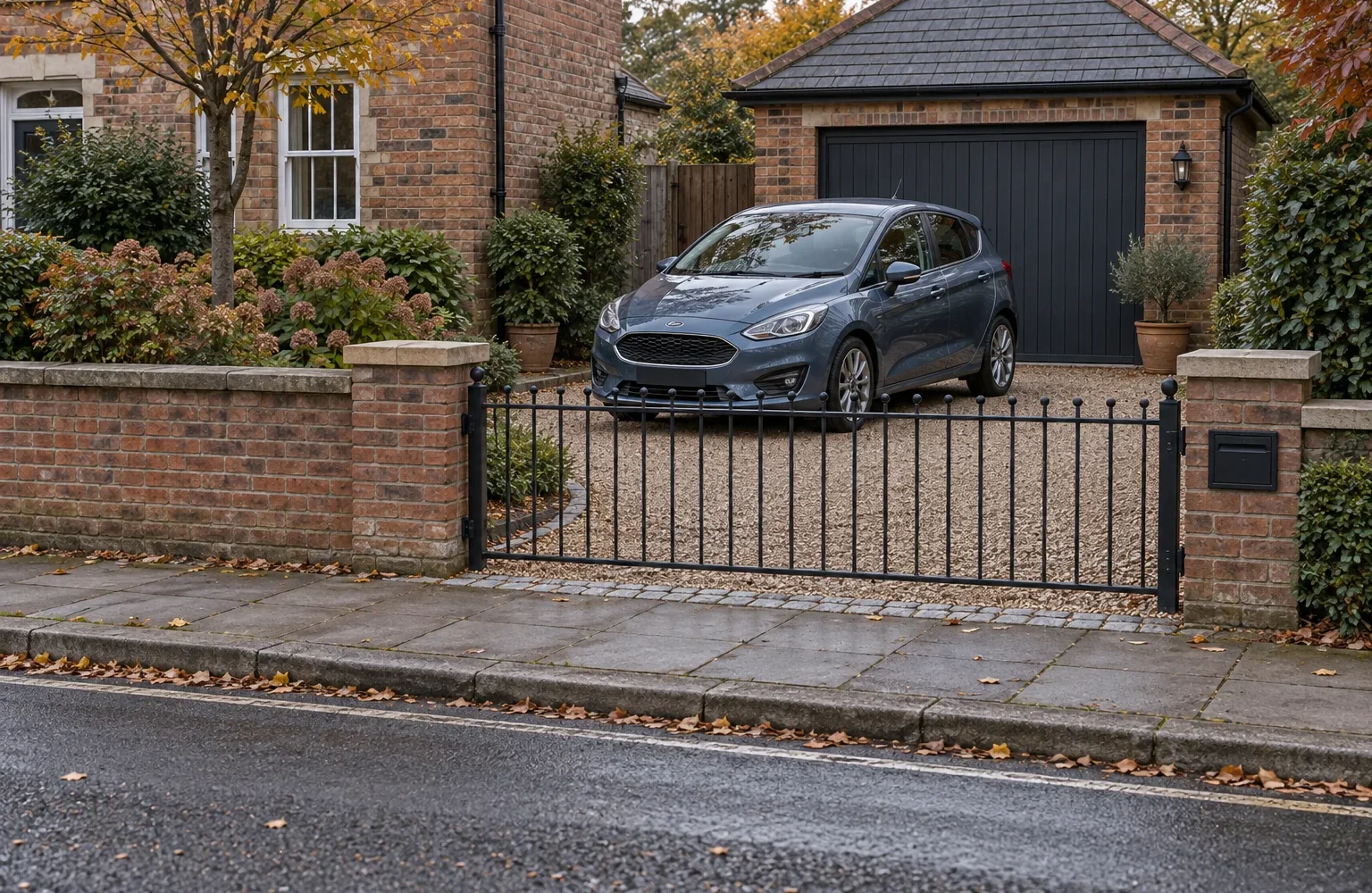
The car must be off the public road, such as in a garage, on a private drive or on private land. A parking space on the street outside your home remains on the public road; a cover over the car changes nothing. SORN is not a parking permission.
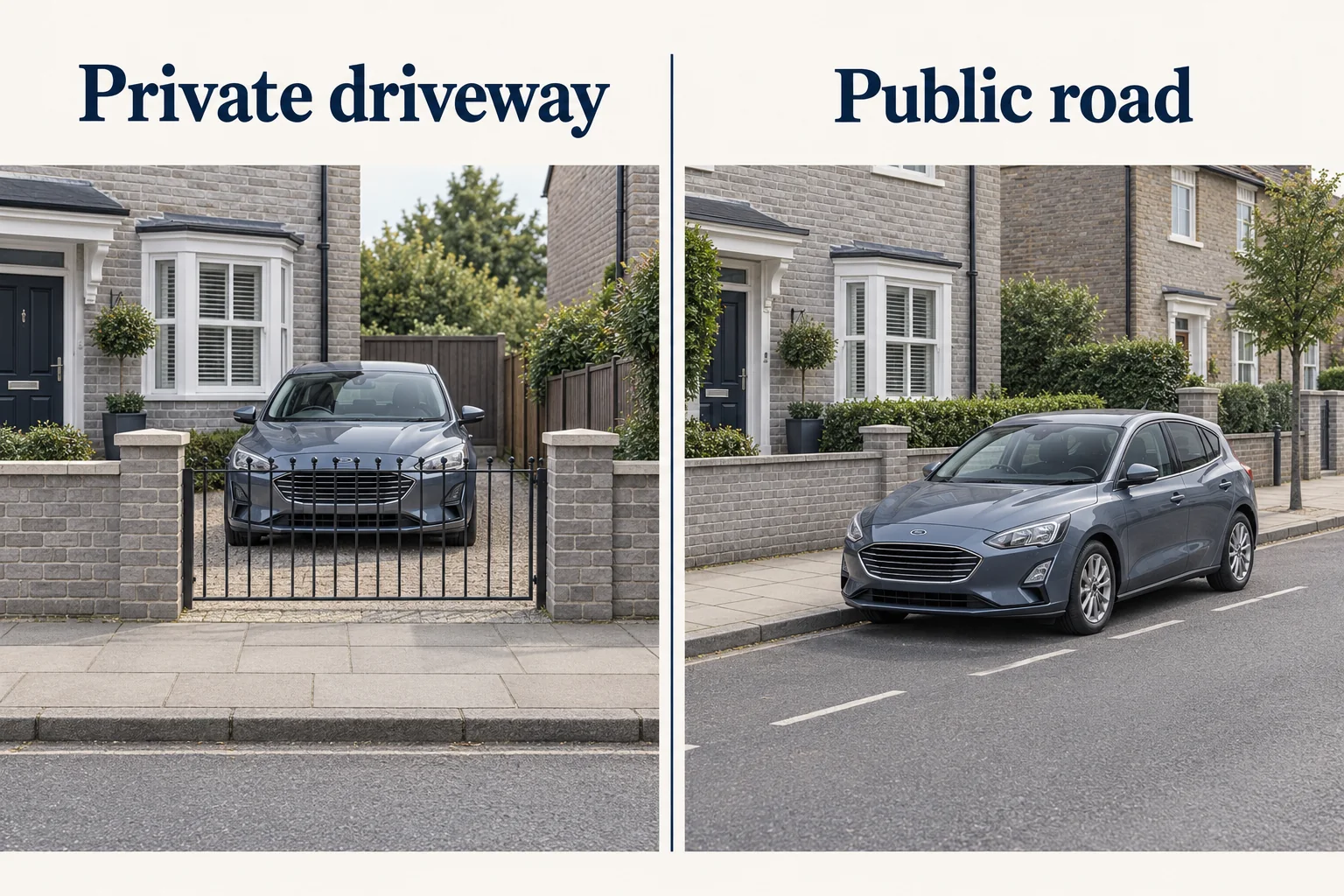
For a rented garage, communal parking area or storage business, establish who controls the space and whether you are allowed to leave the vehicle there. Do this before submitting the declaration. A space being privately owned is not, by itself, an answer to every question about public access or insurance.
The vehicle must also remain in the UK for the declaration to stay valid. SORN is not the process for permanently exporting it. These limits are set out in the official SORN overview.
How to make the declaration
First check the keeper’s name and address on the V5C log book. If your address is wrong, GOV.UK directs you to correct it before making the online declaration. Our V5C guide explains the document and replacement options.
Use the route that matches the paperwork you actually have:
The vehicle is already registered in my name
Use the official SORN service with the 11-digit reference from your V5C or the 16-digit reference on your vehicle tax reminder. The reminder may be a letter, email or text. DVLA also offers a telephone service on 0300 123 4321. Check the vehicle details and start date before confirming.
I have bought the car but am not yet the registered keeper
The previous keeper’s SORN does not transfer to you. DVLA’s V890 instructions say to apply by post if you are not yet registered as keeper, sending the appropriate completed part of the V5C with the V890 form. Do not rely on the seller’s declaration while waiting for your paperwork.
I do not have the V5C
DVLA directs applicants without a V5C to send a V62 application for a log book with the V890. There is a fee for the new log book, separate from the free SORN declaration. Use the current official forms and instructions so you can check the applicable payment and documents before posting.
Keep the confirmation and the effective date with your vehicle records. Avoid sharing the V5C reference in a public advert or sending it to an unverified intermediary.
When does SORN start?
Do not assume every online declaration starts immediately. The current GOV.UK application guidance distinguishes these situations:
| Position when you apply | SORN starts |
|---|---|
| Vehicle tax has already expired | Immediately |
| Tax has not expired, and this is not its expiry month | Immediately |
| Tax is due to expire this month | On the first day of the next month |
For example, an application during October for tax that expires at the end of October starts on 1 November under this guidance. Write down the date the service confirms; that is the date to use when coordinating storage and insurance. If the date does not fit your situation, contact DVLA before leaving a gap in your obligations.
A SORN cannot be backdated. Separately, the public tax and SORN checker can take up to two working days to update after an application has been approved. A display delay and a future effective date are different things: keep the approval record rather than treating an unchanged search result as proof that a submission failed.
What happens to the vehicle tax?
DVLA cancels the tax and any vehicle-tax Direct Debit when it processes the relevant notification. Any refund is for full unused months, calculated from when DVLA receives your information. The refund cheque goes to the name and address on the V5C. You do not receive a daily refund for the unused part of a month.
Some payment surcharges are not refundable, and the refund calculation for a vehicle’s first tax payment can differ from a simple division of the original bill. Check the official refund rules before estimating a saving. DVLA says to contact it if the refund cheque has not arrived after eight weeks.
The practical comparison is the whole period off the road: tax refunded, storage charges, any insurance change and the cost of returning the car to use. A few days without driving do not necessarily create a useful saving. This is a budgeting prompt, not a quoted saving for your vehicle.
Does a SORN cancel the insurance?
No. A DVLA notification and an insurance policy are separate arrangements. In England, Scotland and Wales, continuous insurance enforcement means a privately kept vehicle generally needs insurance unless it is kept off the road and has a SORN. Read the government’s uninsured-vehicle guidance.
Before cancelling or changing cover, ask the insurer what happens to theft, fire and accidental-damage protection while the car is stored. Ask about cancellation charges, any premium refund and any effect on your no-claims record. Those are policy questions; there is no single refund or cover promise that applies to every driver.
A useful question is: “The vehicle will be stored at this address from this date. What cover remains, and what must I arrange before it moves?” Give the actual storage circumstances, rather than describing a public or shared space as a private garage.
Northern Ireland: a separate insurance rule
DVLA’s enforcement policy states that continuous insurance enforcement does not currently apply in Northern Ireland. Do not import the Great Britain keeper rule unchanged. However, the obligation to declare an untaxed vehicle off the public road still applies, as explained by nidirect’s vehicle-documentation guidance. Insurance is required before driving in a public place; nidirect explains the cover requirements.
Can you drive a SORN car to an MOT?
DVLA describes a narrow public-road exception for a journey to or from a pre-booked MOT or other testing appointment. It is not permission for a test drive, an errand, a general trip to a garage or moving between storage spaces. See the SORN driving restriction.
The appointment does not replace insurance or make an unsafe vehicle roadworthy. Check that the driver and journey are insured. A current MOT certificate is also not a guarantee of present condition: the driver remains responsible for roadworthiness. If the car’s condition or the permitted journey is uncertain, arrange professional transport instead of assuming the booking makes driving acceptable.
Do not mix up the MOT and SORN exceptions. The general expired-MOT guidance mentions repair journeys, but that does not remove a separate SORN restriction. Northern Ireland has its own test arrangements; check the current DVA booking guidance. Its temporary arrangements for test delays explicitly require that the vehicle is not SORN.
Putting the car back on the road
You end the SORN by taxing the vehicle again. There is no separate “un-SORN” application. Use the official vehicle-tax service; you must complete the tax process even if the amount payable is zero.
- Check the MOT position. If a test is required and has expired, resolve that before ordinary road use or tax renewal. A stored car’s paperwork does not remain current just because it has not covered any miles.
- Confirm insurance. Arrange cover for the intended driver and use, with the correct start time. Storage-only cover should not be assumed to cover a road journey.
- Assess condition and outstanding maintenance. Tell the garage how long the car has stood and about any known faults. Use our servicing guide to organise that conversation; this paperwork checklist cannot assess mechanical safety.
- Complete and record the tax transaction. Keep its confirmation with the insurance and test records. Check the effective dates before planning the first normal journey.
If you sell the car while it is SORN, notify DVLA of the sale. The new keeper must make their own tax or SORN arrangements. For buyers, the declaration says nothing about the car’s mechanical condition or the seller’s ownership claim; use our used-car viewing checklist alongside the document checks.
Rules and official guidance checked on 16 October 2026. This is a guide to the administrative process, not an assessment of an individual vehicle, parking location or insurance policy.