
For a used Qashqai, start with the version and the paperwork for that particular car. On a J11, especially one built between April 2018 and February 2019, ask about starting problems, battery replacement and any update recorded by Nissan. On an e-POWER, ask the seller to identify which battery or system an invoice refers to. In both cases, check the registration for outstanding safety recalls before putting down a deposit. [1] [2] [3] [4]
Which Qashqai does the reported problem belong to?
In a survey carried out from December 2019 to February 2020, Which? found that about one in five responding owners of Qashqais then aged up to three years reported needing a new battery. Most of the affected owners said their car would not start. This was a specific group of cars at a particular point in their lives. It gives you a good question for the seller of a used J11, but cannot tell you the chances of a battery failure on the car outside your door today. [1] [2]
Nissan told Which? at the time that it had changed its battery supplier and was contacting owners of certain cars built between April 2018 and February 2019 about an update. A 2019 registration alone cannot tell you whether the car was in that group. Ask a Nissan dealer to check the vehicle identification number (VIN) and whether any applicable work is outstanding. Check the bill separately if the seller says a replacement battery was fitted: a receipt for a new part and a dealer record of a campaign answer different questions. [1] [5]
The 2024 Qashqai e-POWER has a different drive system: a petrol engine drives a generator, while an electric motor powers the wheels. A seller describing a “battery problem” on one of these cars could be passing on part of a workshop conversation. Ask for the wording on the job sheet. Applying the older Qashqai survey to an e-POWER traction battery would give you the wrong starting point. [3]
What to ask for before travelling
| What you hear | What to request | What to look for |
|---|---|---|
| “The battery was sorted.” | Dated invoice with the car’s registration or VIN, mileage, named part and work carried out. | A battery test, a replacement and a software update are three different jobs. Ask if the starting problem returned after the work. |
| “All the recalls are done.” | The registration for the GOV.UK check, then Nissan’s campaign status for this VIN where relevant. [4] [5] | A general model-year result helps you identify a question. The vehicle-specific result and completion record are what matter at the viewing. |
| “Full history and a fresh MOT.” | Service entries with dates and mileages, itemised bills and the MOT timeline. [6] [7] | Read them in date order. Check what the garage actually did between tests, particularly if a problem appears more than once. |
Read the MOT and invoices together
Use the registration to look up previous passes, failures and recorded mileages. For tests in England, Scotland and Wales, GOV.UK also shows failed items and minor problems. The history available for cars tested in Northern Ireland starts in 2017. Write down two or three entries worth asking about before you visit. [6]
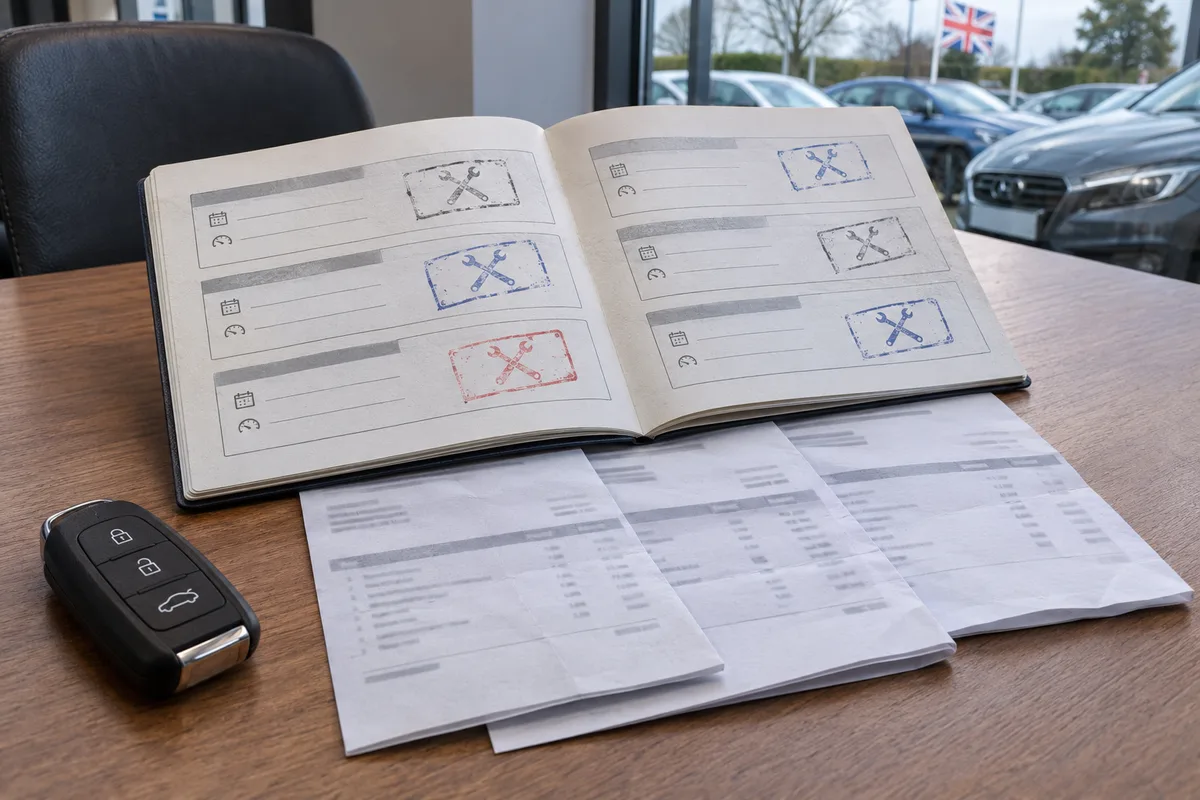
Suppose two successive tests mention wear on the same tyre and the seller says the tyres have since been changed. Compare the later test date with the fitting invoice, then check which tyres the invoice covers. If it predates the second test or refers to another wheel, you still have a question. The same method works with an intermittent starting complaint: put the first report, the repair and any repeat visit on one line. A service stamp on its own gives you little detail about a separate repair. Nissan’s service booklet records service type, date and mileage. [7]
When to pause the purchase
If a warning is showing, copy the exact wording while the car is parked. Ask for a written diagnosis and the outcome of the repair before agreeing a price. If the seller offers to clear the message or to replace a part after collection, you still have no record that the cause was found. Arrange an independent inspection if the explanation and paperwork disagree.
For an open safety recall, follow the manufacturer’s instructions for the specific car. If those instructions say not to drive, do not take it out for a test drive. Check with Nissan before collecting it. Its online VIN tool covers the Takata campaign specifically; Nissan directs owners to a dealer for other campaigns. [4] [5]
What if a seller says they have lost the paperwork?
Ask them to obtain copies of the relevant invoices or a dated service printout. Give them the exact job you want to see, such as the battery replacement at a stated mileage. If they cannot trace it, treat that job as unconfirmed when deciding whether to proceed.
Take the used-car viewing checklist for the rest of the inspection. If you are still choosing between models, our Sportage and Qashqai comparison covers their different cabin and powertrain options.
Sources
- Which?, Qashqai owner survey and Nissan’s response
- Nissan, Qashqai J11 identification sheet (PDF)
- Nissan UK, 2024 Qashqai e-POWER owner’s manual, electric motors
- GOV.UK, Check whether a vehicle has been recalled
- Nissan UK, Recall and service campaign checks
- GOV.UK, Check the MOT history of a vehicle
- Nissan UK, Warranty information and maintenance record (PDF)