SUV stands for sport utility vehicle. In today’s UK car market, it describes a broad family of taller-bodied cars, often with a raised seating position and rugged styling. It does not tell you whether the car has four-wheel drive, seven seats, a big boot or useful off-road ability. Treat the badge as a starting point: check the actual car’s dimensions, seating, luggage space and running costs.
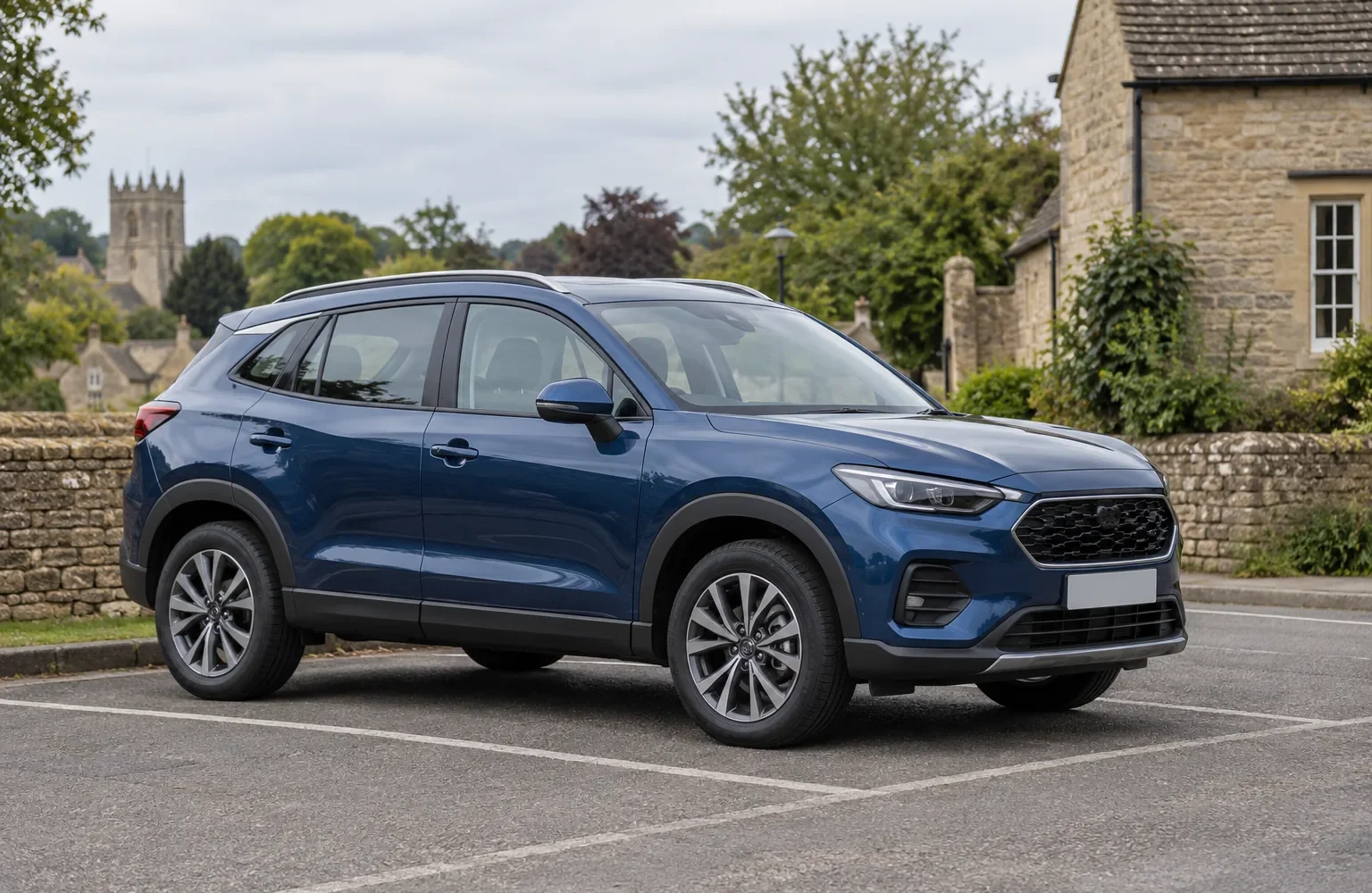
A small SUV can be a sensible alternative to a hatchback if you prefer its seating position. A larger one might accommodate a third row or a particular towing requirement. Neither advantage comes with every SUV. This guide separates the shape of the car from the features you need, then gives you a practical way to compare one with a hatchback, estate or people carrier.
What makes a car an SUV?
There is no single size or specification that describes every car sold as an SUV. The familiar ingredients are a relatively tall body, upright cabin, tailgate and styling influenced by off-road vehicles. Ground clearance and seat height may be greater than in a related hatchback, but the difference is model-specific.
The category includes compact urban cars and much larger family vehicles. It also spans petrol, diesel, hybrid and electric powertrains. Those are separate choices: describing a car as an SUV does not establish how it is powered or which wheels receive drive.
Manufacturer terminology is loose too. Lexus’s explanation of SUVs and crossovers acknowledges that the names are increasingly used interchangeably. Read the specification behind the description instead of expecting every advertisement to use the same definition.
SUV, crossover and 4×4: three different questions
Crossover usually signals a road-focused car combining SUV-style height and appearance with passenger-car characteristics. It is often used for smaller SUVs, although there is no dependable size boundary. The historical distinction between a separate body and chassis and a car-like integrated structure helps explain the vocabulary; it is not a reliable rule for sorting every modern vehicle advertised as an SUV.
4×4 describes a drive arrangement, not a body shape. A car can look like an off-roader and drive only its front wheels. Conversely, a lower estate can have all-wheel drive. For a documented example, Škoda’s 2019 European Kamiq launch information explicitly called it a city SUV while specifying front-wheel drive. That example illustrates the distinction; it is not a substitute for checking the version you are buying.
If you need drive to both axles, ask which system is fitted to the exact engine, year and trim. If you need to leave surfaced roads, go further: establish the manufacturer’s operating limits, suitable tyres and relevant equipment. Plastic wheel-arch trim and a driving-mode button do not answer those questions.
| Description in an advert | What it helps describe | What still needs checking |
|---|---|---|
| SUV or crossover | The broad body style and market positioning. | Actual size, seat height, luggage space and driven wheels. |
| AWD or 4WD | Drive can be supplied to both axles, subject to the system’s design. | How that system operates and its restrictions. |
| Seven-seater | The vehicle has a seven-seat configuration. | Which seats suit your passengers and what luggage fits with them occupied. |
| Hybrid or electric | A powertrain description. | Charging needs where applicable, usable space, efficiency and the exact specification. |
Is an SUV necessarily more spacious?
No. Extra exterior height does not automatically create more room where you need it. A high floor, sloping roof, wheel arches, battery installation or seat arrangement can affect the usable space. Compare the passenger positions and boot configuration you will actually use.
A useful counterexample appears in Škoda UK’s boot-space comparison, checked on 13 October 2026. It lists the Scala hatchback at 467 litres with the seats up and the Kamiq SUV at 400 litres. These figures show why the body-style label cannot rank capacity. They do not establish that one car will accept your particular pushchair or that either is the best choice for you.
Brochure volumes are a starting point. Confirm the measurement configuration, including which seats are in place, whether a movable floor is raised and whether the quoted figure includes underfloor storage. Avoid comparing a five-seat figure with one obtained after folding a third row.
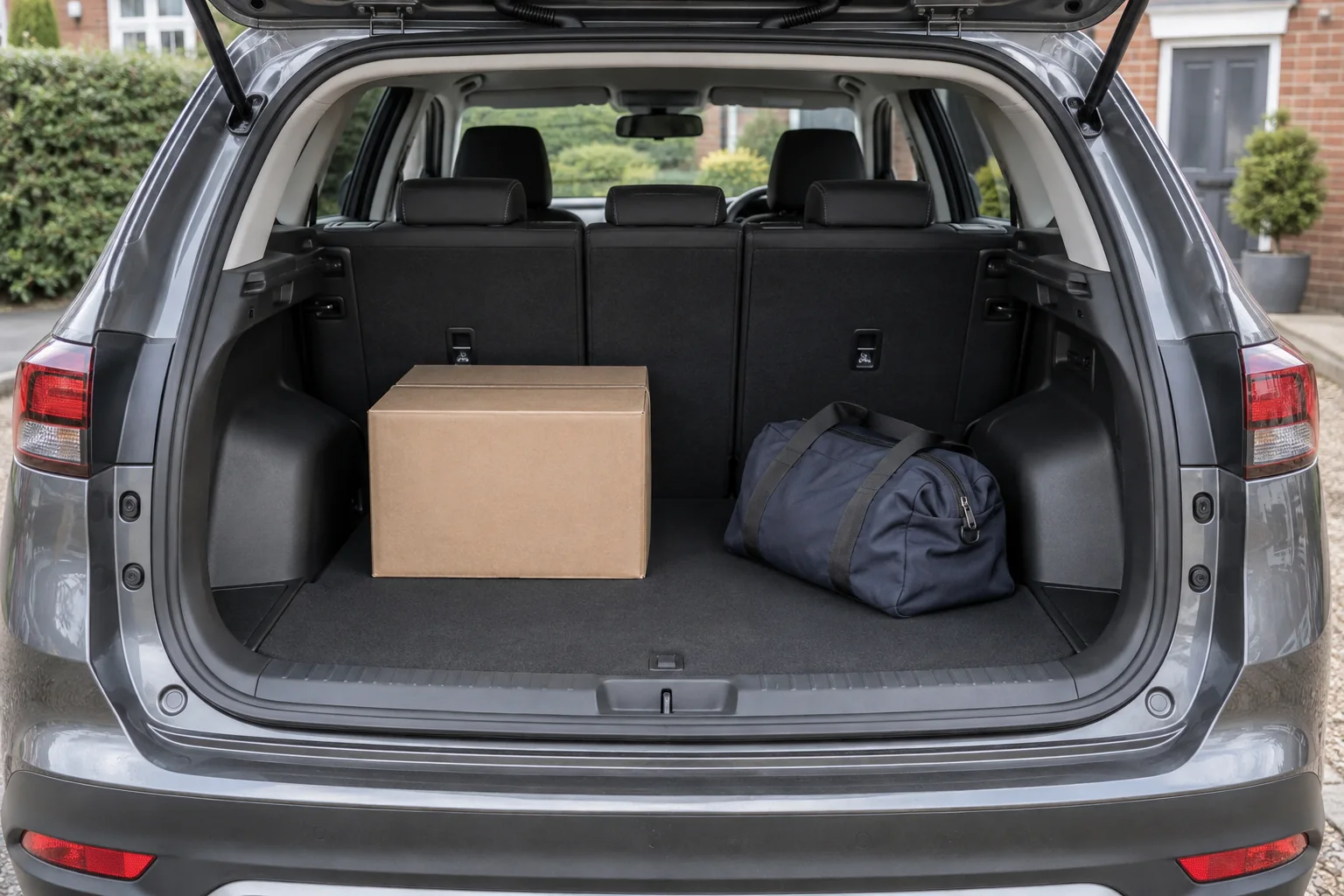
Check the shape, not just the number
Take the item that dictates your choice to the viewing, with the seller’s agreement. A folded pushchair, musical instrument or mobility aid can reveal a problem that litres cannot describe. If taking it is impractical, record its rigid dimensions and make a simple cardboard template of the awkward end.
Measure the narrowest opening and the gap between the wheel arches. Check the floor length with the relevant seats upright, the height beneath the luggage cover, and whether the tailgate can close without pressing against the load. Then consider how you will lift the item over the sill. A load that fits is not necessarily easy for you to handle.
Does the higher seating position help?
It may suit you, but try it before deciding. A seat you can move into without dropping down or climbing up can be useful. Another SUV’s sill, roof edge or seat bolsters may make the same movement awkward. Adjust the seat and steering wheel to your driving position before judging the view.
Check close-range visibility as well as the view down the road: the front corners, rear pillars and view when reversing matter in daily use. Cameras and sensors can help with manoeuvring, but try the actual equipment fitted, including its image quality and controls. A higher viewpoint is not proof of fewer blind spots.
For family use, test access to the rear seat with the front seat positioned for its usual occupant. Confirm the child seat is suitable for the vehicle and position and follow both sets of fitting instructions. Do not assume that a wide-looking rear bench takes three child seats. The official child-seat guidance sets out the UK rules and fitting requirements; a body-style description cannot establish compatibility.
With seven seats, get the intended passengers to try the third row and its access route. Check where their feet go, whether the second row must move forward and where the luggage will sit. For occasional extra passengers, a fold-away third row may be useful; for regular seven-person journeys, also examine an MPV or people carrier.
Which alternatives deserve a place on the shortlist?
Compare cars against the task that led you towards an SUV. Peugeot’s estate-versus-crossover guide makes a useful distinction between a longer load area and a taller, more upright layout. Your best fit depends on what needs to go inside.
| Your main requirement | Also try | Compare in person |
|---|---|---|
| An everyday car with manageable dimensions | A hatchback. | Access, seat comfort, visibility and parking-space clearance. |
| Long or bulky luggage with rear seats occupied | An estate. | Load-floor length, opening shape and lifting height. |
| Several passengers and flexible seating | An MPV or people carrier. | Individual seat space, access, folding arrangements and occupied-seat luggage room. |
| A particular towing or rough-surface requirement | Vehicles with documented capability, regardless of body label. | The exact manufacturer’s limits and required equipment. |
Make the comparison fair. Keep purchase budget and approximate age consistent, and account for the equipment you need. A more expensive SUV with a camera and automatic transmission can feel easier to use than a basic hatchback without either, but that does not isolate the effect of the body style.
What about running costs, safety and towing?
Price the exact version
Ask for insurance quotes using the registrations, check servicing requirements and price replacement tyres in the fitted size. Compare fuel consumption for specific variants under the same test procedure. For an electric candidate, examine energy consumption and the charging arrangements that suit your routine; our electric-car suitability guide covers that decision.
Do not turn an official economy figure into a promise. The VCA’s WLTP explanation notes that driving style, accessories and carried weight affect actual consumption. Use comparable figures to screen candidates, then test the budget with realistic assumptions for your journeys.
Read the safety assessment, not the silhouette
Look up the individual model’s Euro NCAP assessment, checking its test year and the equipment covered. Euro NCAP explains that its protocols become more demanding over time, so ratings from different years are not directly comparable. A star count without that context is an incomplete comparison. The vehicle’s condition and correct use of its safety systems also remain relevant.
This guide does not rank an SUV as safer than a hatchback simply because it is taller. Nor does it treat a manufacturer’s safety description as evidence of a universal advantage for the whole body style.
Check towing limits separately
A large-looking car is not a towing specification. Confirm the permitted limits for the particular vehicle, trailer and loading arrangement. GOV.UK’s towing guidance directs drivers to the handbook or specification sheet and explains gross train weight. If towing is essential to the purchase, resolve that requirement before putting a deposit down.
A practical SUV viewing checklist
Open the sections that match your needs. Record an actual observation for each candidate rather than giving every SUV an assumed advantage. These prompts help organise a viewing; they are not a vehicle inspection or safety score.
I want easier entry and a higher driving position
Set the seat for driving, get out and back in, and repeat for the passenger who will use it. Note any awkward sill or roof contact. Check the view around the car and reach to the controls. Compare the same movements in your hatchback or estate alternative.
I need room for children, adults or occasional extra passengers
Use the intended seating arrangement, with the front seats set normally. Check rear access, head and foot space and relevant child-seat compatibility. For a third row, check access and remaining luggage space with every required seat occupied.
I carry bulky equipment or holiday luggage
Try the actual awkward item or its measured template. Record opening width, floor shape, loading height and any seats you must fold. Check whether the luggage cover and other everyday bags can still be accommodated. Follow the handbook’s load limits and securing instructions.
My parking space is tight
Compare the manufacturer’s dimensions, including mirrors, with your space. Allow room to open the doors and tailgate. With permission, try parking the car somewhere representative and assess the view and manoeuvring controls from the driving seat.
Your shortlist should now describe a requirement, not just a shape: for example, “easy rear-seat access, room for this folded pushchair and a comfortable fit in our garage”. Use our next-car planning guide to bring those requirements together, then the used-car viewing checklist to examine a candidate’s condition and records.
Sources checked on 13 October 2026. This is a researched explanation and buying framework, not a first-hand road test. Manufacturer examples illustrate specific differences; specifications can vary by market, model year and equipment. How we produce our guides.
The conversation