The short answer: start with petrol if your normal week consists mainly of short, interrupted trips. Put diesel on the shortlist when you regularly make longer journeys and its measured fuel saving justifies the actual ownership costs. There is no annual-mileage number that settles the choice: journey pattern, the particular engine, emissions-zone access and the price of the two cars matter together.
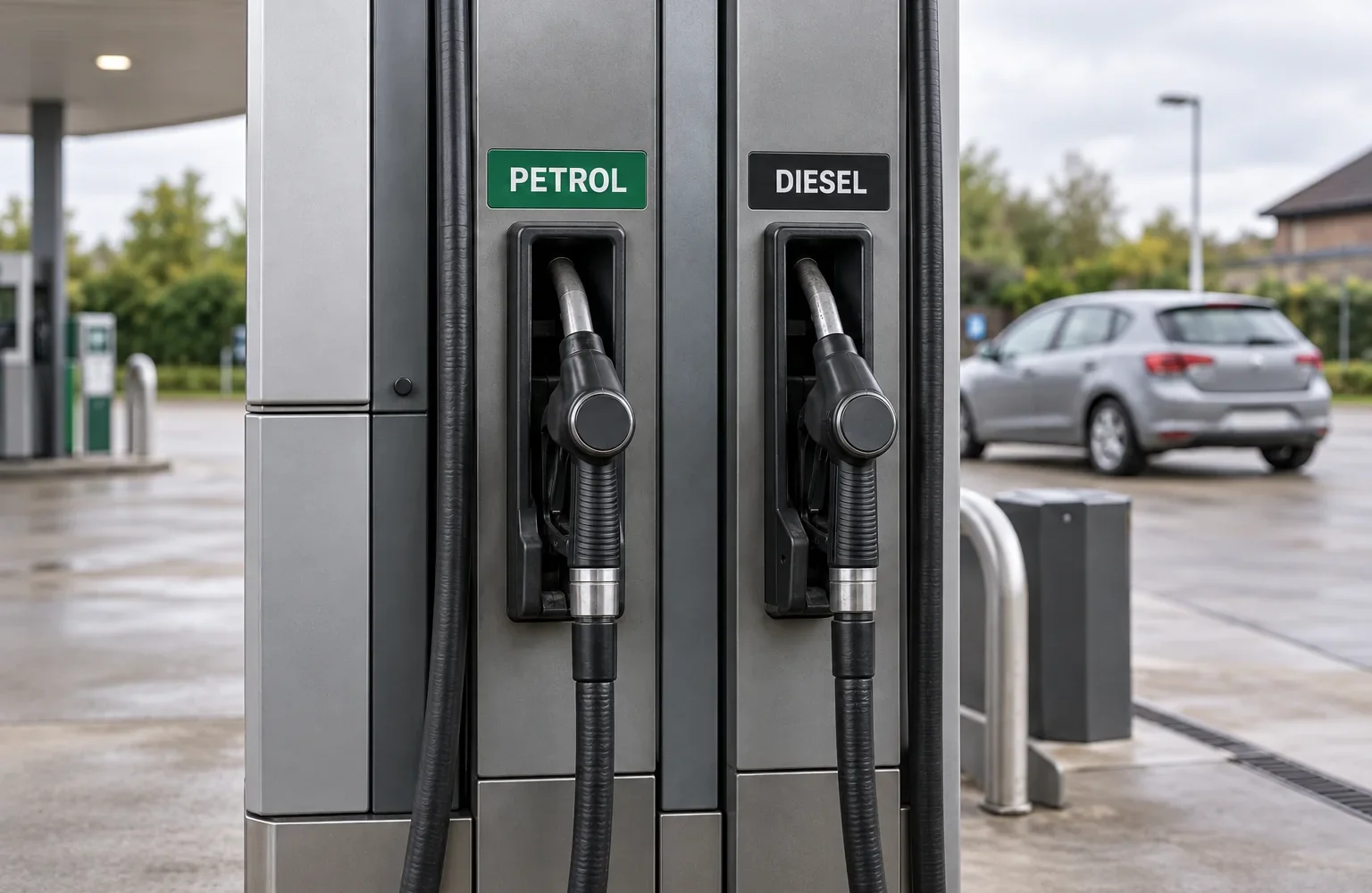
A cheap diesel can be an expensive mismatch for a school-run routine. An efficient petrol can also cost more in fuel than a well-chosen diesel on repeated long journeys. This guide helps you compare two real cars without treating a fuel badge as a guarantee of economy or reliability.
Petrol vs diesel at a glance
| What matters | Petrol | Diesel |
|---|---|---|
| Repeated short trips | A sensible starting point, but check the engine’s maintenance and any particulate-filter requirements. | Investigate whether the routine suits the diesel particulate filter’s regeneration needs. |
| Long-distance use | Compare actual motorway consumption rather than dismissing it. | Consider it where the fuel-economy advantage survives the price-per-litre calculation. |
| Buying used | Condition, service history and engine version remain central. | The same checks apply, plus evidence about the emissions-control equipment. |
| Urban access | Check the registration against the relevant zone rules. | Check the registration; a diesel’s advertised economy does not establish compliance. |
| Total cost | Include purchase, fuel, servicing, tax and eventual resale. | Use the same calculation, adding AdBlue where fitted and quoted maintenance costs. |
Look at your normal week before your annual mileage
Write down a representative week: how often you start from cold, the length of each trip, how much is a queue, and how often you make an uninterrupted journey. Two drivers covering 8,000 miles a year can have very different routines. One might make frequent short errands; another might leave the car parked all week and travel a long distance each weekend.
The distinction matters to a diesel’s exhaust-treatment system. Volvo’s V90 guidance describes how repeated low-speed trips without reaching normal operating temperature can cause problems with diesel emission control. It is evidence for checking the routine, not a universal minimum trip length for every diesel. Read Volvo’s model-specific explanation.
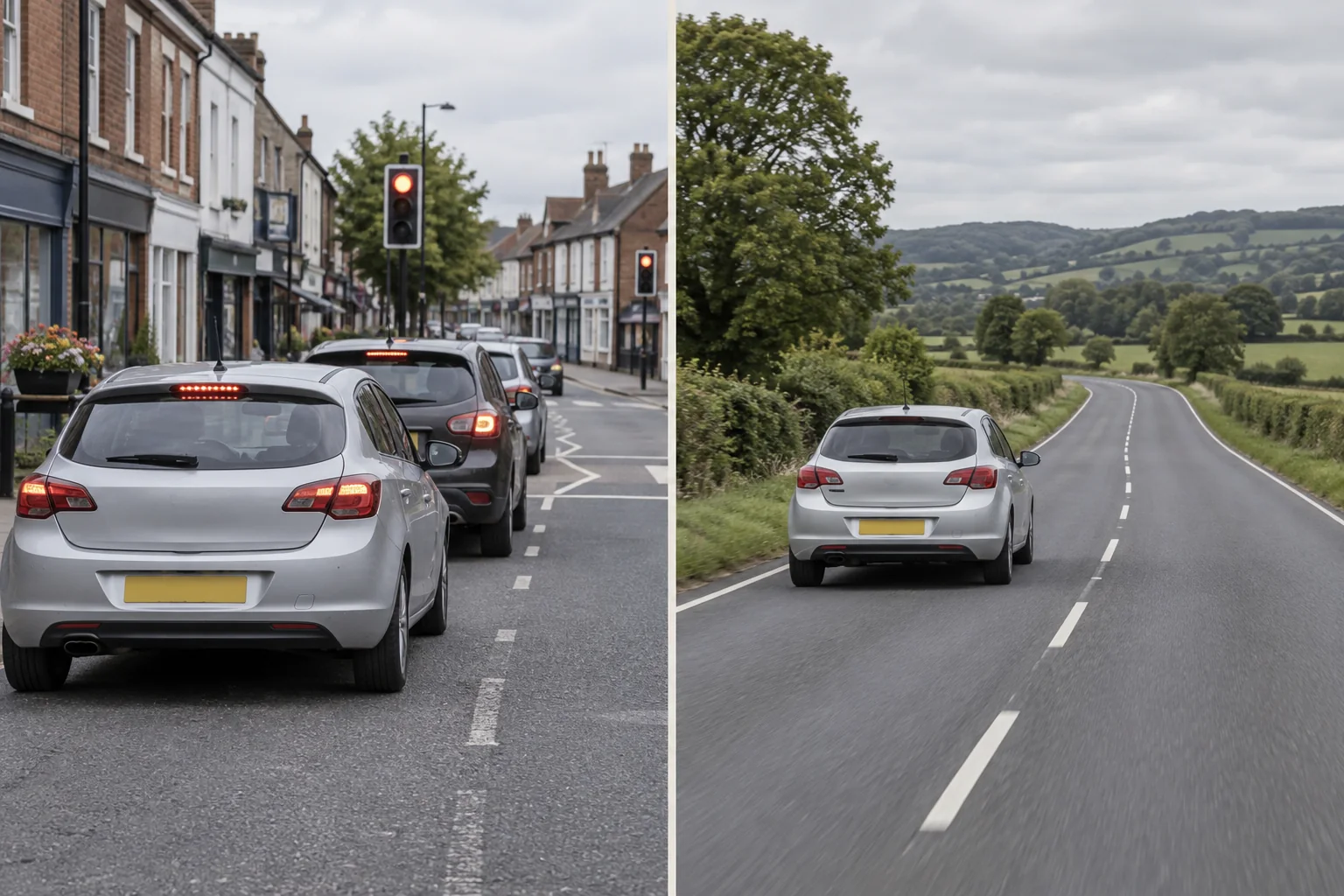
Do not let a fortnight’s summer touring hide eleven months of short local trips. Equally, low annual mileage alone does not rule out diesel. Ask whether the manufacturer’s operating guidance fits journeys you already need to make. Planning extra driving solely to accommodate the car adds time and fuel to the ownership decision.
DPF, AdBlue and the maintenance questions to ask
A diesel particulate filter, or DPF, captures soot from exhaust gas. Regeneration removes accumulated soot using heat. Ford explains that the process normally happens automatically, but some driving patterns need additional support. The handbook’s instructions depend on the vehicle. Ford’s DPF guidance also warns that regeneration produces high exhaust temperatures.
Before buying, obtain the correct handbook and ask the seller about warning messages, previous DPF work and the car’s typical use. If a warning is present, require proper investigation rather than accepting “it just needs a motorway run”. There is no safe generic instruction to drive at a particular speed or engine revs that replaces the car’s warning-specific guidance.
Some diesels also use selective catalytic reduction, or SCR, with AdBlue to reduce nitrogen oxides. AdBlue is a separate operating fluid, not something to mix into the diesel tank. Volkswagen explains the separate filler and the purpose of the system in its AdBlue guide. Its warning-light instructions describe a no-restart condition if refill warnings are ignored.
Budget for the applicable fluid and servicing, and distinguish a routine refill from a system fault requiring diagnosis. Do not assume all diesels use the same equipment or that every repair mentioned online applies to your engine.
Petrol does not mean maintenance-free. Some petrol engines have particulate filters too; Volvo’s petrol-filter guidance is one example. Research the precise engine and service schedule on either shortlist.
Work out fuel cost per mile, not just mpg
Start with comparable consumption figures for the exact engine, gearbox and specification. Avoid comparing an older NEDC figure with a newer WLTP result. The Vehicle Certification Agency explains the testing changes and why specification and driving behaviour affect the comparison. Official figures are a starting point; evidence from similar journeys makes a better budget.
Use current local pump prices for the grades each car requires. The government’s weekly fuel-price series provides national context, but it is not a quote from your forecourt.
Annual fuel cost (£) = annual miles ÷ UK mpg × 4.54609 × price per litre (£). The factor converts UK gallons to litres; do not use US mpg. NIST lists the imperial-gallon conversion. Divide a price in pence by 100 before entering it: 175p is £1.75.
A worked example with explicit assumptions
Illustrative calculation prepared 13 October 2026: 10,000 miles a year, petrol at £1.75 per litre and 45 UK mpg, diesel at £2.00 per litre and 60 UK mpg. These are chosen example inputs, not current national averages, tested cars or forecasts.
| Calculation | Petrol example | Diesel example |
|---|---|---|
| Fuel used in 10,000 miles | 1,010.2 litres | 757.7 litres |
| Fuel cost per mile | 17.68p | 15.15p |
| Annual fuel bill | £1,767.92 | £1,515.36 |
| Diesel’s annual fuel saving | £252.56, before any other cost difference | |
If the diesel costs £1,200 more to buy, that fuel saving alone takes about 4.8 years to recover the premium, assuming all other costs and resale values are equal. At 5,000 miles the annual fuel saving halves to about £126.28. If diesel instead costs £2.20 per litre, the 10,000-mile saving shrinks to about £101.02.
Those changes are why “diesel pays after 12,000 miles” cannot be a rule for everyone. The answer moves with the two cars’ prices, fuel consumption, pump prices and how long you keep them. A cheaper-to-buy diesel changes the calculation again; do not invent a premium that is absent from the adverts.
For a fuel-only check, divide a positive purchase-price premium by the positive annual fuel saving to estimate years to recover it. If there is no fuel saving, this calculation gives no fuel-based payback. It is not the same as total ownership break-even: a service due immediately, different insurance quotes or a different resale value can change the result. Keep those differences visible in the worksheet below.
Copy this ownership-cost worksheet
Use the same ownership period for both cars, such as three years. Copy the rows into a note or spreadsheet and fill them with quotes. This is a manual worksheet, not an automatic calculator; unknown costs should stay marked as unknown.
| Item | Petrol car | Diesel car |
|---|---|---|
| Purchase price minus expected resale value | £____ | £____ |
| Fuel: annual calculation × years | £____ | £____ |
| Insurance and vehicle tax | £____ | £____ |
| Scheduled servicing, tyres and fluids | £____ | £____ |
| Known repairs and a separately labelled contingency | £____ | £____ |
| Applicable zone charges and finance interest/fees | £____ | £____ |
| Estimated ownership total | £____ | £____ |
Add the rows; do not also add the full loan repayments to a calculation already containing the purchase price. Resale and repair allowances are estimates, so repeat the comparison with less favourable figures. If you plan to lease or return a financed car, compare the actual contractual payments and return costs instead of assuming you own an asset to resell.
Check tax and emissions-zone access separately
Do not infer vehicle tax from fuel type or an old advert. Registration date, the relevant emissions rules and, for some cars, original list price affect the bill. The current GOV.UK tax tables distinguish first registration from later payments and explain the expensive-car supplement. Confirm the amount for each registration before completing the worksheet.
A lower fuel bill is also not a complete environmental comparison. Consider the exact car’s certified CO₂ figure separately from the pollutant standards used by a local emissions zone. “Diesel”, “petrol” and “hybrid” are not entry permits.
- England’s Clean Air Zones: the national framework distinguishes zone classes; not all charge private cars. Where relevant, the stated minimum for cars is Euro 4 petrol or Euro 6 diesel. Check your registration, route and any exemption through the official CAZ guidance and checker.
- London: use TfL’s vehicle checker. ULEZ compliance does not settle other London charges, so read the results for the journey you intend to make.
- Scotland: LEZ access depends on meeting the standard or an exemption; do not treat a penalty as a daily entry ticket. Use the Scottish vehicle checker and official LEZ guidance.
Check places you visit occasionally as well as home and work. Do not extend England’s CAZ rules automatically to every UK jurisdiction. Recheck official rules before purchase and before unfamiliar journeys.
Choose the situation closest to yours
Open a scenario to see what should decide your shortlist. These prompts organise the evidence; they do not score a car’s reliability.
Most of my journeys are short local errands
Start the comparison with petrol. Read its handbook too, and price the exact car rather than assuming every petrol is economical. A diesel should earn its place through a compatible real journey pattern and convincing ownership costs, not a promise that one extra drive will prevent every DPF problem.
I regularly cover long distances on main roads
Compare petrol and diesel versions with similar space, equipment and performance. Run the fuel worksheet using credible consumption for that route, then include purchase price, emissions equipment, servicing and resale. Also compare noise and comfort on a test drive. Higher mileage makes small cost-per-mile differences matter more; it does not guarantee a winner.
My mileage is changing or hard to predict
Calculate at a low and a high annual mileage. Include the likely new commute rather than last year’s exceptional travel. If the result changes with a small adjustment, condition, flexibility and the price of the actual cars deserve more weight than an uncertain fuel saving.
Five checks before you commit
- Identify the exact version. Record registration, model year, engine, gearbox and emissions standard. Compare like-for-like specifications.
- Read the history. Ask for itemised service and repair records, not just a claim that a car is “motorway miles”. Confirm what work is due next.
- Investigate warnings. Unexplained engine, DPF or AdBlue messages need diagnosis. A seller’s assurance is not evidence of a completed repair.
- Drive a relevant route. Include parking, ordinary acceleration and the road speeds you use. Fuel type and gearbox behaviour are separate choices; our manual vs automatic guide helps with the latter.
- Check the whole shortlist. Use our car-choice guide to compare space and everyday requirements. If charging might fit your routine, consider the questions in electric-car everyday life before limiting the search to two fuels.
For a used car with an uncertain history, arrange an independent inspection by someone familiar with that engine before committing. Choose the car whose condition, journey requirements and costs you can explain with evidence, including the uncertainties that remain.
The conversation